The Role of Students in Community Development Through Service Programs
Gusti Ayu Tita P
16 September 2026
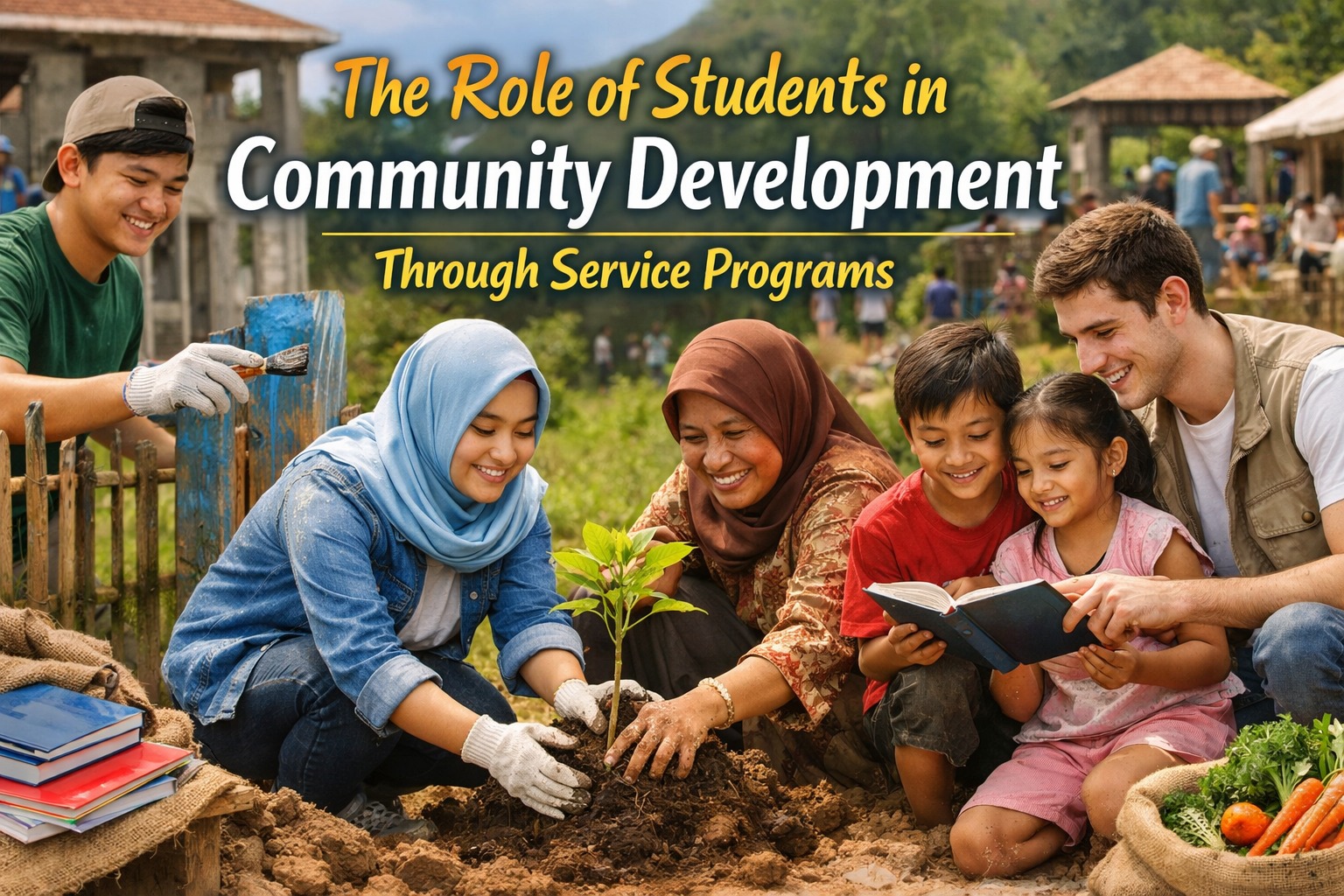
Community development is an important process that helps improve the quality of life in society. One of the most effective ways to support this process is through student participation in service programs. Students possess knowledge, creativity, and enthusiasm that can contribute to solving various community challenges. Through community service activities, they can apply what they learn in classrooms to real-life situations. As a result, service programs become valuable opportunities for both students and the communities they serve.
WHY STUDENT INVOLVEMENT MATTERS IN COMMUNITY DEVELOPMENT?
Students play a significant role in helping communities achieve sustainable development goals. Their involvement brings fresh ideas and innovative solutions to local issues such as education, health, environmental conservation, and economic development. By working directly with community members, students gain a deeper understanding of social challenges and local needs.
In addition, student participation encourages collaboration between educational institutions and society. Communities benefit from the knowledge and skills that students bring, while students gain practical experience that strengthens their academic learning. This mutual relationship creates positive impacts for all parties involved.
HOW SERVICE PROGRAMS BENEFIT LOCAL COMMUNITIES?
Service programs provide direct support to communities in various ways. Students often organize educational workshops, environmental campaigns, health awareness programs, and entrepreneurship training. These activities help improve public knowledge and encourage community members to become more active in solving local problems.
Furthermore, service programs can strengthen social bonds within communities. When students work alongside local residents, they build trust and foster cooperation. This partnership often leads to long-term improvements that continue even after the program has ended.
SKILLS STUDENTS DEVELOP THROUGH COMMUNITY SERVICE
Participating in service programs helps students develop many valuable life skills. They learn leadership, communication, teamwork, and problem-solving while interacting with diverse groups of people. These experiences prepare them for future professional and personal responsibilities.
Students also improve their ability to adapt to different situations. Working in real community settings often requires flexibility, creativity, and critical thinking. Such experiences help students become more confident and capable individuals who can contribute positively to society.
THE IMPACT OF STUDENT SERVICE PROGRAMS ON SOCIAL CHANGE
Student service programs can create meaningful social change by addressing important community needs. For example, educational initiatives can improve literacy rates, while environmental projects can promote cleaner and healthier surroundings. Small actions taken by students often inspire community members to continue positive practices.
Moreover, these programs encourage civic responsibility among young people. Students learn that they have the power to make a difference through active participation and community engagement. This mindset helps create future leaders who are committed to social development and public welfare.
CHALLENGES AND STRATEGIES FOR EFFECTIVE COMMUNITY SERVICE
Although service programs offer many benefits, they also come with challenges. Students may face limited resources, cultural differences, or difficulties in understanding local needs. Without proper planning, some activities may not achieve their intended goals.
To overcome these challenges, students should conduct community assessments, communicate openly with local stakeholders, and design programs based on actual needs. Strong collaboration, careful planning, and continuous evaluation can ensure that service programs deliver meaningful and sustainable results.
CONCLUSION
Students are valuable contributors to community development through service programs. Their knowledge, energy, and commitment can help address social issues while creating positive change in local communities. At the same time, students gain important skills and real-world experiences that support their personal and professional growth. By actively participating in community service, students become agents of change who contribute to a better and more sustainable future for society.
Tentang Penulis
Gusti Ayu Tita P
Penulis — Universitas STEKOM
Penulis aktif yang berfokus pada isu-isu akademik, teknologi pendidikan, dan pengembangan sumber daya manusia di lingkungan kampus.