The Role of Technology in Industrial Development
Gusti Ayu Tita P
8 Juni 2026
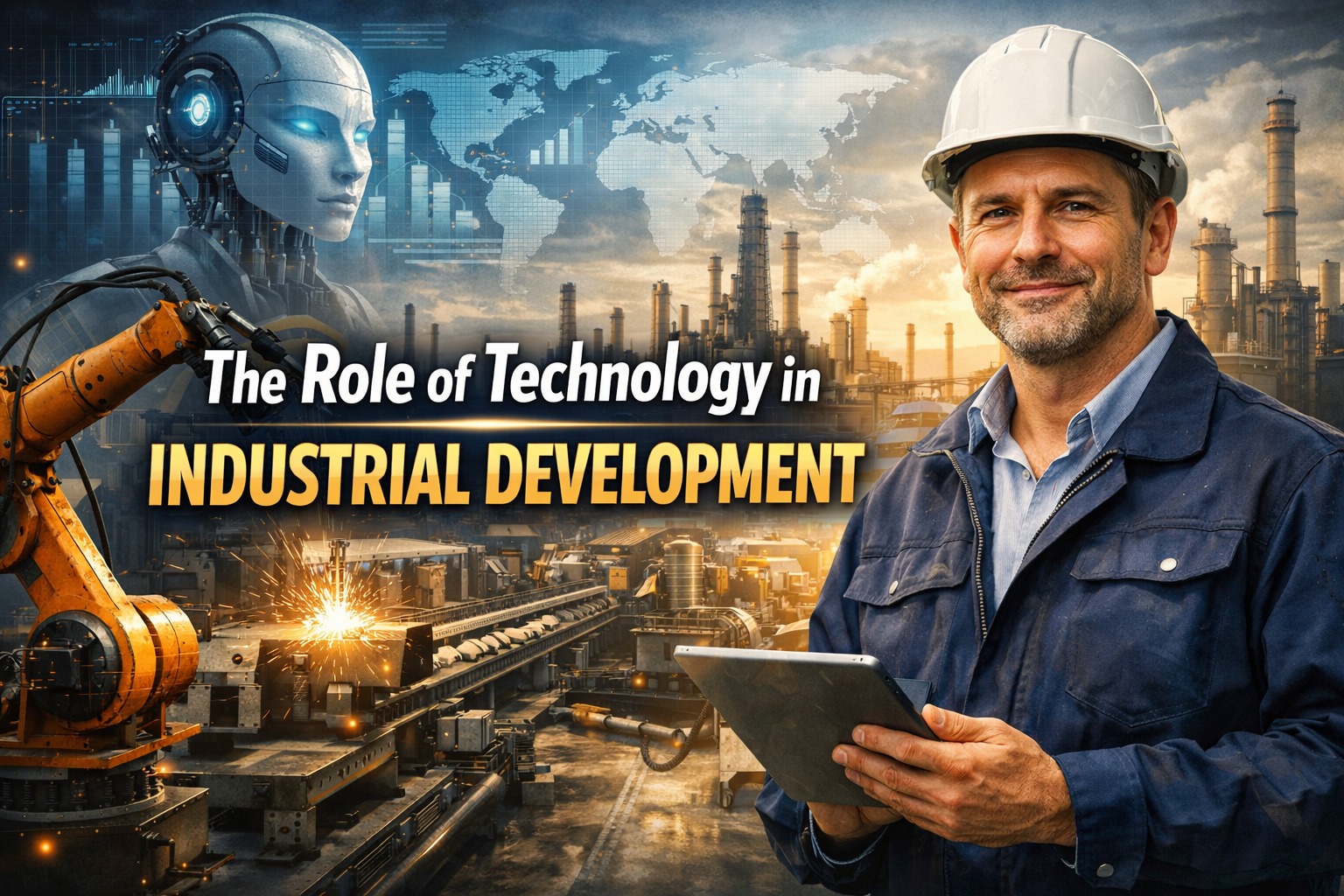
Technology has become one of the most important driving forces behind modern industrial growth. From automated machines to digital communication systems, industries now rely heavily on advanced technology to improve productivity, efficiency, and product quality. The development of technology has changed how factories operate, how workers perform tasks, and how companies compete in global markets. In today’s competitive business environment, industries that adopt modern technology are more likely to grow faster and survive longer. Because of this, understanding the role of technology in industrial development is essential for businesses, workers, and society.
IMPACT OF TECHNOLOGY ON INDUSTRIAL PRODUCTIVITY
One of the biggest benefits of technology in industry is the increase in production efficiency. Modern machines can perform tasks much faster than human labor while reducing errors and production costs. Automated production lines allow factories to produce goods in large quantities without sacrificing quality. This helps companies meet growing consumer demand and increase profits. Technology also reduces wasted materials, making industrial operations more effective and environmentally friendly.
In addition, digital systems help industries monitor and manage production in real time. Companies can use software and smart sensors to track machine performance and detect problems quickly. This minimizes downtime and prevents expensive production delays. As a result, industries can maintain stable operations and deliver products on time. The use of technology also allows businesses to improve workplace safety by reducing dangerous manual tasks.
THE ROLE OF AUTOMATION IN MODERN INDUSTRIES
Automation has become a major part of industrial development around the world. Many factories now use robotic systems to perform repetitive and complex tasks with high precision. Robots can work continuously without getting tired, helping companies increase production speed and consistency. This is especially important in industries such as automotive manufacturing, electronics, and food processing. Automation also helps companies reduce operational costs over time.
Besides improving productivity, automation encourages industries to focus on innovation and product quality. Workers can spend more time handling creative and technical responsibilities instead of repetitive labor. Companies that use automation are often more competitive because they can produce products faster and at lower costs. However, industries must also provide training programs so workers can adapt to new technologies. This balance between human skills and automation is essential for long-term industrial success.
DIGITAL TRANSFORMATION IN INDUSTRIAL DEVELOPMENT
Digital transformation has changed the way industries communicate, manage data, and make decisions. Modern businesses now use cloud computing, artificial intelligence, and big data analysis to improve operations. These technologies help companies understand market trends, customer preferences, and production performance more accurately. With better information, businesses can make smarter decisions and respond quickly to changing market conditions. Digital transformation also improves collaboration between departments and business partners.
Another important advantage of digital technology is faster communication. Companies can now connect with suppliers, customers, and employees from different parts of the world instantly. Online systems simplify inventory management, financial transactions, and product distribution. This creates a more connected and efficient industrial ecosystem. As industries continue to adopt digital solutions, global competition becomes stronger and more dynamic.
TECHNOLOGY AND SUSTAINABLE INDUSTRIAL GROWTH
Technology also plays a significant role in supporting sustainable industrial development. Many industries are now using renewable energy, energy-efficient machines, and environmentally friendly production methods. Modern technology helps reduce pollution, save energy, and minimize industrial waste. This is important because industries are expected to balance economic growth with environmental responsibility. Sustainable practices not only protect nature but also improve a company’s public image.
Furthermore, advanced technology supports the development of green industries and smart factories. Smart manufacturing systems can optimize energy usage and reduce unnecessary resource consumption. Governments and international organizations also encourage industries to adopt cleaner technologies through policies and incentives. Companies that invest in sustainable technology often gain long-term financial and environmental benefits. Therefore, technology is becoming a key factor in building a more sustainable industrial future.
CHALLENGES OF TECHNOLOGICAL DEVELOPMENT IN INDUSTRY
Although technology offers many advantages, industries also face several challenges in adopting new systems. One major challenge is the high cost of purchasing advanced machines and digital infrastructure. Small and medium-sized companies may struggle to afford modern technology. In addition, workers who lack technical skills may find it difficult to adapt to technological changes. This can create gaps in productivity and workforce readiness.
Cybersecurity is another growing concern in modern industries. As companies become more dependent on digital systems, the risk of cyberattacks and data breaches also increases. Businesses must invest in strong security systems to protect important information and maintain operational stability. Continuous employee training is also necessary to reduce human error and improve technological understanding. Overcoming these challenges is essential for maximizing the benefits of industrial technology.
CONCLUSION
Technology has transformed industrial development in many positive ways. It improves productivity, supports automation, strengthens communication, and encourages sustainable growth. Industries that successfully adopt modern technology can compete more effectively in global markets and achieve long-term success. However, companies must also address challenges such as high investment costs, workforce adaptation, and cybersecurity risks. By combining innovation, skilled workers, and responsible management, technology will continue to shape the future of industrial development worldwide.
Tentang Penulis
Gusti Ayu Tita P
Penulis — Universitas STEKOM
Penulis aktif yang berfokus pada isu-isu akademik, teknologi pendidikan, dan pengembangan sumber daya manusia di lingkungan kampus.