The Role of the Minister of Education in Improving Education Quality
Gusti Ayu Tita P
12 Agustus 2026
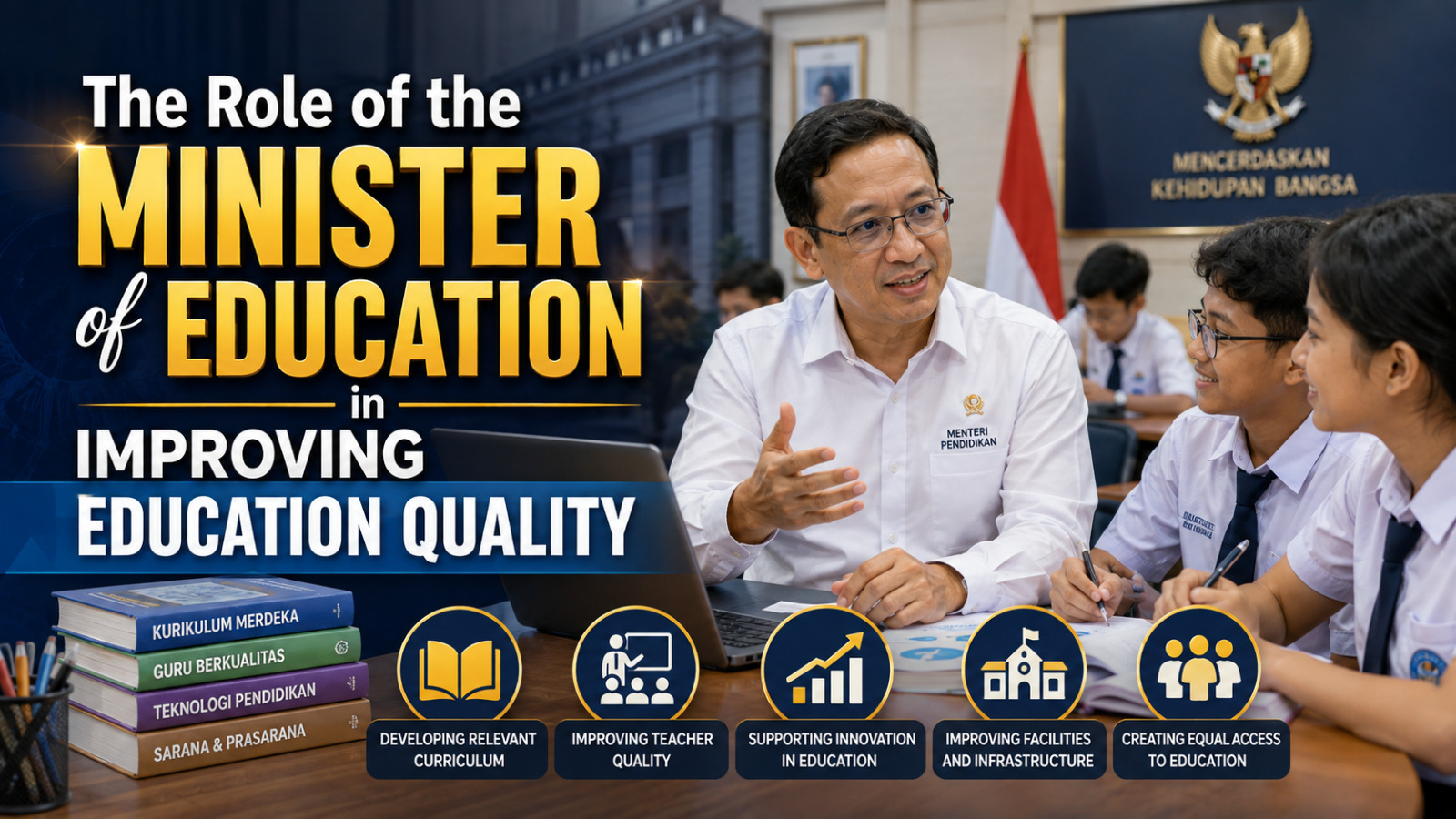
The Minister of Education has an important role in supporting the improvement of education quality in Indonesia. Through the ministry's responsibilities, the government develops policies and programs related to learning, teachers, educational institutions, and students. Quality education requires effective policies, competent educators, relevant learning approaches, and fair access to educational opportunities. The minister helps direct these efforts so that education policies can respond to national needs. Cooperation with schools, teachers, local governments, and other institutions is also important for achieving better educational outcomes.
DEVELOPING EDUCATION POLICIES
One of the main responsibilities of the Minister of Education is to formulate and implement policies within the education sector according to the ministry's authority. These policies can address curriculum, learning, teachers, students, and educational institutions. Effective education policies should consider student needs, developments in knowledge and technology, and conditions across different regions. Clear policies provide direction for schools and education stakeholders.
Education policies also need to be evaluated regularly. Data and feedback can help the government understand whether a policy is achieving its intended objectives. If challenges are identified, adjustments can be considered according to applicable regulations. This process helps education policies remain relevant to changing needs.
IMPROVING TEACHER QUALITY
Teachers have a central role in determining the quality of learning. The Minister of Education can support policies and programs designed to improve teachers' professional competence and teaching skills. Competent teachers can create more effective learning experiences and respond better to students' educational needs. Professional development can include training, learning resources, and other forms of support.
Teacher development should also consider the different conditions faced by schools and educators. Some areas may have different educational resources or workforce challenges. Government programs can therefore be designed to support teachers according to identified needs. Strengthening teacher quality can contribute directly to better learning outcomes.
DEVELOPING CURRICULUM AND LEARNING
Curriculum provides an important framework for determining what students learn and how learning is organized. The Minister of Education has a role in developing and directing curriculum policies according to the government's educational framework. A relevant curriculum should help students develop knowledge, skills, and character while responding to changes in society and technology.
Curriculum development also requires support for teachers and schools. Educators need sufficient guidance and resources to apply curriculum policies effectively. Evaluation can help identify whether learning approaches are working as intended. Through continuous improvement, education can become more relevant to students' current and future needs.
EXPANDING ACCESS TO QUALITY EDUCATION
Improving education quality also requires ensuring that students have opportunities to receive education. The Minister of Education can support policies that promote broader and more equitable access to education. Access includes opportunities to learn, appropriate educational facilities, qualified teachers, and supportive learning environments. Differences between regions need to be considered when developing education programs.
Cooperation with local governments and educational institutions is important because education services are delivered across many regions. Government programs can address identified barriers and support schools that require additional assistance. Monitoring can help determine whether access and quality are improving. Greater educational equity can help more students benefit from quality learning opportunities.
CONCLUSION
The Minister of Education plays an important role in improving education quality through education policies, teacher development, curriculum improvement, and expanded access to education. Each area requires careful planning, implementation, monitoring, and evaluation. Cooperation between the central government, local governments, schools, teachers, families, and communities is also essential. Education quality cannot depend on one policy alone but requires continuous improvement. Through effective leadership and coordinated programs, the Minister of Education can help support a stronger education system in Indonesia.
Tentang Penulis
Gusti Ayu Tita P
Penulis — Universitas STEKOM
Penulis aktif yang berfokus pada isu-isu akademik, teknologi pendidikan, dan pengembangan sumber daya manusia di lingkungan kampus.