The Skills Every Informatics Engineering Student Needs to Master
Gusti Ayu Tita P
6 Juli 2026
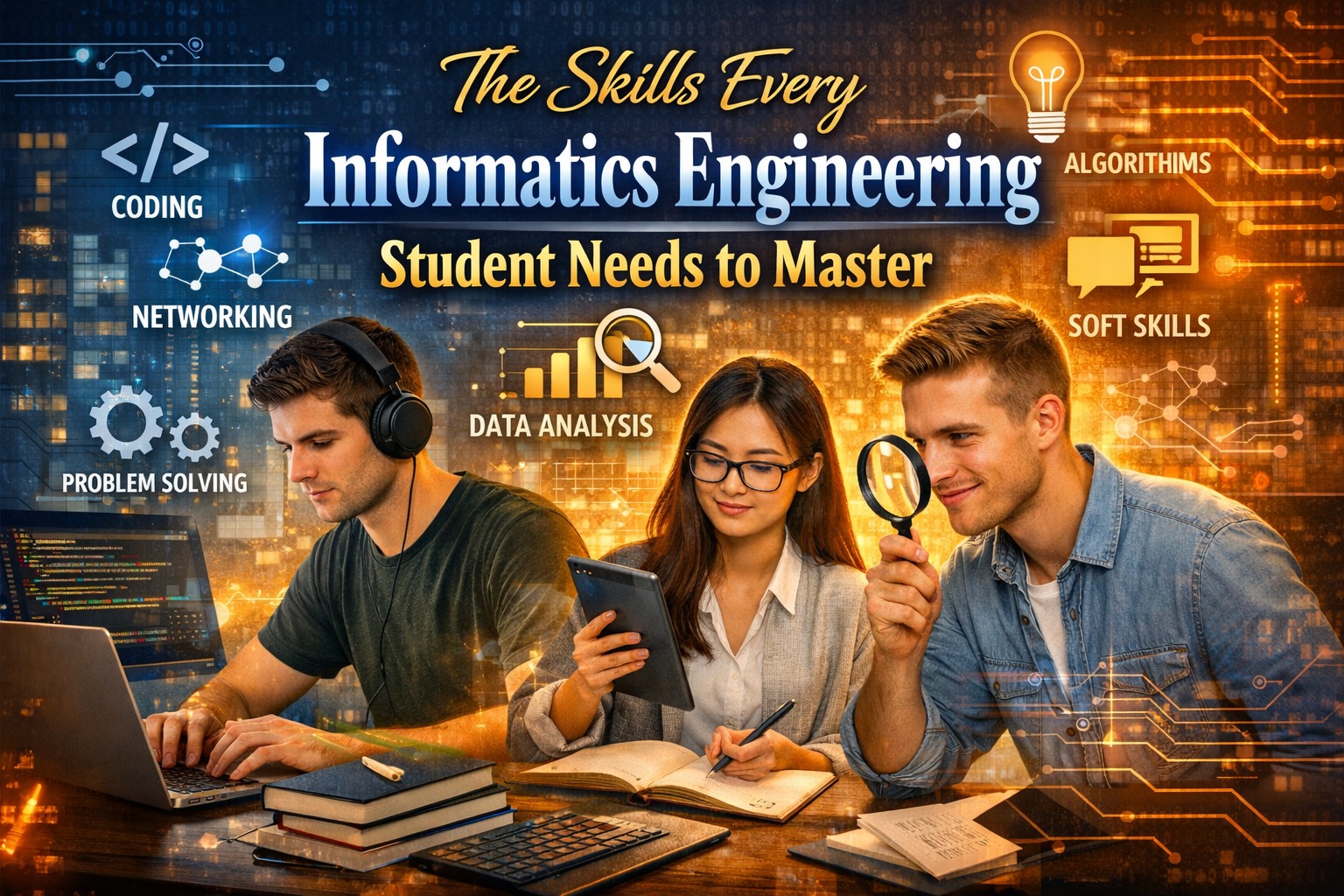
The world of technology continues to evolve rapidly, creating countless opportunities for students pursuing an Informatics Engineering degree. However, earning a degree alone is not enough to succeed in today's competitive digital industry. Students must develop a combination of technical skills, problem-solving abilities, and professional competencies to stay ahead of the competition.
As businesses increasingly rely on digital solutions, the demand for skilled professionals in software development, artificial intelligence, cybersecurity, and data analysis continues to grow. By mastering the right skills during college, Informatics Engineering students can prepare themselves for successful and rewarding careers.
PROGRAMMING FUNDAMENTALS
One of the most important skills every Informatics Engineering student must master is programming. Programming serves as the foundation for developing software, websites, mobile applications, and various digital systems. Students should become familiar with popular programming languages such as Python, Java, C++, and JavaScript.
Understanding programming concepts like variables, algorithms, data structures, and object-oriented programming helps students build efficient and scalable applications. Strong coding skills also improve logical thinking and make it easier to learn new technologies in the future.
PROBLEM-SOLVING AND ANALYTICAL THINKING
Technology professionals face complex challenges every day, making problem-solving skills essential. Informatics Engineering students must learn how to analyze situations, identify issues, and develop effective solutions using systematic approaches.
Analytical thinking helps students break large problems into smaller, manageable tasks. Whether debugging code, optimizing databases, or designing software systems, the ability to think critically and logically is a valuable asset in the technology industry.
DATABASE MANAGEMENT SKILLS
Modern applications rely heavily on data, making database management a crucial skill. Students should understand how databases store, organize, and retrieve information efficiently. Knowledge of SQL, database design, and data modeling is highly beneficial.
Learning database technologies allows students to build reliable systems that can handle large amounts of information. As businesses continue to generate massive volumes of data, professionals with strong database expertise remain highly sought after.
SOFTWARE DEVELOPMENT AND PROJECT MANAGEMENT
Beyond writing code, students should understand the complete software development lifecycle. This includes planning, designing, developing, testing, deploying, and maintaining software applications. Familiarity with methodologies such as Agile and Scrum can significantly improve teamwork and project efficiency.
Project management skills help students meet deadlines, collaborate effectively, and manage resources wisely. These abilities become increasingly important when working on large-scale projects involving multiple team members and stakeholders.
CYBERSECURITY AWARENESS
As cyber threats continue to increase worldwide, cybersecurity knowledge has become an essential skill for Informatics Engineering students. Understanding network security, encryption, authentication, and risk management helps protect systems and sensitive information.
Students who develop cybersecurity awareness can create more secure applications and identify potential vulnerabilities before they become serious threats. This expertise is valuable across industries, from finance and healthcare to government and technology companies.
COMMUNICATION AND TEAMWORK ABILITIES
Technical expertise alone is not enough to guarantee success. Informatics Engineering students must also develop strong communication skills and the ability to work effectively within a team. Technology projects often require collaboration between developers, designers, managers, and clients.
Good communication helps students explain technical concepts clearly to both technical and non-technical audiences. Teamwork skills also improve productivity, encourage knowledge sharing, and contribute to successful project outcomes.
CONTINUOUS LEARNING AND ADAPTABILITY
Technology changes faster than almost any other industry. Therefore, one of the most valuable qualities for any Informatics Engineering student is a commitment to continuous learning. New programming languages, frameworks, and technologies emerge regularly.
Students who remain curious and adaptable can quickly adjust to industry changes and stay relevant in the job market. Participating in online courses, certifications, workshops, and personal projects can significantly enhance professional growth.
CONCLUSION
Success in Informatics Engineering requires much more than classroom knowledge. Students must master programming, problem-solving, database management, software development, cybersecurity, communication, and continuous learning to build strong careers in the digital era.
By developing these essential skills early, Informatics Engineering students can increase their employability, contribute to innovative projects, and become valuable professionals in the ever-growing technology sector. Investing time in these competencies today will create greater opportunities and long-term success in the future.
Tentang Penulis
Gusti Ayu Tita P
Penulis — Universitas STEKOM
Penulis aktif yang berfokus pada isu-isu akademik, teknologi pendidikan, dan pengembangan sumber daya manusia di lingkungan kampus.