The Supernatural World from the Perspective of Local Traditions and Beliefs
Gusti Ayu Tita P
9 September 2026
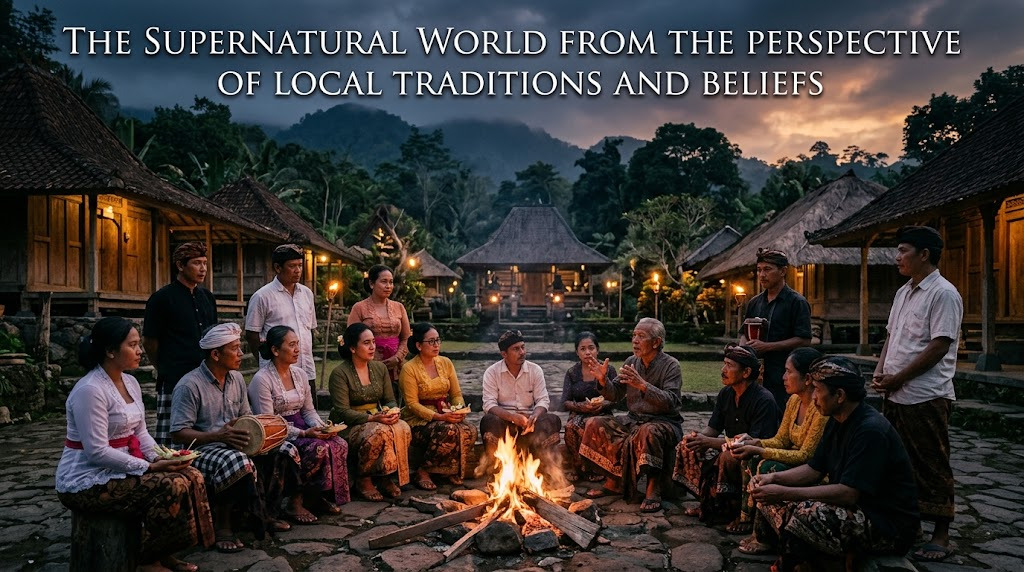
The supernatural world has been interpreted in many different ways by communities around the world. Local traditions often provide explanations for mysterious events, unusual experiences, sacred places, and invisible beings. In Indonesia, these interpretations are closely connected with local beliefs, folklore, customs, and community history. Different regions can have completely different stories about the unseen world. Studying these perspectives can help us understand how culture shapes the way people interpret things they cannot easily explain.
LOCAL TRADITIONS SHAPE SUPERNATURAL BELIEFS
Local traditions play an important role in shaping ideas about the supernatural world. Stories are often passed from parents and elders to younger generations through conversations, ceremonies, and oral storytelling. Over time, these stories can become part of a community's collective memory. Some traditions contain warnings about certain behaviors, places, or situations that are considered dangerous. Others focus on relationships between humans, nature, ancestors, and the spiritual realm.
Because traditions develop in different environments, supernatural beliefs can vary considerably. A community living near mountains may have different legends from one living near the sea or a dense forest. Geography, history, social structure, and cultural experience can all influence the development of supernatural narratives. This diversity makes local folklore an important part of cultural identity.
THE RELATIONSHIP BETWEEN HUMANS AND THE UNSEEN WORLD
Many traditional beliefs describe a relationship between the visible and unseen worlds. In some cultural narratives, humans are expected to respect certain places, ancestors, natural environments, or spiritual forces. These ideas can influence customs and social behavior. People may follow traditional restrictions because they believe certain actions could disturb a spiritual balance or bring undesirable consequences. Such practices can also function as social rules that encourage caution and respect.
However, these beliefs should be understood within their cultural setting. Not everyone in a community necessarily interprets them in exactly the same way. Some people may consider supernatural stories to be genuine beliefs, while others see them as cultural heritage or traditional wisdom. Recognizing these differences provides a more accurate picture of local traditions.
INDONESIAN FOLKLORE AND REGIONAL DIVERSITY
Indonesia has an exceptionally diverse collection of Indonesian folklore. Javanese, Sundanese, Balinese, Batak, Minangkabau, Dayak, Bugis, and many other cultural traditions have their own stories about supernatural beings and mysterious events. These narratives may include spirits, guardian figures, magical abilities, sacred locations, and legendary characters. The meanings behind these stories can also differ from one community to another. Therefore, Indonesian supernatural beliefs should not be treated as a single uniform system.
Regional diversity is one of the most interesting aspects of local supernatural beliefs. A supernatural figure may be considered frightening in one context but have a different role in another. Some stories may even change when they move from oral tradition into books, films, or social media. This demonstrates how folklore can evolve while retaining connections to its cultural origins.
SACRED PLACES AND TRADITIONAL WARNINGS
Many local traditions associate supernatural stories with sacred places. Mountains, forests, caves, rivers, springs, old trees, and historical locations may have special meanings within particular communities. Traditional stories surrounding these places can encourage visitors to behave respectfully and avoid damaging the environment. In some cases, the stories also preserve historical memories or explain why a particular location is considered important.
A supernatural reputation, however, should not automatically be interpreted as scientific evidence. Environmental conditions, isolation, darkness, unusual sounds, and human expectations can influence experiences in unfamiliar locations. The cultural meaning of a place can remain important even when its supernatural claims cannot be independently verified. This distinction allows people to appreciate mysterious places and local traditions without confusing folklore with scientific fact.
HOW BELIEFS CHANGE THROUGH GENERATIONS
Supernatural beliefs are not completely fixed. Modern education, science, religion, urbanization, and technology can influence how younger generations understand traditional stories. Some people may continue to follow ancestral customs, while others may reinterpret them as folklore or entertainment. There are also people who combine traditional perspectives with modern explanations. These differences demonstrate that cultural beliefs can adapt without completely disappearing.
Digital media has accelerated this process. Traditional stories can now be recorded, discussed, modified, and shared with people far beyond their original communities. A local legend may become popular nationally after appearing in a video or horror film. However, modernization can sometimes remove important cultural details from the original narrative, making it important to preserve historical and regional context.
THE IMPORTANCE OF CULTURAL RESPECT AND CRITICAL THINKING
Discussing the supernatural world requires both cultural sensitivity and critical thinking. Traditional beliefs are meaningful to many communities and should not be dismissed simply because they cannot be scientifically verified. At the same time, extraordinary claims should not automatically be presented as established facts. Personal experiences can be genuine and emotionally powerful while still having multiple possible explanations. A balanced approach allows people to explore supernatural traditions without creating unnecessary fear or misinformation.
Counseling can also be helpful when supernatural fears become overwhelming or interfere with daily life. Talking with a qualified counselor can help a person understand anxiety, fear, and recurring thoughts in a safe environment. This does not require rejecting cultural beliefs or traditions. Instead, it can help individuals maintain emotional balance while viewing supernatural stories from a broader perspective.
CONCLUSION
The supernatural world from the perspective of local traditions is a complex subject shaped by culture, geography, history, and community experience. Indonesian communities have developed diverse stories about spirits, supernatural creatures, sacred places, and mysterious events. These narratives can serve as entertainment, cultural heritage, moral lessons, or explanations for experiences that seem difficult to understand. Their meanings often change as they move between generations.
Understanding local beliefs and supernatural folklore does not require accepting every story as fact. A respectful and balanced perspective can preserve cultural traditions while recognizing the importance of evidence and critical thinking. By studying supernatural narratives in their original cultural contexts, we can better appreciate Indonesia's rich diversity and understand why these stories continue to influence society today.
Tentang Penulis
Gusti Ayu Tita P
Penulis — Universitas STEKOM
Penulis aktif yang berfokus pada isu-isu akademik, teknologi pendidikan, dan pengembangan sumber daya manusia di lingkungan kampus.