The Truth About Studying Informatics Engineering What Students Should Know
Gusti Ayu Tita P
4 Juli 2026
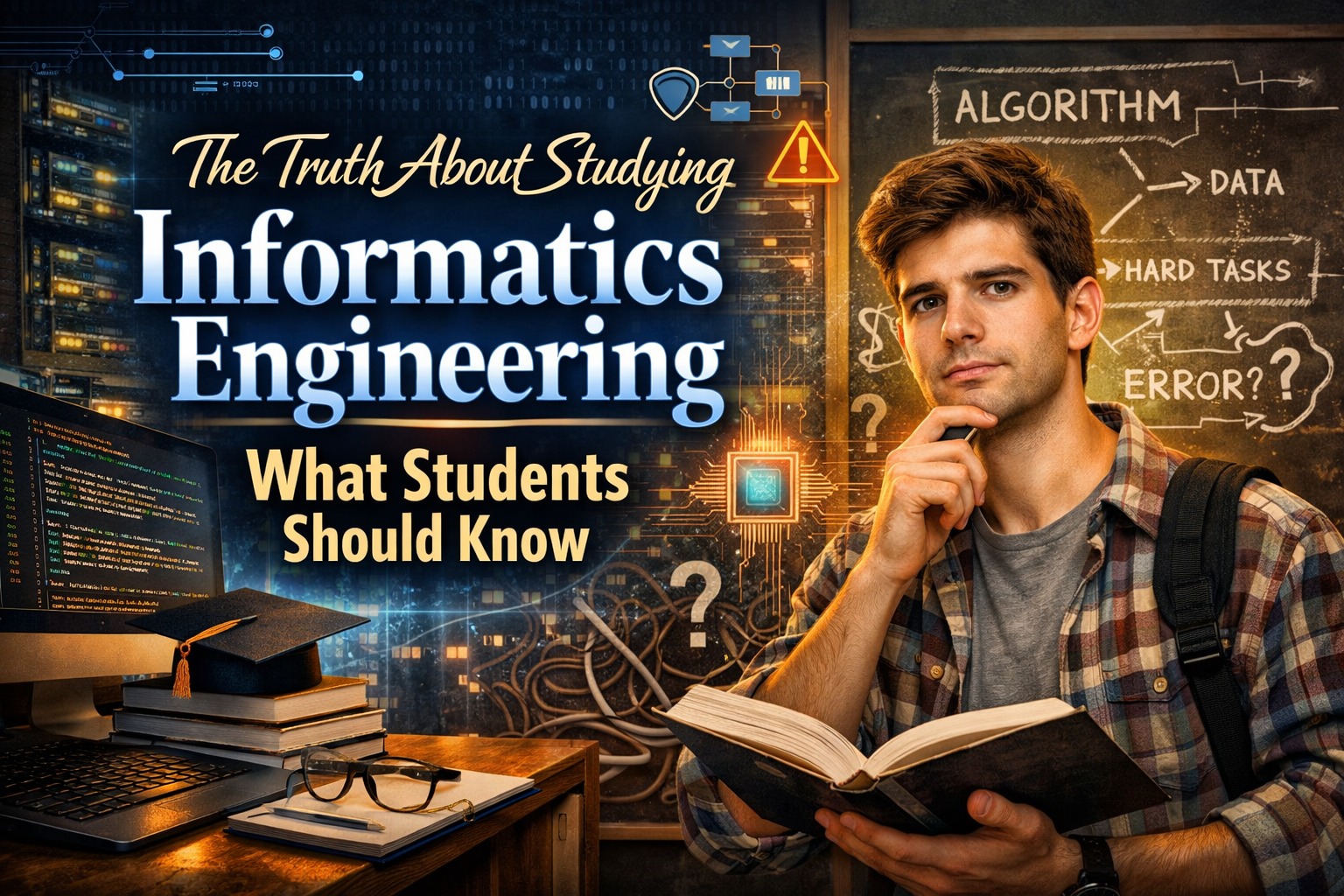
Informatics Engineering is one of the most popular study programs in today's digital era. Many students choose this major because of the growing demand for technology professionals and the attractive career opportunities available worldwide. However, there are still many misconceptions about what it truly means to study Informatics Engineering. Some people think it is only about coding, while others believe it is an easy path to a high-paying job.
The reality is that Informatics Engineering requires dedication, problem-solving skills, and continuous learning. Students who understand the challenges and opportunities of this field are more likely to succeed academically and professionally. Before choosing this major, it is important to know what studying Informatics Engineering is really like.
WHAT IS INFORMATICS ENGINEERING?
Informatics Engineering is a field of study that focuses on computer systems, software development, data processing, algorithms, and information technology. Students learn how computers work, how software is designed, and how technology can solve real-world problems. This major combines both theoretical knowledge and practical skills.
In addition to programming, students also study topics such as database management, computer networks, artificial intelligence, and cybersecurity. The goal is to prepare graduates who can create innovative technological solutions and adapt to rapidly changing digital environments.
CODING IS IMPORTANT, BUT IT IS NOT EVERYTHING
One of the biggest myths about Informatics Engineering is that students spend all their time writing code. While programming skills are essential, coding is only one part of the learning process. Students must also understand logic, system design, software architecture, and project management.
Many assignments require analyzing problems before creating solutions. This means students need strong critical thinking abilities and creativity. Successful Informatics Engineering students are not only good programmers but also effective problem solvers.
MATHEMATICS AND LOGICAL THINKING PLAY A MAJOR ROLE
Students who enter Informatics Engineering should be prepared to work with mathematics and logical concepts. Subjects such as discrete mathematics, statistics, and algorithms are often part of the curriculum. These courses help students develop analytical thinking and structured problem-solving skills.
However, being a math genius is not a requirement. What matters more is the willingness to learn and practice regularly. Over time, students become more comfortable with complex concepts and improve their ability to solve technical challenges.
CONTINUOUS LEARNING IS THE KEY TO SUCCESS
Technology evolves rapidly, and professionals in this field must keep updating their knowledge. What is considered modern today may become outdated within a few years. Therefore, continuous learning is one of the most important habits for Informatics Engineering students.
Students often learn new programming languages, frameworks, and technologies beyond classroom materials. Reading documentation, joining online courses, and participating in technology communities can greatly enhance their skills. Those who embrace lifelong learning often have better career prospects.
CAREER OPPORTUNITIES ARE DIVERSE AND PROMISING
One of the biggest advantages of studying Informatics Engineering is the wide range of career options available after graduation. Graduates can work as software developers, data analysts, system analysts, network engineers, cybersecurity specialists, or IT consultants.
The rise of digital transformation has increased demand for technology professionals across various industries. Companies, government institutions, healthcare organizations, and startups all require skilled IT experts. This creates strong employment opportunities and competitive salaries for qualified graduates.
CHALLENGES THAT STUDENTS SHOULD EXPECT
Although the field offers many opportunities, Informatics Engineering is not always easy. Students often face challenging assignments, tight project deadlines, and complex technical problems. Time management and persistence are essential for overcoming these obstacles.
Group projects are also common, requiring teamwork and communication skills. Students who stay disciplined and maintain a positive mindset are better prepared to handle academic pressure. Challenges should be viewed as learning experiences that help build professional competence.
HOW TO SUCCEED IN INFORMATICS ENGINEERING
Success in Informatics Engineering requires more than academic performance. Students should actively practice coding, build personal projects, and develop a strong portfolio. Practical experience often becomes a valuable asset when applying for internships or jobs.
Networking with lecturers, classmates, and industry professionals can also open new opportunities. By combining technical expertise, communication skills, and continuous learning, students can maximize their potential and achieve long-term success in the technology industry.
CONCLUSION
The truth about studying Informatics Engineering is that it involves much more than learning how to code. Students must develop programming skills, logical thinking, problem-solving abilities, and a commitment to continuous improvement. While the journey can be challenging, the rewards are significant, including diverse career opportunities and strong industry demand.
For students interested in technology and innovation, Informatics Engineering can be an excellent choice. Understanding the realities of this field before starting the journey will help students prepare better and build a successful future in the digital world.
Tentang Penulis
Gusti Ayu Tita P
Penulis — Universitas STEKOM
Penulis aktif yang berfokus pada isu-isu akademik, teknologi pendidikan, dan pengembangan sumber daya manusia di lingkungan kampus.