Tips For Building Effective Leadership As A MayorTips For Building Effective Leadership As A Mayor
Gusti Ayu Tita P
12 Agustus 2026
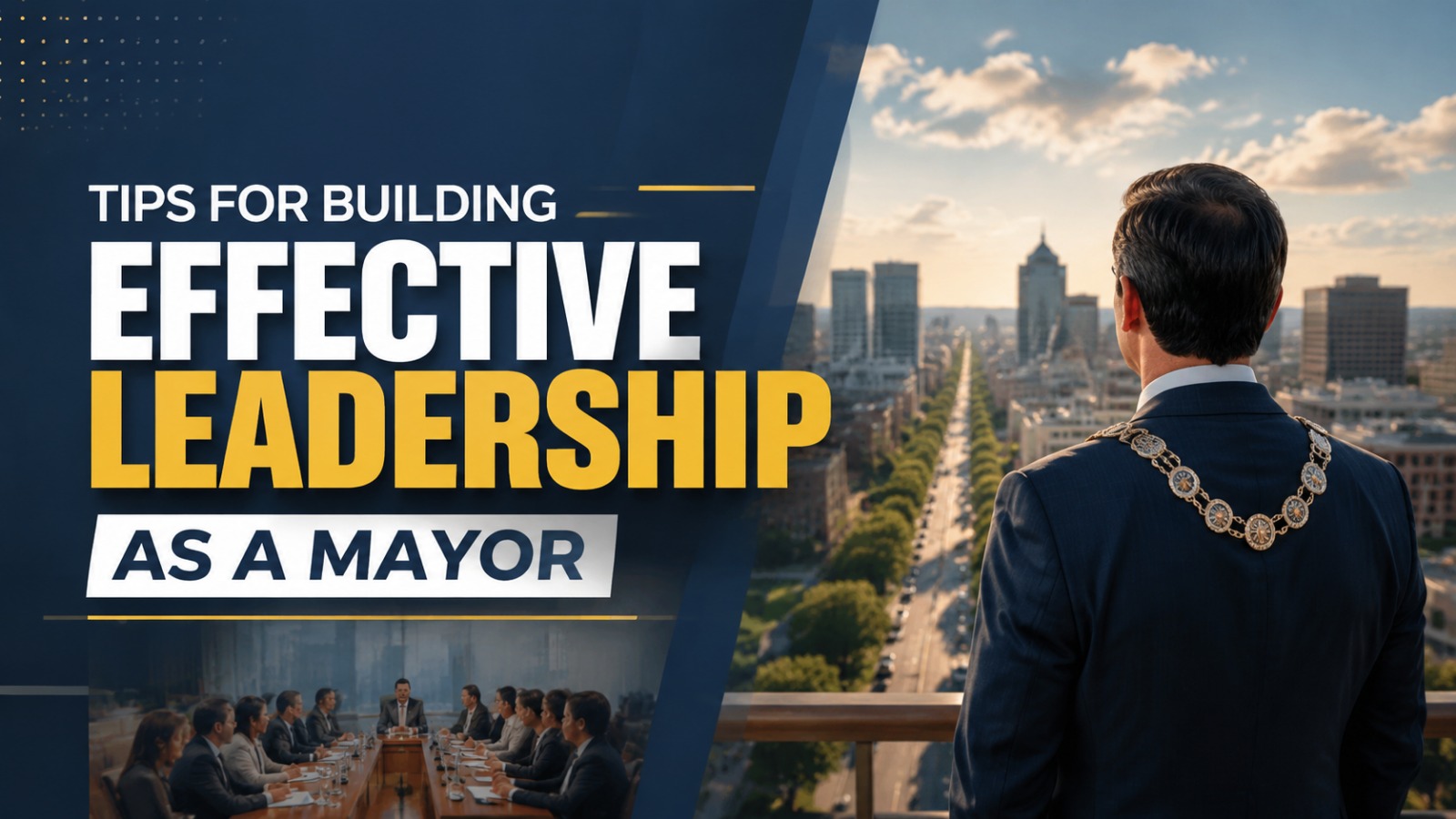
Being a mayor requires more than holding a government position. A mayor must be able to lead people, understand community needs, make responsible decisions, and coordinate different government institutions. Effective Leadership is essential because city development often involves complex social, economic, and administrative challenges.
A good mayor should combine leadership skills with integrity, communication, accountability, and strategic thinking. Strong leadership can help government programs run more consistently and encourage public participation. For this reason, developing the right leadership approach is important for anyone who wants to become a successful local government leader.
UNDERSTAND COMMUNITY NEEDS
The first step toward effective leadership is understanding what residents actually need. A mayor should regularly listen to communities through public meetings, consultations, surveys, and appropriate communication channels. Community Needs can differ between neighborhoods, so policies should not be based only on general assumptions. Direct interaction helps leaders identify problems related to infrastructure, transportation, education, employment, public services, and other local concerns.
Listening is not enough without proper follow-up. A responsible mayor should analyze public feedback and determine which issues require immediate attention and which require long-term planning. This approach helps create policies that are more relevant to residents. It also demonstrates that the government takes public concerns seriously.
DEVELOP CLEAR LEADERSHIP GOALS
A mayor needs clear goals to guide the administration. These goals should be realistic, measurable, and connected to the city's development priorities. Leadership Goals can include improving public services, developing infrastructure, supporting local businesses, increasing environmental sustainability, or strengthening social programs. Clear priorities help government departments understand what they need to achieve.
Goals should also be communicated clearly to government employees and the public. Residents need to understand what the administration wants to accomplish and how progress will be measured. Regular evaluation can show whether programs are working as planned. If conditions change, leaders should be willing to adjust strategies while maintaining the main objectives.
STRENGTHEN COMMUNICATION SKILLS
Communication is one of the most important abilities for a mayor. A leader must explain policies in language that residents can easily understand. Public Communication should be honest, clear, consistent, and supported by reliable information. Good communication can reduce misunderstandings and help residents understand why certain decisions are necessary.
A mayor should also listen carefully instead of only speaking to the public. Open dialogue allows residents and community organizations to provide useful feedback. During difficult situations, timely communication becomes even more important because unclear information can increase uncertainty. Strong communication can therefore strengthen cooperation between local government and the community.
BUILD A STRONG GOVERNMENT TEAM
A mayor cannot manage an entire city alone. Effective local government requires cooperation among departments, civil servants, experts, community representatives, and other stakeholders. A mayor should encourage Team Leadership by establishing clear responsibilities and promoting cooperation between different institutions.
Good leaders also recognize the strengths of their team members. Tasks should be delegated appropriately so that officials can use their expertise effectively. At the same time, important programs need proper supervision and evaluation. A collaborative government team can respond to problems faster and implement policies more efficiently.
PRACTICE INTEGRITY AND ACCOUNTABILITY
Trustworthy leadership depends heavily on integrity. A mayor should make decisions according to laws, ethical standards, and the public interest. Leadership Integrity means avoiding misuse of authority, managing public resources responsibly, and being willing to explain important decisions. Personal interests should not take priority over community needs.
Accountability is equally important. Government programs should have clear objectives, responsibilities, and evaluation processes. When mistakes occur, leaders should acknowledge them and take appropriate corrective action rather than hiding problems. This attitude can strengthen public confidence and encourage a culture of responsible government.
ENCOURAGE INNOVATION AND COLLABORATION
Modern cities face challenges that cannot always be solved through traditional approaches. A mayor should encourage Public Innovation by supporting new ideas, appropriate technology, and more efficient methods of delivering government services. Innovation can improve administrative processes and help governments respond to changing community needs.
Collaboration can make innovation more effective. Mayors can work with universities, businesses, technology organizations, community groups, and other institutions to explore practical solutions. However, new initiatives should still consider accessibility, security, cost, and public benefit. Innovation should be used as a tool to improve people's lives rather than simply as a symbol of modernization.
CONCLUSION
Building effective leadership as a mayor requires a combination of communication, integrity, strategic thinking, teamwork, and community awareness. A strong mayor understands residents, establishes clear goals, communicates openly, and creates a capable government team. These qualities help local government respond to challenges more effectively.
Effective leadership is also a continuous process. Mayors need to evaluate their decisions, learn from experience, listen to feedback, and adapt to changing circumstances. By practicing Effective Leadership consistently, a mayor can strengthen public trust and support sustainable city development.
Tentang Penulis
Gusti Ayu Tita P
Penulis — Universitas STEKOM
Penulis aktif yang berfokus pada isu-isu akademik, teknologi pendidikan, dan pengembangan sumber daya manusia di lingkungan kampus.