Tips For Choosing The Best Departure Time To Avoid Traffic During Homecoming
Gusti Ayu Tita P
10 Agustus 2026
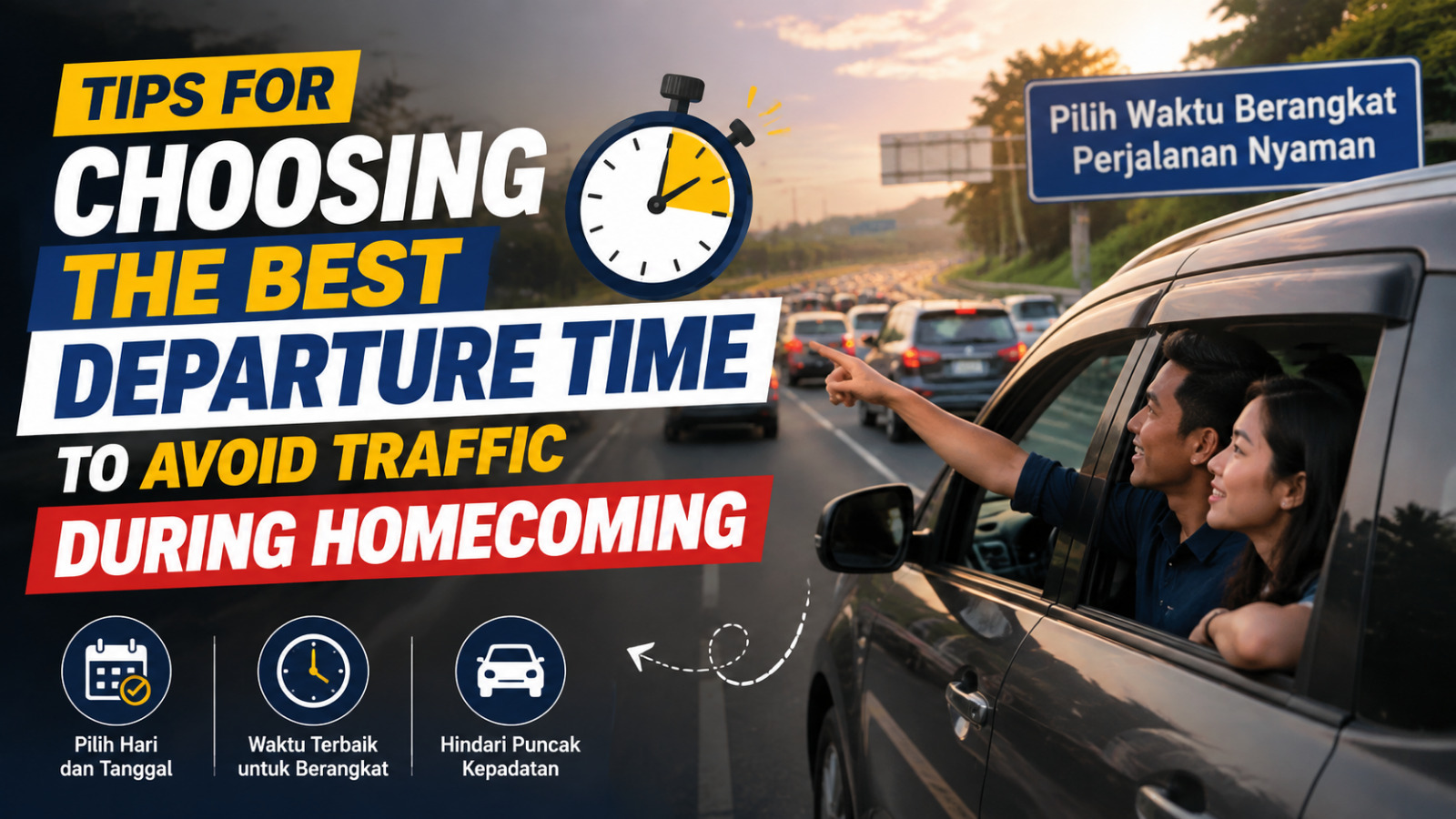
Choosing the right Departure Time is an important part of preparing for homecoming travel. During the holiday season, millions of people may travel within a limited period, causing traffic to become much heavier than normal. Leaving at an unsuitable time can result in long queues, extended travel hours, and greater driver fatigue. A carefully selected departure time can help travelers reduce exposure to the busiest traffic periods. However, avoiding congestion should always be balanced with Travel Safety.
Traffic conditions are not exactly the same every year. They can change because of holiday schedules, road conditions, weather, transportation policies, accidents, and changes in travel behavior. Therefore, travelers should not rely entirely on previous experience. Checking current information before departure is a better approach. A flexible schedule also makes it easier to respond when conditions change unexpectedly.
CHECK TRAFFIC INFORMATION BEFORE DEPARTURE
The first step in choosing a suitable departure time is checking reliable traffic information. Travelers can use navigation applications, transportation authority announcements, road monitoring services, and other trustworthy sources. These sources may provide information about congestion, accidents, road closures, and alternative routes. Checking information shortly before leaving can help travelers understand the current situation. It can also prevent unnecessary delays caused by choosing a heavily congested route.
Travelers should compare traffic information with their destination and planned route. A road may appear clear in one area but become congested closer to a major city or transportation hub. This is why looking at the complete route is more useful than checking only the starting point. Travelers should also prepare an alternative plan when possible. Good Travel Planning provides greater flexibility throughout the journey.
AVOID THE BUSIEST DEPARTURE PERIODS
One practical strategy is to avoid periods when large numbers of travelers are expected to leave simultaneously. Many people choose to travel after work, after school, or immediately before a major holiday. These periods can create concentrated traffic on highways and major roads. Leaving earlier or later may reduce the possibility of encountering the heaviest queues. However, travelers should first consider whether the chosen time is safe and practical.
A less crowded period does not automatically mean that the journey will be safer. For example, traveling very late at night may reduce traffic but can increase fatigue for drivers who are not accustomed to nighttime driving. Drivers should choose a time when they are physically and mentally prepared. If the driver feels sleepy, departure should be delayed rather than forced. Arriving later is always better than creating a dangerous situation on the road.
CONSIDER THE DISTANCE OF THE JOURNEY
The distance between the starting point and destination should influence the choice of departure time. A short journey may not require the same schedule as a trip lasting many hours. Long-distance travelers need to consider traffic, rest periods, meals, fuel stops, and possible delays. A departure time that looks convenient on paper may become difficult when these factors are included.
Travelers should estimate the journey realistically rather than assuming that roads will remain clear. Adding extra travel time can reduce stress when unexpected congestion occurs. Drivers should also identify suitable rest areas along the route. Proper planning is especially important when traveling with children, elderly passengers, or people who need regular breaks.
CONSIDER DRIVER FATIGUE
Driver fatigue is one of the most important factors when choosing a departure time. A driver who has not received enough rest may have slower reactions and reduced concentration. Long-distance driving can make fatigue worse, particularly when traffic conditions are stressful. Therefore, travelers should choose a departure time that allows the driver to begin the journey in a well-rested condition.
Drivers should take regular breaks during long journeys. If sleepiness appears, stopping at a safe location and resting is the appropriate response. Caffeine should not be considered a replacement for proper sleep. Driver Safety should remain more important than reaching the destination at a specific time.
PLAN AHEAD FOR FAMILY TRAVEL
Families need additional considerations when selecting a departure time. Children may become tired, hungry, or uncomfortable during long journeys. Elderly passengers may also need more frequent rest and restroom breaks. Choosing a suitable departure period can make the journey more comfortable for everyone.
Parents should prepare food, drinks, medicine, clothing, entertainment, and other necessary supplies before departure. A flexible schedule allows families to stop when needed without feeling pressured. Family Travel becomes easier when travelers accept that the journey may take longer than expected. Comfort and safety should remain the main priorities.
MONITOR ROAD CONDITIONS DURING THE JOURNEY
Choosing the right departure time does not guarantee that traffic will remain smooth. Road conditions can change because of accidents, construction, weather, vehicle breakdowns, or unexpected increases in traffic. Travelers should continue monitoring reliable updates during the journey. This allows them to respond when the original route becomes congested.
Drivers should never use a phone while driving simply to check traffic information. A passenger can monitor the navigation application, or the driver can stop safely before checking the device. Road Conditions should be monitored without creating an additional safety risk. Technology is useful only when it is used responsibly.
HAVE AN ALTERNATIVE PLAN
A good travel plan should include at least one alternative option. If the primary route becomes severely congested, travelers may need to consider another road or delay their journey. However, alternative routes should not be chosen based only on estimated travel time. Road quality, lighting, traffic volume, weather, and vehicle suitability should also be considered.
Some smaller roads may appear faster on navigation applications but may not be suitable for every vehicle. Travelers should avoid unfamiliar roads that present significant safety concerns. The goal of Traffic Avoidance is not simply to find the shortest route. It is to find a reasonable balance between efficiency, comfort, and safety.
USE PUBLIC TRANSPORTATION WHEN APPROPRIATE
Travelers should also consider public transportation when it is available and suitable for their destination. Trains, buses, and other services can reduce the number of private vehicles using busy roads. They can also remove the need for travelers to drive long distances themselves. However, passengers should check schedules and ticket availability before departure.
Public transportation can be particularly practical for travelers who want to avoid driving during severe congestion. Travelers should compare travel time, cost, comfort, and accessibility before making a decision. Transportation Planning can help families select the most suitable option. Booking earlier may also provide greater flexibility during periods of high demand.
CONCLUSION
Choosing the right Departure Time can make a significant difference during homecoming travel. Travelers should check traffic information, avoid heavily concentrated departure periods when possible, consider journey distance, and prioritize driver rest. They should also monitor changing Road Conditions and prepare alternative options when necessary.
Effective Travel Planning is not about finding a perfect departure time that guarantees an empty road. It is about preparing for different possibilities and making responsible decisions throughout the journey. By combining traffic awareness, flexible scheduling, vehicle preparation, and Traffic Avoidance strategies, travelers can enjoy a safer, more comfortable, and better-organized homecoming journey.
Tentang Penulis
Gusti Ayu Tita P
Penulis — Universitas STEKOM
Penulis aktif yang berfokus pada isu-isu akademik, teknologi pendidikan, dan pengembangan sumber daya manusia di lingkungan kampus.