Tips for Choosing the Best Transportation to the Airport
Gusti Ayu Tita P
10 Agustus 2026
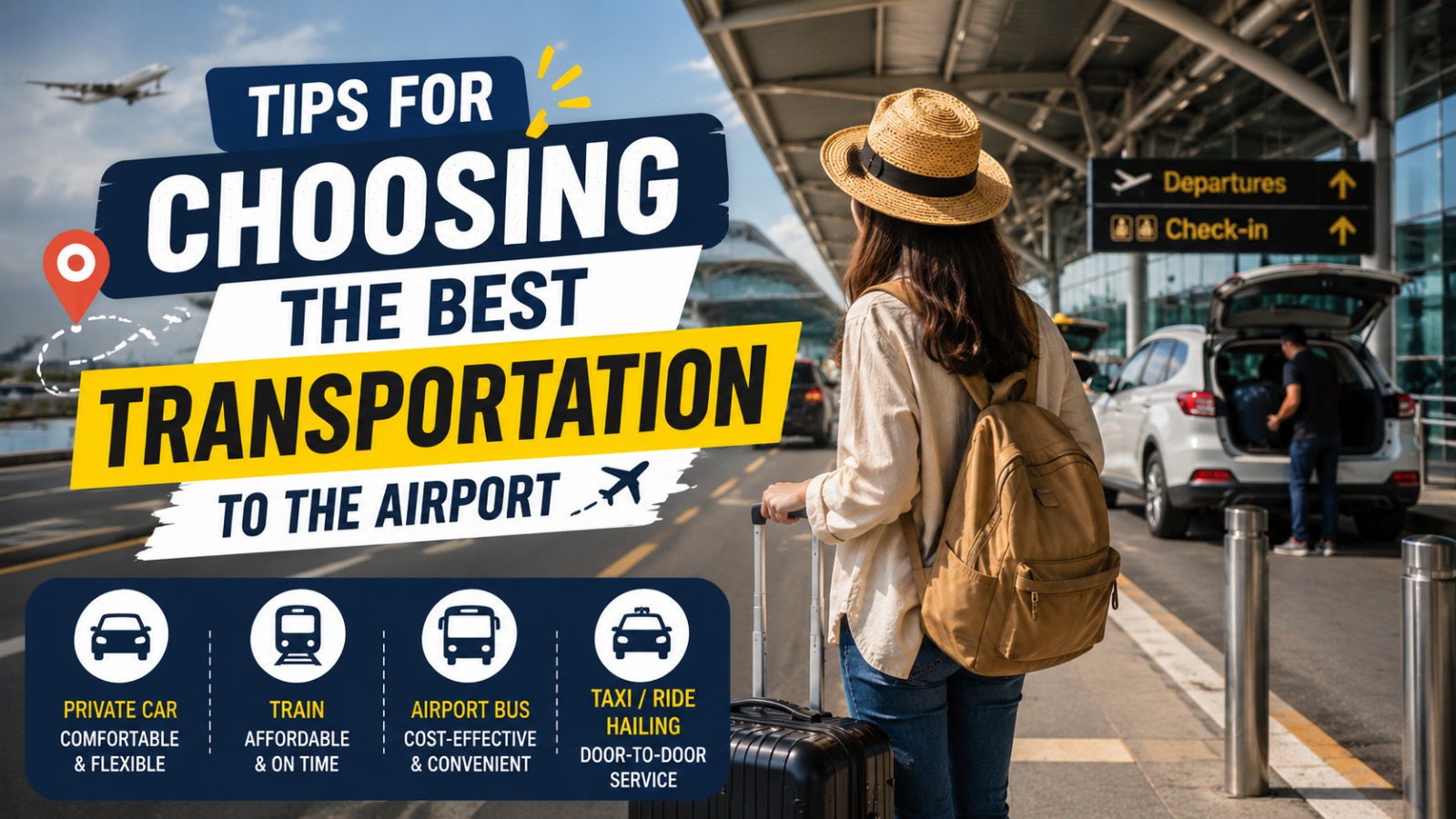
Choosing the right transportation to the airport is an important part of preparing for a flight. The wrong choice can lead to traffic delays, unnecessary expenses, or difficulty carrying luggage. The best transportation depends on your budget, departure time, distance, luggage, and personal comfort. Travelers can choose from public transportation, taxis, ride-hailing services, private cars, airport buses, or trains where available. By comparing these options before leaving, you can reach the airport more comfortably and on time.
CONSIDER YOUR FLIGHT DEPARTURE TIME
Your flight departure time should be one of the first factors to consider when choosing transportation. Early morning or late night flights may have fewer public transportation options available. If your flight leaves during busy hours, traffic can also make road transportation take longer than usual. Check how much time you need for the journey and add extra time for unexpected delays. A transportation option that works during the day may not be suitable for a very early flight.
You should also consider the time needed after arriving at the airport. Check in, baggage drop, security screening, and walking to the departure gate can all take time. For international flights, additional procedures may require more preparation. Choose transportation that allows you to arrive comfortably before the recommended airport arrival time. Avoid planning your journey around the minimum possible travel time.
CHECK THE DISTANCE AND ROUTE
The distance between your location and the airport can affect both travel time and transportation cost. A short journey may be convenient by taxi or ride hailing service, while a longer journey may be more affordable by train or airport bus. Check the usual route before your departure day. You should also look for possible traffic problems, road construction, or major congestion areas.
Do not rely only on the estimated travel time under normal conditions. Road conditions can change significantly during rush hours, weekends, holidays, or bad weather. If the route is known for heavy traffic, consider leaving earlier or choosing a transportation option with a more predictable travel time. Good route planning can reduce the risk of arriving late at the airport.
COMPARE TRANSPORTATION COSTS
Budget is another important factor when selecting transportation to the airport. Public transportation is often an affordable option, especially for solo travelers or passengers carrying limited luggage. Taxis and ride hailing services may cost more but can provide direct transportation from your location to the terminal. Private cars may seem inexpensive, but you should also consider fuel, tolls, and parking fees. Compare the total cost instead of looking only at the initial fare.
Traveling with several people can change which option provides the best value. A private vehicle or taxi may become more economical when the cost is divided among passengers. However, make sure the vehicle has enough space for everyone and their luggage. The cheapest option is not always the most practical if it requires several transfers or takes significantly longer. Consider cost together with reliability and convenience.
CONSIDER THE AMOUNT OF LUGGAGE
The amount of luggage you carry can strongly influence your transportation choice. Public transportation may be convenient with a small backpack or suitcase, but several large bags can make transfers difficult. A taxi, private car, or direct airport shuttle may be more comfortable for passengers with multiple suitcases. Check the vehicle's luggage capacity before booking. You should also consider how far you need to walk between transportation stops and the terminal.
Keep important documents, valuables, and essential items in your cabin baggage rather than placing them in checked luggage. Organize your bags so they are easy to carry and identify. If you use public transportation, check whether the service provides dedicated luggage space. Choosing transportation based on your luggage can make the journey much easier and less stressful.
COMPARE PUBLIC AND PRIVATE TRANSPORTATION
Public transportation can be a good choice for travelers who want to reduce costs. Airport trains, buses, and other scheduled services may offer predictable routes and avoid some road traffic. However, you need to check operating hours, schedules, stops, and possible transfers. Some services may not operate at all hours, especially during the night. Make sure the schedule matches your flight plans.
Private transportation provides more flexibility because you can leave according to your own schedule. A private car can also be convenient for families, groups, or travelers with heavy luggage. However, drivers must consider traffic, parking, fuel, and toll costs. If you leave your vehicle at the airport for several days, parking charges can become significant. Compare the total convenience and cost before making your decision.
CONSIDER TAXIS AND RIDE HAILING SERVICES
Taxis and ride hailing services are convenient because they can usually pick you up directly from your location. They are especially useful when public transportation is unavailable or when you have several bags. Before booking, confirm that the destination is the correct airport terminal. Check the estimated travel time and current traffic conditions when possible. It is also wise to book early enough to allow for possible driver delays.
If your flight is during a busy period, consider scheduling your ride in advance when the service allows it. Make sure the selected vehicle has enough passenger and luggage capacity. Do not choose a service based only on the lowest price. Reliability, pickup time, vehicle capacity, and travel duration are also important when you have a flight to catch.
CHECK TRAFFIC AND WEATHER CONDITIONS
Traffic conditions can change the amount of time needed to reach the airport. Roads that are normally clear may become heavily congested during rush hour or holiday periods. Rain, storms, or other weather conditions can also slow down road transportation. Check traffic and weather conditions before leaving your location. If delays are likely, leave earlier than planned.
It is better to have extra time than to depend on a perfect travel situation. Add a reasonable time buffer for traffic, transportation delays, parking, and walking to the terminal. If your flight is particularly important, choose an option with a more predictable journey whenever possible. Careful planning can make transportation problems easier to manage.
PREPARE A BACKUP TRANSPORTATION PLAN
Even a well-planned transportation option can experience unexpected problems. Your driver may cancel, public transportation may be delayed, or a road may become unexpectedly congested. Having a backup plan can help you respond quickly instead of searching for another option at the last minute. Keep alternative transportation options available on your phone. Save important information such as transportation schedules and pickup locations before leaving.
A backup plan is especially useful for early morning, late night, or important international flights. If your first transportation option becomes unavailable, switch to the alternative before too much time is lost. Continue monitoring your estimated arrival time at the airport. Good preparation gives you more flexibility when unexpected problems occur.
CONCLUSION
Choosing the best transportation to the airport requires more than simply finding the cheapest option. Consider your flight departure time, distance, traffic conditions, budget, luggage, comfort, and transportation reliability. Public transportation can be affordable, while taxis, ride hailing services, and private cars can provide greater flexibility. Always allow extra time for unexpected delays and prepare a backup option when possible. With careful planning, you can reach the airport comfortably, reduce travel stress, and have enough time to complete all pre flight procedures.
Tentang Penulis
Gusti Ayu Tita P
Penulis — Universitas STEKOM
Penulis aktif yang berfokus pada isu-isu akademik, teknologi pendidikan, dan pengembangan sumber daya manusia di lingkungan kampus.