
Tips For Creating Attractive YouTube Shorts Titles That Are Easy To Discover
Gusti Ayu Tita P
28 Agustus 2026
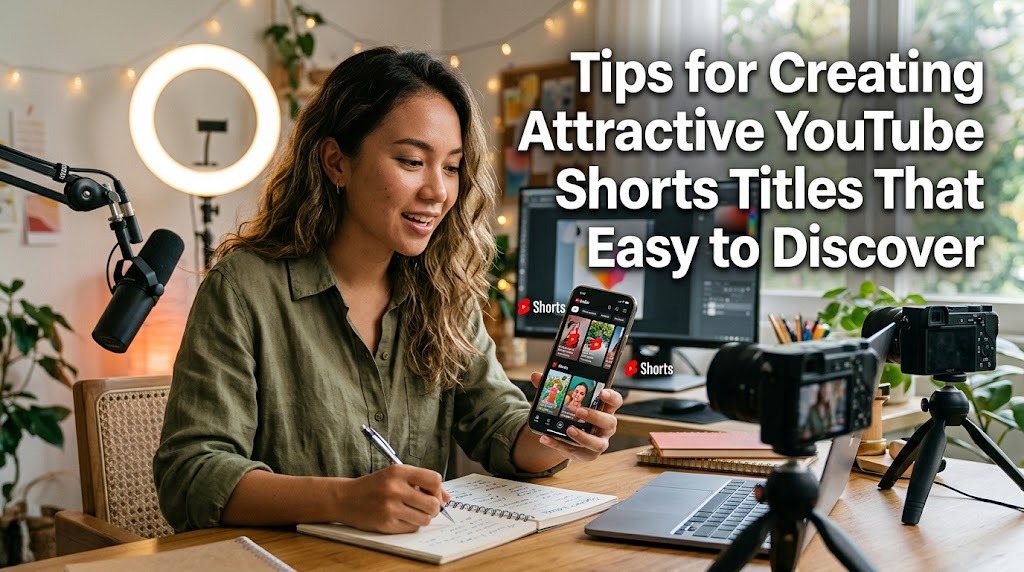
A title is one of the first elements viewers notice when they encounter a YouTube Shorts video. A good title should quickly communicate what the video is about and give viewers a reason to become interested. Avoid titles that are too vague because viewers may not understand the value of the content. Instead, use simple words that accurately describe the main topic.
An effective title should also match the actual content of the video. Honest and relevant titles can help create trust between creators and viewers. If the title promises something that the video does not provide, viewers may lose interest in the creator. Therefore, attracting attention should always be balanced with accuracy.
USE RELEVANT KEYWORDS NATURALLY
Keywords can help communicate the topic of a Short more clearly. Choose words that are directly related to the subject and reflect what your potential audience might search for or care about. For example, a Short about studying can naturally use terms related to study tips, learning, or student productivity. Avoid adding unrelated keywords simply because they appear popular.
Keyword placement should feel natural rather than forced. A clear title is generally more useful than one filled with repeated phrases. Use the main keyword where it makes sense while keeping the title easy to read. This approach creates a practical keyword strategy without making the title look artificial.
CREATE CURIOSITY WITHOUT MISLEADING VIEWERS
Curiosity can encourage people to pay attention to your video. You can create curiosity by asking a question, highlighting a problem, presenting an unexpected idea, or suggesting a useful benefit. For example, a title can introduce a common mistake and encourage viewers to discover the solution. The goal is to make people interested while still accurately representing the video.
Avoid excessive clickbait because it can create the wrong expectations. If viewers feel disappointed after opening a video, they may be less likely to engage with future content. Curiosity should be supported by genuine value rather than exaggerated promises. An attractive but honest title can support stronger long-term audience relationships.
KEEP TITLES CLEAR AND CONCISE
Short-form content works best when the message is easy to understand. A title that contains too many words may become difficult to read, especially when viewers are quickly browsing through content. Focus on the most important information and remove unnecessary words. Simple wording can make your topic easier to recognize immediately.
You can use strong and specific words that communicate a clear benefit. For example, instead of using a generic phrase such as "Some Things You Should Know About Studying," a more direct title could focus on a specific study technique. Clarity is more important than complexity when creating titles for short-form videos.
MATCH THE TITLE WITH YOUR TARGET AUDIENCE
Different audiences respond to different language, topics, and communication styles. A title aimed at students may use familiar terms related to assignments, exams, or study habits. Meanwhile, a business audience may respond better to titles focused on marketing, sales, or productivity. Understanding your target audience helps you create titles that feel relevant.
Think about the reason your audience would want to watch the video. Does the content solve a problem, answer a question, teach something, or provide entertainment? Highlighting the most relevant benefit can increase audience attention. The title should make it immediately clear why the video may be worth watching.
TEST DIFFERENT TITLE APPROACHES
There is no single title formula that works equally well for every creator or niche. Experiment with different approaches, such as questions, how-to formats, tips, mistakes, comparisons, or benefit-focused titles. Keep track of which approaches receive stronger responses over time. This can help you develop a more effective content optimization process.
When testing titles, consider the topic and the quality of the actual video as well. A strong title cannot compensate for content that does not satisfy viewer expectations. Use performance data as a learning tool rather than judging your channel based on one video. Continuous testing and improvement can help you discover title patterns that work best for your audience.
CONCLUSION
Creating attractive and discoverable YouTube Shorts titles requires clarity, relevance, and an understanding of your audience. Use appropriate keywords naturally, create curiosity without misleading viewers, and keep titles concise. Matching the title with audience needs can make your content more appealing to the right people. Finally, test different approaches and learn from your content performance. With a consistent keyword strategy and thoughtful optimization, your Shorts can have better opportunities to reach interested viewers.
Tentang Penulis
Gusti Ayu Tita P
Penulis — Universitas STEKOM
Penulis aktif yang berfokus pada isu-isu akademik, teknologi pendidikan, dan pengembangan sumber daya manusia di lingkungan kampus.















