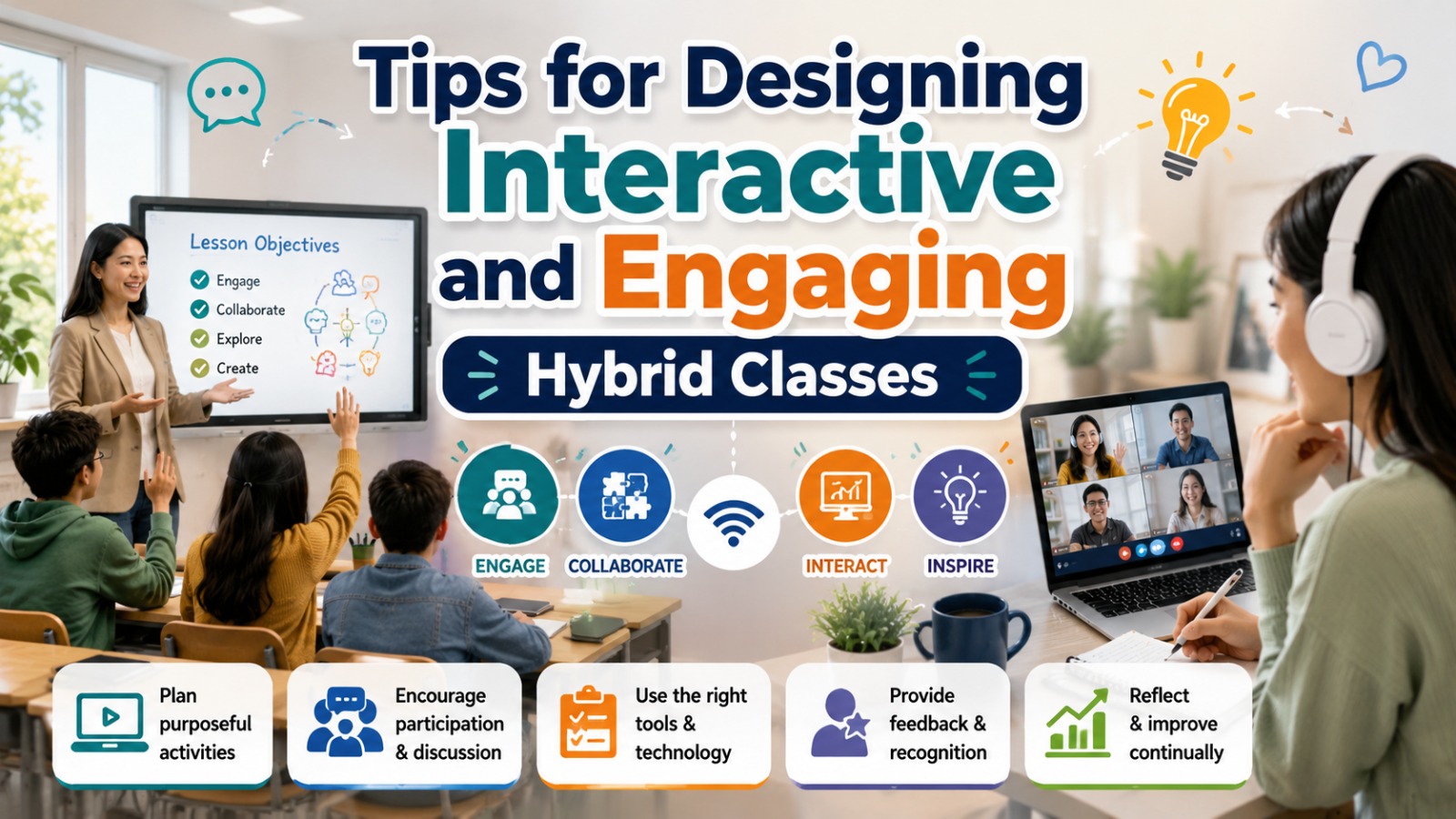
Hybrid learning has transformed the modern classroom. By combining in-person teaching with online participation, educators can create more flexible learning environments. However, flexibility alone does not guarantee student engagement. Without thoughtful planning, hybrid classes can easily become passive and disconnected.
Designing interactive and engaging hybrid classes requires more than simply mixing face-to-face and digital instruction. Teachers need strategies that encourage participation, collaboration, and active learning for all students, regardless of where they join the class.
UNDERSTAND THE NEEDS OF BOTH LEARNING GROUPS
One of the biggest challenges in hybrid education is balancing the experience of in-person and remote learners. Students in the classroom often have easier access to the teacher, while online participants may feel less involved.
To create an effective hybrid environment, lessons should be designed with both groups in mind. Every activity, explanation, and discussion should be accessible to all students equally. When both groups feel included, engagement naturally increases.
START WITH CLEAR LEARNING OBJECTIVES
Interactive classes begin with clear goals. Before preparing materials or activities, define what students should understand, practice, or achieve by the end of the lesson.
Clear objectives help teachers choose the most effective interactive methods. Whether the lesson includes discussions, quizzes, collaborative tasks, or presentations, every activity should support the learning target.
USE DIGITAL TOOLS THAT ENCOURAGE PARTICIPATION
Technology plays a major role in making hybrid classes more dynamic. Interactive platforms can help students participate in real time, even when they are not physically present.
Live polls, quizzes, shared documents, discussion boards, and virtual whiteboards can keep students actively involved. These tools also provide immediate feedback, helping teachers understand whether students are following the lesson.
The goal is not to use more technology, but to use the right tools that support meaningful interaction.
CREATE REGULAR OPPORTUNITIES FOR DISCUSSION
Student engagement grows when learners are invited to think, speak, and respond. Instead of long lectures, divide lessons into shorter segments with regular discussion breaks.
Ask open-ended questions that encourage critical thinking. Invite both online and in-person students to share opinions, solve problems, or reflect on what they have learned.
Even brief conversations can make hybrid classes feel more connected and collaborative.
DESIGN COLLABORATIVE ACTIVITIES
Collaboration is one of the strongest ways to build engagement. Hybrid classrooms should include activities where students work together rather than simply listen.
Group projects, case studies, brainstorming sessions, and peer review exercises can all work well in hybrid settings. The important part is making sure remote learners can contribute as easily as students in the physical classroom.
When students work together, they often become more motivated and involved in the learning process.
KEEP LESSONS VARIED AND VISUALLY ENGAGING
Monotony quickly reduces attention. Hybrid lessons should include a variety of teaching methods such as short presentations, videos, interactive tasks, group discussions, and practical examples.
Visual elements also matter. Clear slides, simple graphics, and organized materials make content easier to follow. When lessons feel fresh and structured, students are more likely to stay focused.
CHECK ENGAGEMENT FREQUENTLY
In hybrid classes, it can be harder to notice when students lose focus, especially online. Teachers should check participation regularly throughout the lesson.
Simple methods such as quick polls, chat responses, short reflections, or asking students to summarize a concept can reveal whether learners are staying engaged.
Frequent interaction also helps prevent passive attendance.
BUILD A STRONG CLASSROOM CONNECTION
Engagement is not only about activities. It also depends on the classroom atmosphere. Students participate more when they feel seen, respected, and encouraged.
Greeting students by name, acknowledging contributions, and creating a supportive learning environment can make a major difference. In hybrid classes, these small actions help bridge the gap between physical and virtual spaces.
CONCLUSION
Designing interactive and engaging hybrid classes requires intentional planning, flexibility, and student-centered thinking. Successful hybrid teaching goes beyond delivering content. It focuses on creating meaningful participation for every learner.
By setting clear goals, using interactive tools, encouraging discussion, and building collaboration, teachers can turn hybrid classrooms into dynamic learning spaces that support deeper understanding and stronger student engagement.
Tentang Penulis
Gusti Ayu Tita P
Penulis — Universitas STEKOM
Penulis aktif yang berfokus pada isu-isu akademik, teknologi pendidikan, dan pengembangan sumber daya manusia di lingkungan kampus.