Tips for Handling Airport Baggage to Avoid Loss or Mix Ups
Gusti Ayu Tita P
10 Agustus 2026
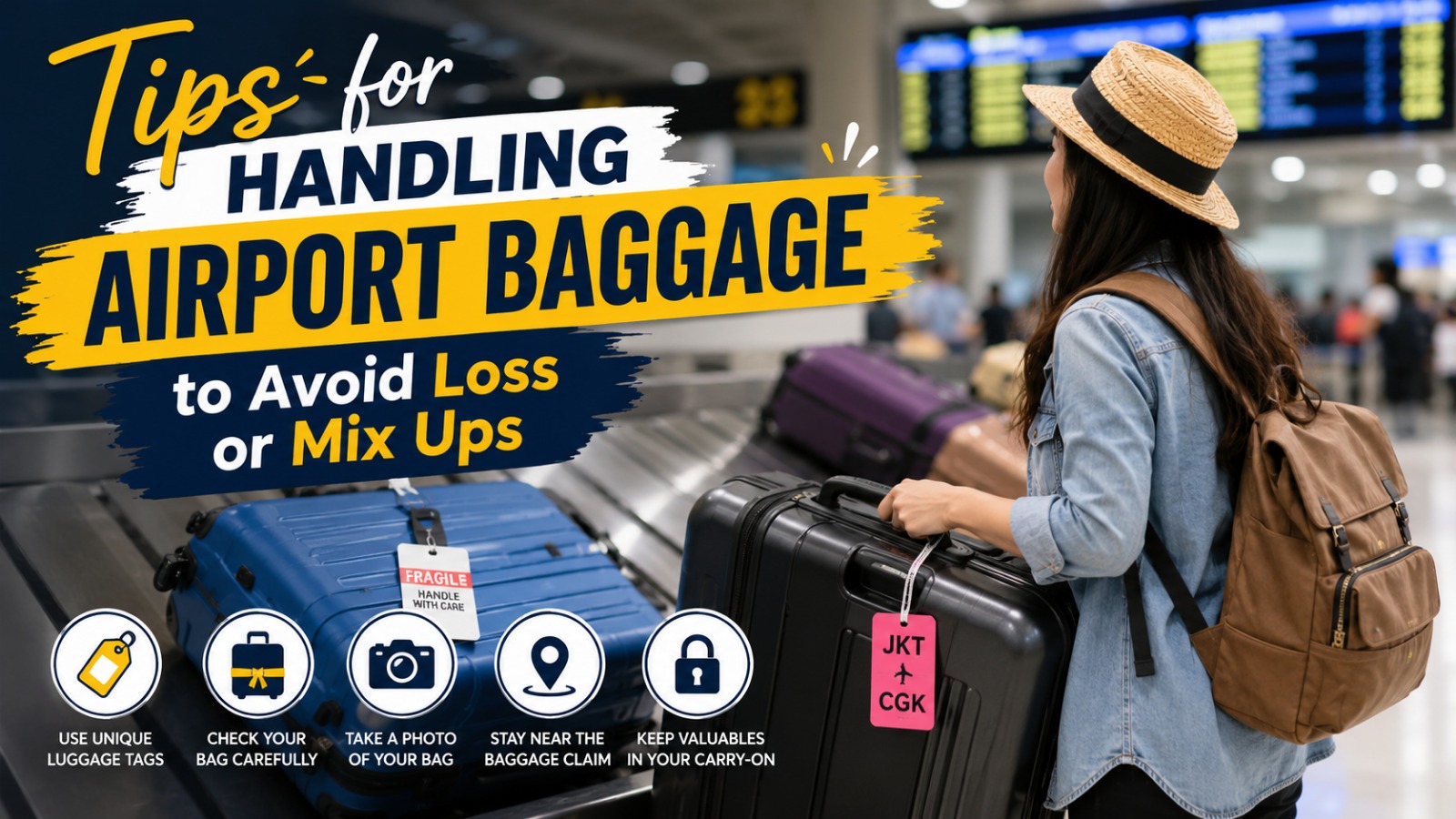
Airport baggage problems can make a trip stressful, especially when luggage is lost, delayed, or accidentally taken by another passenger. Although airlines and airports have baggage handling systems, passengers also play an important role in keeping their belongings safe. Simple steps such as using clear identification, checking baggage tags, and taking photos can reduce the risk of problems. With proper preparation, travelers can make the baggage process more organized and secure.
USE A CLEAR AND UNIQUE BAGGAGE TAG
A clear baggage tag makes it easier to identify your luggage at the airport. Write your name and contact information on the tag, and make sure the details are easy to read. Adding a phone number or email address can help the airline contact you if your baggage is delayed or misplaced. Avoid including unnecessary personal information that could compromise your privacy.
It is also useful to place identification information inside the suitcase. An internal tag can help identify the owner if the external tag becomes damaged or detached. Choose a durable luggage tag that is securely attached to the handle. Before leaving home, check that all contact information is still correct.
MAKE YOUR BAGGAGE EASY TO RECOGNIZE
Many suitcases have similar colors, shapes, and designs, which can increase the risk of baggage mix ups. Choose luggage with a distinctive feature such as a colorful strap, unique cover, or noticeable tag. These simple additions make your suitcase easier to recognize on the baggage carousel. Avoid relying only on the brand or general appearance of the suitcase.
You can also take a clear photo of your luggage before checking it in. A photo showing the suitcase and its identifying features can be useful if you need to report delayed or missing baggage. Remember the color, size, brand, and any distinctive marks on your luggage. These details can help airline staff locate the correct bag more efficiently.
CHECK THE BAGGAGE TAG AFTER CHECK IN
After checking in your luggage, make sure the baggage receipt and tag information are correct. The baggage tag should correspond to your destination and flight details. Keep the baggage receipt until you have collected your suitcase at the destination. This document can be important when reporting delayed or missing baggage.
Do not throw away the baggage receipt immediately after boarding. Store it somewhere safe, such as your wallet or travel document holder. If a problem occurs, airline staff may ask for the baggage tag number to track the luggage. Keeping this information accessible can make the reporting process easier.
REMOVE OLD BAGGAGE TAGS
Old baggage tags can create confusion during the baggage handling process. Before checking in your suitcase, remove previous destination tags and outdated stickers from earlier trips. Make sure only the current flight information is clearly visible. This is especially important for travelers who frequently reuse the same luggage.
Old tags can also make it harder to identify the correct destination information. Check the suitcase carefully before leaving for the airport. Removing unnecessary labels takes only a few seconds but can reduce possible confusion. A clean suitcase exterior also makes the current baggage tag easier to see.
KEEP IMPORTANT ITEMS IN CARRY ON BAGGAGE
Important and valuable belongings should generally be kept in carry-on baggage rather than checked luggage. Items such as passports, travel documents, medication, money, electronic devices, and essential personal items should remain accessible during the journey. Keeping these belongings with you reduces the impact if checked baggage is delayed. Always follow the airline and airport rules for items carried into the cabin.
It is also wise to keep a basic set of essential clothing and personal items in your carry-on when possible. This can be useful if your checked baggage does not arrive immediately. Avoid putting irreplaceable items in checked luggage. Properly separating essential belongings between carry-on and checked baggage can provide extra protection against unexpected delays.
CHECK YOUR BAGGAGE BEFORE LEAVING THE CAROUSEL
When your luggage arrives at the baggage carousel, check its identifying details before taking it away. Do not rely only on the suitcase's appearance because another passenger may have a similar bag. Compare the baggage tag with your baggage receipt or other identification information. This simple habit can help prevent accidental baggage exchanges.
After collecting your suitcase, inspect it for visible damage or missing items. If something appears wrong, report the issue to the airline as soon as possible. Avoid leaving the baggage claim area before addressing a serious problem if airline procedures require you to report it there. Prompt reporting can make it easier for staff to document and investigate the issue.
DO NOT TAKE ANOTHER PASSENGER'S BAG BY MISTAKE
Accidentally taking another passenger's suitcase is one of the most common causes of baggage mix ups. Before picking up a bag, carefully compare its tag with your own information. If the suitcase looks identical to yours, check the baggage tag rather than relying on its appearance. A unique luggage strap or cover can make this process much easier.
If you accidentally take the wrong suitcase, contact the airline or airport baggage service immediately. Do not open or use the other passenger's belongings. Returning the suitcase quickly can help both passengers recover their luggage sooner. Keeping your own baggage details available will also make the exchange easier to resolve.
KEEP A RECORD OF YOUR BELONGINGS
Taking a photo of the contents of your luggage can be helpful if the bag is lost or damaged. You do not need to photograph every item individually, but important belongings can be documented for reference. A simple packing list can also help you remember what was inside the suitcase. Store the information securely on your phone or another trusted location.
For valuable items, keep receipts or other proof of ownership when appropriate. These documents may be useful if you need to make a baggage claim. However, valuable and irreplaceable belongings are generally better kept in carry-on baggage. Good documentation can make the recovery or claim process more organized.
REPORT LOST OR DELAYED BAGGAGE QUICKLY
If your baggage does not arrive, contact the airline's baggage service as soon as possible. Provide your baggage tag number, flight information, description of the suitcase, and your contact details. Explain clearly whether the luggage is missing, damaged, or appears to have been taken by another passenger. The airline can then begin the appropriate tracing or reporting process.
Keep any reference number or documentation provided by the airline. You may need this information for follow-up communication about the baggage. If your luggage is delivered later, check it carefully when it arrives. Prompt and accurate reporting gives the airline the information it needs to handle the problem.
CONCLUSION
Handling airport baggage carefully can significantly reduce the risk of loss, delays, and mix ups. Use a clear and unique baggage tag, remove old labels, keep important belongings in your carry-on, and always check the baggage tag before leaving the carousel. Taking photos and keeping baggage receipts can also make the recovery process easier if something goes wrong. Most importantly, report missing or damaged baggage to the airline as soon as possible. With these simple habits, travelers can enjoy a safer and more organized airport experience.
Tentang Penulis
Gusti Ayu Tita P
Penulis — Universitas STEKOM
Penulis aktif yang berfokus pada isu-isu akademik, teknologi pendidikan, dan pengembangan sumber daya manusia di lingkungan kampus.