Tips For Keeping Family Card Information Safe In The Digital Era
Gusti Ayu Tita P
2 September 2026
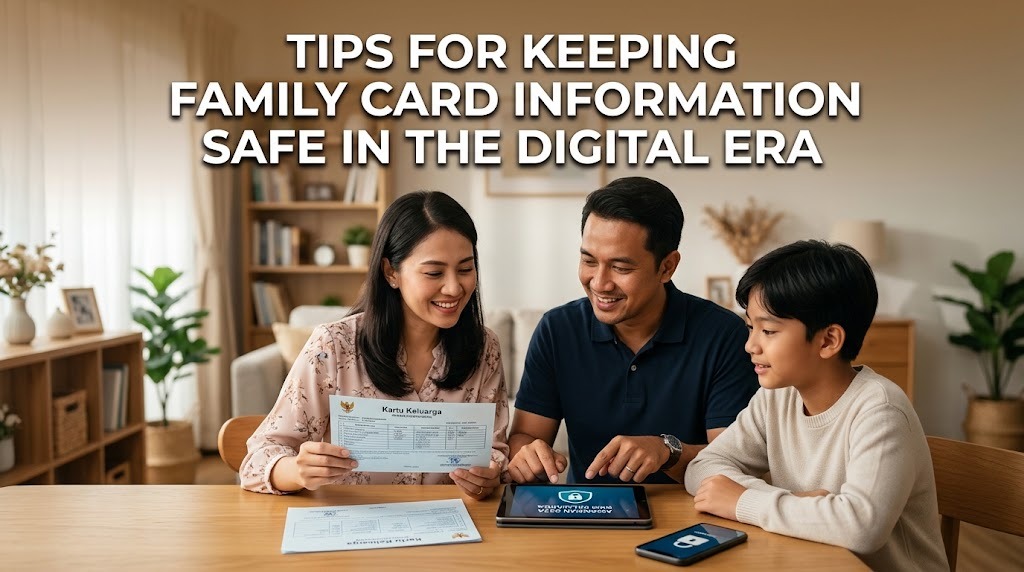
A Family Card contains important personal information about everyone registered in a household. Details such as names, NIK, addresses, dates of birth, and family relationships can be used for various administrative purposes. In the digital era, protecting this information is increasingly important because documents can be shared and stored electronically.
Digital technology makes administrative services more convenient, but it also creates risks when personal documents are handled carelessly. A Family Card should only be shared when there is a clear and legitimate administrative purpose. Good data protection habits can help families reduce the risk of information being misused.
LIMIT FAMILY CARD SHARING
Do not share a Family Card with people or organizations without a clear reason. Before sending a copy, find out why the document is needed, who will receive it, and how it will be used. Only provide the document when it is genuinely necessary for an administrative process.
Avoid posting Family Card photos or scans on social media, public groups, or open websites. Even when some information seems harmless, the document contains several pieces of personal information that can become sensitive when combined. Being selective about who can access the document is an important first step in protecting family data.
USE OFFICIAL DIGITAL SERVICES
When submitting a Family Card online, use an official government website, application, or verified service channel. Local Dukcapil services may provide different digital platforms, so residents should confirm the correct channel through their local government. This reduces the risk of sending personal information to fraudulent websites.
Be careful with links received through suspicious messages or social media. A website that looks professional does not necessarily mean it is an official service. Always verify the source before entering NIK, Family Card numbers, passwords, or other personal information.
STORE DIGITAL FILES SECURELY
Digital copies of Family Cards should be stored in a secure location. Use a password-protected device or trusted storage service when keeping important population documents. Avoid storing sensitive files in publicly accessible folders or on shared computers.
It is also useful to organize digital documents carefully so they are not accidentally sent to the wrong person. When a file is no longer necessary, consider removing unnecessary copies from devices or accounts. Keeping fewer copies can reduce the number of places where personal information could potentially be exposed.
CHECK BEFORE SENDING DOCUMENTS
Always check the recipient before sending a digital Family Card. A simple mistake, such as choosing the wrong contact or email address, can expose personal information to an unintended person. Take a moment to verify the recipient, purpose, and communication channel before pressing send.
If an institution requests a Family Card, ask whether the complete document is required. If only certain information is needed, follow the institution's legitimate data submission procedure rather than sharing documents unnecessarily. This approach helps minimize unnecessary exposure of family information.
PROTECT ACCOUNTS AND DEVICES
The security of your Family Card also depends on the security of the device or account where it is stored. Use strong passwords, device locks, and updated software whenever possible. Do not share account passwords or verification codes with other people.
Avoid accessing important population documents through unsecured public devices. If you use a shared computer, make sure you log out after completing an administrative activity. Basic digital security practices can provide an additional layer of protection for personal documents.
BE ALERT TO DATA FRAUD
Scammers may attempt to obtain personal information by pretending to represent government institutions or service providers. They may request Family Card numbers, NIK, verification codes, or copies of documents through messages or phone calls. Be cautious when a request feels urgent, unusual, or asks for information that does not appear necessary.
When in doubt, verify the request directly through an official Dukcapil service or the relevant institution. Do not rely solely on contact information provided in a suspicious message. Taking time to verify a request can help prevent personal and family data from falling into the wrong hands.
CONCLUSION
Keeping Family Card information safe is essential in today's digital environment. Families should limit unnecessary sharing, use official digital services, store files securely, and carefully verify recipients before sending population documents.
Strong passwords, secure devices, and awareness of fraudulent requests can provide additional protection. Most importantly, always treat Family Card information as important personal data and contact an official Dukcapil service whenever you are uncertain about a digital administration request.
Tentang Penulis
Gusti Ayu Tita P
Penulis — Universitas STEKOM
Penulis aktif yang berfokus pada isu-isu akademik, teknologi pendidikan, dan pengembangan sumber daya manusia di lingkungan kampus.