Tips for Managing a Waste Bank Effectively and Profitably
Gusti Ayu Tita P
20 Agustus 2026
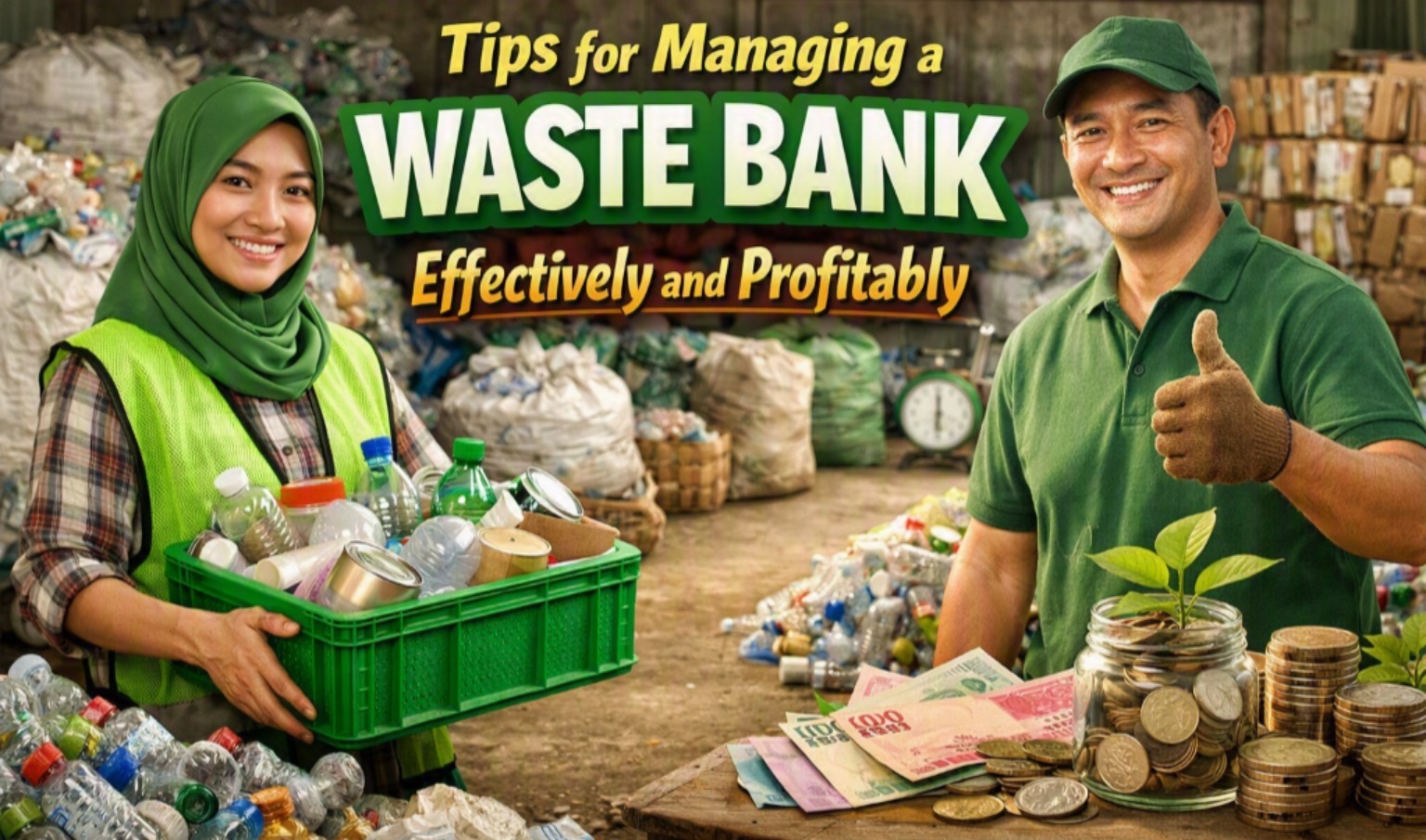
Waste banks are increasingly important in supporting waste reduction, resource recovery, and community participation in environmental protection. A well-managed waste bank does not only collect recyclable materials but can also create economic value for members and managers. However, achieving these benefits requires proper planning, consistent operations, transparent financial management, and active community involvement. Without an organized system, collected waste can become difficult to sort, store, sell, and monitor. Therefore, effective management is essential to make a waste bank both environmentally useful and financially sustainable.
UNDERSTAND THE BASIC WASTE BANK SYSTEM
The first step in managing a waste bank is understanding how the entire waste collection system works. Members usually separate recyclable waste at home and bring it to the waste bank according to an agreed schedule. Managers then weigh, record, sort, store, and sell the collected materials to recycling partners or collectors. Different materials such as plastic, paper, cardboard, metal, and glass generally have different selling values. A clear system makes daily operations easier and helps members understand how their waste can generate economic benefits.
Managers should also establish simple rules that every member can follow. These rules can cover accepted waste types, collection schedules, weighing procedures, prices, and payment or savings mechanisms. Clear procedures reduce misunderstandings and help create trust between members and managers. Training members to clean and separate recyclable materials can also improve the quality and value of collected waste. A consistent system is one of the foundations of a successful waste bank.
CREATE A CLEAR WASTE COLLECTION AND SORTING SYSTEM
An effective waste bank needs an organized process from collection to storage. Waste should be separated based on material type before being stored or sold. Proper sorting can improve material quality and make it easier for buyers to determine the value of each category. Managers should provide suitable containers or designated areas so recyclable materials do not become mixed or contaminated. Good sorting practices can also reduce unnecessary handling and make operations more efficient.
The waste bank should maintain a regular collection schedule that is convenient for members. Managers can use a simple recording system to track the amount of waste received from each member. Accurate records help identify collection trends and make it easier to evaluate operational performance. If the volume of waste increases, the management team should adjust storage capacity, equipment, and transportation accordingly. An organized collection system prevents recyclable materials from accumulating without proper management.
SET FAIR PRICES AND MAINTAIN TRANSPARENT RECORDS
Pricing is an important part of making a waste bank financially sustainable. Managers should regularly check the market value of recyclable materials because prices can change depending on material type, quality, demand, and local market conditions. The waste bank should communicate buying prices clearly to members before transactions take place. A transparent price list can prevent confusion and strengthen confidence in the management system. Prices should also be reviewed periodically so the waste bank can respond to market changes.
Every transaction should be recorded accurately, including the member's name, waste type, weight, price, and total value. Digital spreadsheets or simple accounting applications can help managers maintain financial records more efficiently. Members should be able to understand how much waste they have deposited and how much value they have accumulated. Regular financial reporting can also help managers identify income, operating expenses, and potential losses. Transparency is essential because financial trust can determine the long-term participation of the community.
BUILD STRONG PARTNERSHIPS WITH RECYCLING BUYERS
A waste bank needs reliable buyers to turn collected recyclable materials into revenue. Managers should identify recycling companies, collectors, or other legitimate buyers that can accept the materials handled by the waste bank. Comparing purchase prices, collection arrangements, payment terms, and reliability can help managers select suitable partners. Maintaining relationships with several potential buyers can reduce dependence on a single market. Strong partnerships can also provide better opportunities when the volume and quality of recyclable materials increase.
Before entering a partnership, managers should clarify important matters such as minimum quantities, material specifications, transportation responsibilities, and payment schedules. Consistent material quality can make the waste bank more attractive to buyers. Managers should avoid accumulating large quantities without a realistic sales plan because storage space and material quality may become problems. Building a stable supply chain can help the waste bank maintain regular revenue. Good communication with buyers is therefore an important part of professional waste bank management.
CONTROL OPERATING COSTS
Profitability does not depend only on increasing sales but also on controlling expenses. Common operating costs may include transportation, equipment, storage, weighing scales, packaging, maintenance, and administrative needs. Managers should record these expenses and compare them with the revenue generated from recyclable materials. Unnecessary spending should be reduced without compromising safety, service quality, or operational efficiency. Careful budgeting helps the waste bank understand whether its activities are financially sustainable.
The management team can also look for practical ways to reduce costs. For example, collection routes can be planned efficiently to reduce transportation expenses. Reusable sacks or containers may also reduce recurring packaging costs when appropriate. Community volunteers can support certain activities while clear responsibilities are maintained. The goal is to create an operation that is efficient, safe, transparent, and financially responsible.
USE DIGITAL TECHNOLOGY FOR BETTER MANAGEMENT
Digital technology can make waste bank administration faster and more accurate. Managers can use spreadsheets or simple digital systems to record member deposits, waste weights, prices, savings balances, sales, and expenses. Digital records make it easier to prepare reports and identify changes in waste collection volume. Technology can also reduce calculation errors that may occur when transactions are recorded manually. Even a basic digital system can provide significant improvements when used consistently.
Communication with members can also be strengthened through digital platforms. Managers can share collection schedules, updated prices, environmental information, and community activities through appropriate messaging or social media channels. Digital promotion may help attract new members and introduce the waste bank to potential business partners. However, technology should remain simple enough for managers and members to use comfortably. The most useful system is one that supports daily operations without creating unnecessary complexity.
INCREASE COMMUNITY PARTICIPATION
Community participation is one of the most important factors in the success of a waste bank. Managers should explain that separating waste is not only an environmental activity but can also provide economic and social benefits. Educational activities can teach households how to identify recyclable materials, clean them properly, and separate them before delivery. Schools, neighborhood groups, community organizations, and local businesses can become valuable partners in expanding participation. The more consistently people participate, the more stable the supply of recyclable materials becomes.
Managers should also create simple programs that encourage members to remain active. Recognition for active members, environmental campaigns, educational events, or community-based challenges can increase engagement. The program should focus not only on financial rewards but also on the long-term environmental impact of responsible waste management. Regular communication can help members see how their contributions support cleaner surroundings and resource recovery. Strong community involvement can ultimately make the waste bank more resilient and sustainable.
IMPROVE VALUE THROUGH RECYCLING AND CREATIVE PRODUCTS
A waste bank can explore additional revenue opportunities by increasing the value of collected materials. Some materials can be sold directly to recycling partners, while suitable items may be processed into reusable or creative products. Examples can include selected plastic packaging transformed into crafts or other useful products, provided the process is safe and there is sufficient market demand. Value-added activities should be based on realistic production costs and customer needs. Producing items without a clear market can create additional costs and unnecessary inventory.
The management team should therefore conduct simple market research before developing products. Identify potential customers, estimate production costs, determine selling prices, and evaluate whether the product can generate a reasonable margin. Training members in basic product development and marketing can also create additional community benefits. However, direct recycling sales may remain more practical for materials that have established buyers and stable demand. A balanced strategy can help the waste bank diversify income without losing focus on its core operations.
MONITOR PERFORMANCE AND IMPROVE CONTINUOUSLY
A successful waste bank should regularly evaluate its environmental, operational, and financial performance. Managers can monitor indicators such as waste volume collected, number of active members, sales revenue, operating costs, and material recovery rates. These figures can show which activities are working well and which areas require improvement. Monthly or quarterly reviews can help managers make decisions based on actual data rather than assumptions. Simple performance reports are enough as long as the information is accurate and useful.
Management should also listen to feedback from members, employees, volunteers, and recycling partners. Problems such as inconvenient collection schedules, unclear prices, limited storage, or delayed payments should be addressed promptly. Improvements do not always require expensive equipment because better procedures can often produce meaningful results. By combining accurate data, community feedback, cost control, and operational discipline, a waste bank can become more effective over time. Continuous improvement is essential for maintaining both environmental impact and financial sustainability.
CONCLUSION
Managing a waste bank effectively requires more than collecting recyclable materials. It involves organized operations, transparent financial management, reliable market partnerships, community participation, and continuous evaluation. Managers should focus on proper sorting, accurate records, fair pricing, cost control, and efficient sales channels. Digital tools and community education can further improve daily operations and expand participation. With consistent management and realistic business planning, a waste bank can contribute to a cleaner environment while creating sustainable economic value for the community.
Tentang Penulis
Gusti Ayu Tita P
Penulis — Universitas STEKOM
Penulis aktif yang berfokus pada isu-isu akademik, teknologi pendidikan, dan pengembangan sumber daya manusia di lingkungan kampus.