Tips For Saving Fuel During Long Distance Driving
Gusti Ayu Tita P
10 Agustus 2026
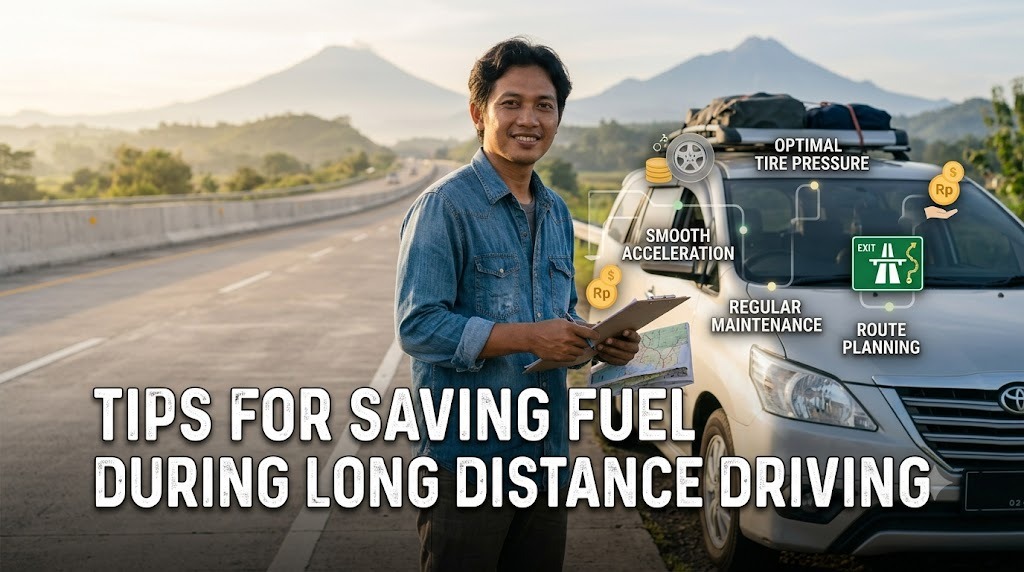
Long distance driving often requires more fuel than everyday short trips. However, efficient driving habits can help reduce fuel consumption without sacrificing safety or comfort. Saving fuel is not only useful for lowering travel expenses but also helps reduce unnecessary emissions. By preparing the vehicle properly and driving efficiently, long journeys can become more economical. This article explains practical ways to save fuel during long distance driving.
CHECK THE VEHICLE BEFORE DEPARTURE
Vehicle condition has a direct influence on fuel efficiency. Before starting a long journey, check the tire pressure according to the manufacturer's recommended level because underinflated tires can increase rolling resistance. Make sure the engine oil, brakes, battery, and other important components are also in good condition. A vehicle that receives regular maintenance generally operates more efficiently than one with neglected components.
It is also important to avoid carrying unnecessary items. Excessive vehicle weight requires more energy from the engine, which can increase fuel consumption. Remove unused objects from the trunk or cabin before traveling. A simple inspection can help prevent mechanical problems while also supporting more efficient fuel use.
MAINTAIN A STEADY DRIVING SPEED
Maintaining a consistent speed is one of the simplest ways to improve fuel efficiency. Frequent acceleration and sudden braking can cause the engine to use more fuel. When traffic and road conditions allow, drive smoothly and maintain a reasonable speed. Smooth acceleration helps the engine work more efficiently and reduces unnecessary fuel consumption.
Cruise control can also be useful on suitable highways because it helps maintain a relatively constant speed. However, it should only be used when road conditions are safe and appropriate. Drivers should remain attentive and adjust their speed according to traffic, weather, and road conditions. Safety should always take priority over fuel economy.
AVOID UNNECESSARY ACCELERATION AND BRAKING
Aggressive driving can significantly affect fuel consumption during long trips. Rapid acceleration requires the engine to produce more power, while sudden braking wastes some of the energy that has already been used to move the vehicle. Instead, anticipate traffic conditions and gradually adjust your speed. This approach makes driving more comfortable while supporting better fuel efficiency.
Keeping a safe following distance can make this easier. With enough space between vehicles, drivers have more time to respond to changes in traffic without repeatedly pressing the accelerator and brake. This habit can reduce unnecessary speed changes. It also contributes to safer and smoother driving.
USE AIR CONDITIONING WISELY
Air conditioning can increase fuel consumption because the system requires energy from the vehicle. During long-distance travel, use the air conditioner at a comfortable and reasonable setting rather than choosing an unnecessarily low temperature. Make sure the windows and doors are properly closed when the air conditioner is operating. Regularly maintaining the air-conditioning system can also help it work efficiently.
However, drivers should not turn off the air conditioner simply to save fuel when doing so creates discomfort or reduces concentration. Driver comfort and safety remain important during long journeys. The best approach is to use the system efficiently according to weather and cabin conditions. Avoiding excessive use while maintaining a comfortable environment can provide a practical balance.
PLAN THE ROUTE BEFORE TRAVELING
Good route planning can help reduce unnecessary fuel consumption. Choose a route that avoids excessive traffic, unnecessary detours, and frequent stops when possible. Navigation applications can help identify alternative routes and estimate travel conditions. Efficient route planning can shorten travel time and reduce the amount of fuel needed.
It is also useful to plan necessary stops in advance. Combining several activities into one stop can prevent repeated trips and unnecessary engine operation. If you expect heavy traffic, consider whether traveling at a different safe time is practical. Better planning can make a long journey more efficient and less stressful.
AVOID LEAVING THE ENGINE RUNNING UNNECESSARILY
Leaving a vehicle's engine running while parked can consume fuel without providing useful movement. If you are waiting for an extended period in a safe and appropriate location, consider turning off the engine according to the vehicle manufacturer's recommendations and local conditions. Short idling periods may have different considerations depending on the situation and vehicle technology. The important point is to avoid unnecessary idling whenever practical.
Drivers should also avoid repeatedly starting and stopping the engine without a reason. Modern vehicles are generally designed to handle normal starting cycles, but driving practices should still follow the manufacturer's guidance. Efficient engine use can contribute to lower fuel consumption. This is especially useful during long trips with multiple stops.
CHOOSE FUEL ACCORDING TO VEHICLE REQUIREMENTS
Using the correct fuel is essential for maintaining vehicle performance. Drivers should follow the fuel specifications recommended by the manufacturer, including the appropriate octane rating where applicable. Using a higher-octane fuel than required does not automatically make every vehicle more economical. Likewise, using fuel that does not meet the vehicle's requirements can affect performance and may cause problems.
Fuel quality and proper storage also matter. Purchase fuel from reputable sources and avoid mixing unsuitable fuels. If the vehicle manufacturer provides specific recommendations, those instructions should be the primary reference. Choosing the right fuel supports reliable engine operation and efficient performance.
MAINTAIN REGULAR VEHICLE MAINTENANCE
Regular maintenance is important for keeping a vehicle efficient over time. Components such as the engine, air filter, spark plugs on applicable engines, tires, and fuel system should be checked according to the maintenance schedule. Problems such as poor tire condition or engine malfunction can contribute to increased fuel consumption. Preventive maintenance can help identify these issues before they become more serious.
Drivers should not wait until the vehicle develops obvious symptoms before checking it. Unusual engine sounds, reduced performance, warning lights, or sudden changes in fuel consumption may indicate a problem. Having the vehicle inspected by a qualified technician can help determine the cause. Proper maintenance supports both fuel efficiency and driving safety.
ADOPT SMART DRIVING HABITS
Saving fuel during long-distance driving does not depend on a single technique. It requires a combination of proper vehicle maintenance, smooth driving, appropriate speed, route planning, and responsible use of vehicle features. Small changes in driving behavior can produce meaningful savings over repeated journeys. The results may become more noticeable for people who frequently travel long distances.
Most importantly, fuel efficiency should never encourage unsafe behavior. Drivers should follow traffic regulations, maintain safe distances, take breaks when tired, and adapt to road conditions. A fuel-saving strategy is successful when it reduces unnecessary consumption while maintaining safety and comfort. With consistent habits, long-distance travel can become more economical, efficient, and environmentally responsible.
Tentang Penulis
Gusti Ayu Tita P
Penulis — Universitas STEKOM
Penulis aktif yang berfokus pada isu-isu akademik, teknologi pendidikan, dan pengembangan sumber daya manusia di lingkungan kampus.