
Tips for Succeeding in a Visual Communication Design Major
Gusti Ayu Tita P
27 Agustus 2026
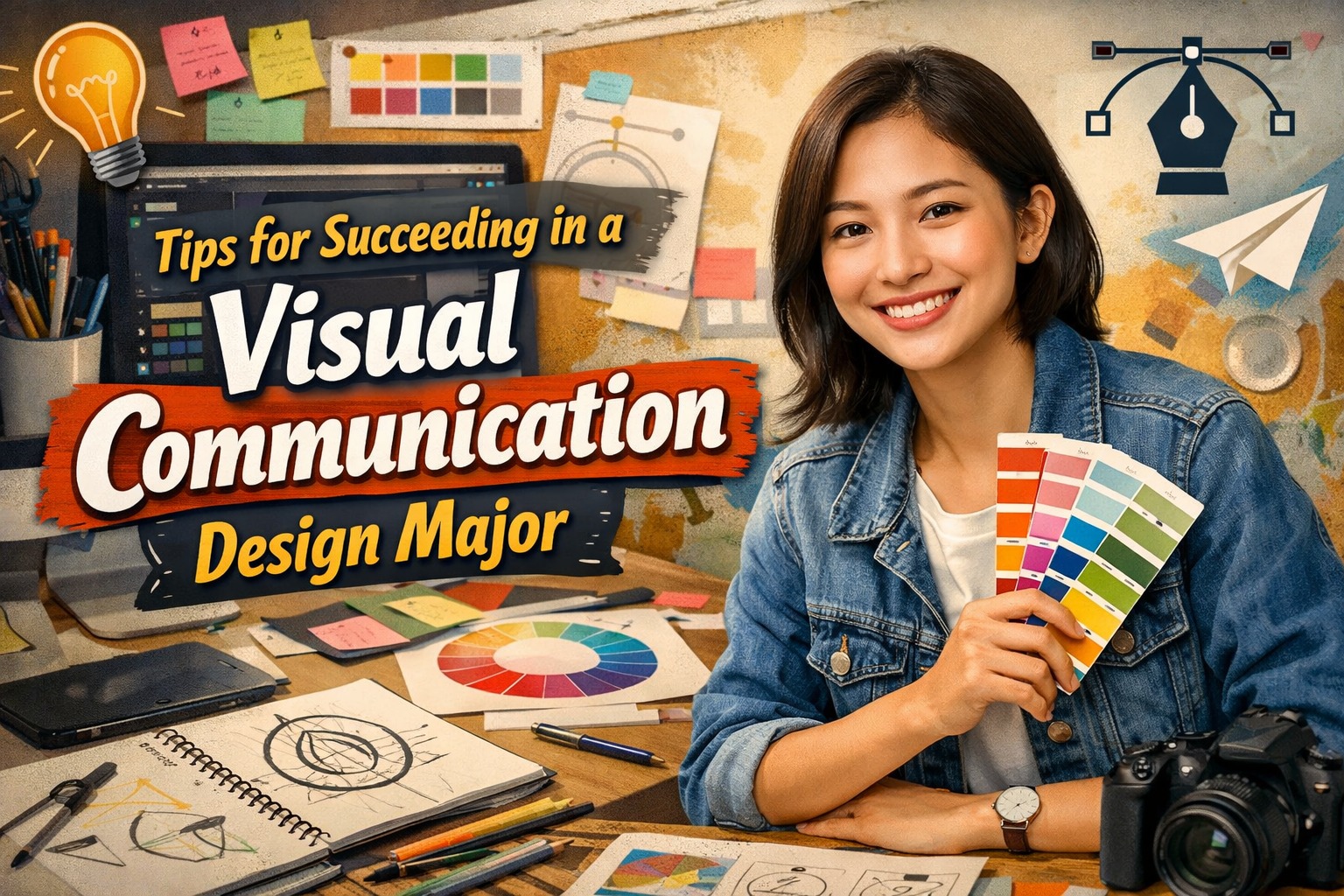
Visual Communication Design (VCD) is one of the most popular majors among creative students today. This field combines artistic skills, communication strategies, and digital technology to create effective visual messages. Students learn how to develop designs that are not only attractive but also meaningful and functional. However, succeeding in this major requires more than creativity alone. It takes dedication, continuous learning, and strong problem-solving abilities.
DEVELOP STRONG DESIGN FUNDAMENTALS
One of the most important steps to succeed in a Visual Communication Design major is mastering the basic principles of design. Students should understand concepts such as color theory, typography, layout composition, visual hierarchy, and balance. These fundamentals serve as the foundation for every design project and help create professional-quality work.
A solid understanding of design principles allows students to communicate ideas more effectively. Instead of relying solely on artistic intuition, they can make informed design decisions based on established visual communication techniques. Strong fundamentals also make it easier to adapt to different design styles and industry requirements.
BUILD A CONSISTENT CREATIVE PORTFOLIO
A portfolio is one of the most valuable assets for Visual Communication Design students. It showcases skills, creativity, and growth throughout the learning process. Students should continuously collect and improve their best projects, whether they involve branding, illustration, advertising, digital media, or user interface design.
Creating a diverse portfolio demonstrates versatility and professionalism. Employers and clients often evaluate portfolios before considering applicants for internships or jobs. Therefore, maintaining a high-quality portfolio can significantly increase future career opportunities.
MASTER DESIGN SOFTWARE AND DIGITAL TOOLS
Success in this major also depends on proficiency in design software and digital tools. Students should become comfortable using industry-standard applications for graphic design, illustration, photo editing, motion graphics, and digital publishing. Learning these tools helps improve efficiency and expands creative possibilities.
Technology continues to evolve rapidly, making it essential for students to stay updated with new features and trends. Regular practice not only improves technical skills but also boosts confidence when handling complex design projects. Employers highly value graduates who can adapt to modern design technologies.
IMPROVE COMMUNICATION AND COLLABORATION SKILLS
Visual Communication Design is not only about creating attractive visuals. Designers must also understand client needs, audience expectations, and project objectives. This requires strong communication skills and the ability to present ideas clearly and professionally.
Collaboration is equally important because many design projects involve teamwork. Students often work with marketers, content creators, developers, and other professionals. Learning how to accept feedback, share ideas, and solve problems together can greatly contribute to academic and professional success.
STAY INSPIRED AND FOLLOW INDUSTRY TRENDS
The design industry constantly changes as new technologies, styles, and consumer preferences emerge. Successful students make an effort to stay informed about design trends, creative innovations, and industry developments. Reading design blogs, attending workshops, and studying successful campaigns can provide valuable inspiration.
However, following trends should not replace originality. Students should use trends as references while developing their own creative identity. A unique design perspective often helps designers stand out in a competitive job market.
PRACTICE TIME MANAGEMENT AND DISCIPLINE
Design projects often involve multiple deadlines, revisions, and detailed creative processes. Effective time management helps students complete assignments without sacrificing quality. Planning tasks, setting priorities, and maintaining a consistent work schedule can reduce stress and improve productivity.
Discipline is equally important because creativity alone cannot guarantee success. Students who consistently practice, learn new skills, and meet deadlines are more likely to achieve long-term academic and career goals. Strong work habits often distinguish outstanding designers from average ones.
CONCLUSION
Succeeding in a Visual Communication Design major requires a combination of creativity, technical expertise, communication abilities, and discipline. Students who master design fundamentals, build strong portfolios, learn industry tools, collaborate effectively, stay updated with trends, and manage their time wisely will have a greater chance of success. By continuously improving their skills and embracing lifelong learning, they can prepare themselves for exciting opportunities in the creative industry.
Tentang Penulis
Gusti Ayu Tita P
Penulis — Universitas STEKOM
Penulis aktif yang berfokus pada isu-isu akademik, teknologi pendidikan, dan pengembangan sumber daya manusia di lingkungan kampus.