
Tips for Successfully Taking the Madrasah Examination
Gusti Ayu Tita P
29 Agustus 2026
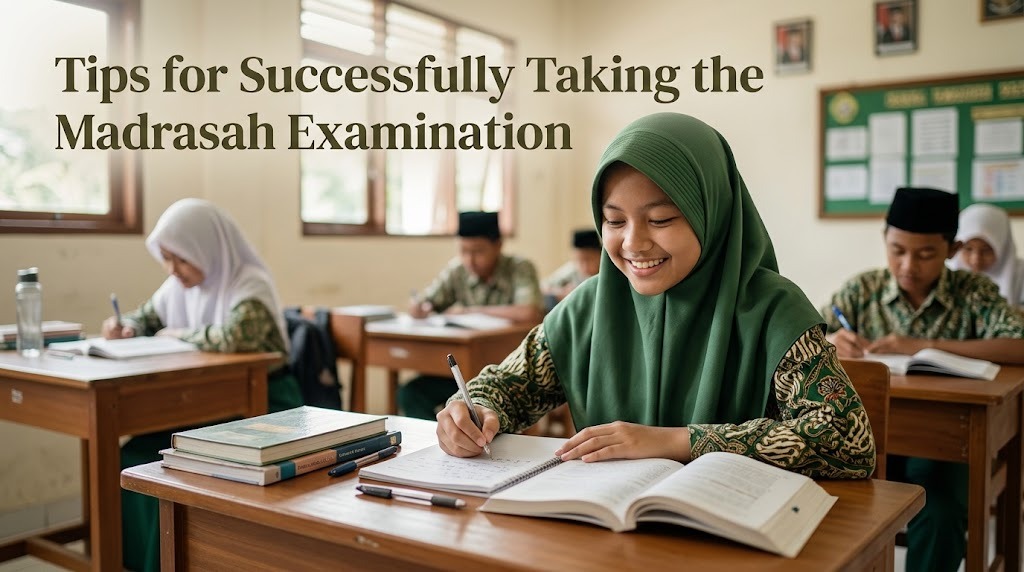
The Madrasah Examination is an important academic assessment for students in madrasah education. Preparing for it requires more than simply memorizing lessons shortly before the test. Students need a clear study plan, good time management, regular practice, and enough rest. With the right preparation, students can understand the material better and feel more confident when taking the examination.
UNDERSTAND THE EXAMINATION MATERIAL
The first step to preparing for the Madrasah Examination is understanding the material that may be tested. Review textbooks, class notes, assignments, teacher explanations, and available study guidelines. Make a list of subjects and topics that require more attention. This approach helps students organize their preparation instead of studying randomly.
Pay special attention to topics that are difficult to understand or frequently cause mistakes. Do not spend all your study time on subjects that you already understand well. Ask teachers or classmates for help when a concept remains unclear. A strong understanding of the material can make it easier to answer different types of questions during the examination.
CREATE A REALISTIC STUDY SCHEDULE
A well-organized study schedule can make exam preparation more manageable. Divide the available time among different subjects according to their difficulty and importance. Avoid creating a schedule that is too demanding because it can be difficult to follow consistently. A simple schedule that you can maintain every day is usually more useful than an unrealistic plan.
Set specific goals for each study session. For example, you can aim to finish one topic, review a chapter, or complete a certain number of practice questions. Include short breaks so that your mind does not become too tired. Adjust the schedule when necessary, but make sure important study targets are still completed.
PRIORITIZE DIFFICULT SUBJECTS
Every student has subjects that feel easier and others that require more effort. Identify difficult subjects early so you have enough time to improve your understanding. Spend more study time on topics where your test results or practice performance are still weak. This strategy helps you use your preparation time more effectively.
However, do not completely ignore subjects that you already understand. Review them regularly to prevent important information from being forgotten. You can divide subjects into easy, moderate, and difficult categories. This simple system can help you determine how much time should be given to each subject.
PRACTICE WITH QUESTIONS REGULARLY
Practice questions are an important part of preparing for the Madrasah Examination. They allow students to apply what they have learned instead of simply reading information repeatedly. Try questions with different levels of difficulty to become familiar with different question styles. Regular practice can also help improve speed and accuracy.
After completing a practice session, review every incorrect answer. Find out whether the mistake happened because of a lack of understanding, a calculation error, or careless reading. Study the related material again and try similar questions afterward. Learning from mistakes is one of the most effective ways to improve examination performance.
USE EFFECTIVE STUDY METHODS
Reading the same material repeatedly is not always the most effective way to study. Students can use active recall by closing their books and trying to explain what they remember. Another useful method is spaced repetition, which involves reviewing information at different intervals. These approaches encourage students to actively retrieve information rather than simply recognizing familiar words.
Students can also create short summaries, concept maps, or study cards. Explaining a difficult topic to a friend or family member can also reveal whether the material is truly understood. Different subjects may require different methods. Experiment with several techniques and choose the ones that help you understand and remember information most effectively.
STUDY WITH FRIENDS WHEN NECESSARY
Group study can be useful when students have difficulty understanding certain topics on their own. Friends can explain concepts using simpler language and share different ways of solving problems. Discussion can also make the study process more engaging. However, the group should have a clear learning goal to prevent the session from becoming mostly socializing.
Before starting, decide which subjects or questions will be discussed. Each student can prepare difficult questions in advance so the discussion remains focused. After the group session, review the material independently to check your own understanding. This combination of group and individual study can make exam preparation more effective.
ASK TEACHERS FOR GUIDANCE
Teachers can provide valuable assistance when students encounter difficult material. Do not hesitate to ask questions about concepts, exercises, or topics that remain confusing. Prepare specific questions before speaking with the teacher so the discussion can be more focused. Understanding a difficult topic before the examination is much better than ignoring it until the test day.
Pay attention to explanations and learning materials provided during class. Teacher feedback can help students identify areas that need more practice. If the madrasah provides review sessions or additional exercises, use these opportunities carefully. Asking for help is not a sign of weakness but an important part of effective learning.
MAINTAIN PHYSICAL AND MENTAL HEALTH
Good academic preparation should be supported by good physical and mental condition. Students need enough sleep because excessive tiredness can reduce concentration and memory. Eat nutritious meals, drink enough water, and include light physical activity in your routine. Avoid making late-night study sessions a daily habit.
Mental preparation is equally important. Feeling nervous before an examination is normal, but excessive worry can interfere with concentration. Focus on the preparation you can control rather than imagining negative results. Take short breaks, maintain a positive mindset, and give yourself enough time to rest before the examination.
PREPARE EVERYTHING BEFORE EXAM DAY
Preparing your examination supplies in advance can prevent unnecessary stress. Check the examination schedule, location, required documents, stationery, and other items according to your madrasah's rules. Prepare these things the day before instead of searching for them at the last minute. Small preparations can make the morning of the examination much calmer.
The night before the examination should be used for light review rather than trying to learn every topic from the beginning. Review important concepts, formulas, definitions, or notes that you have already studied. After that, get enough sleep and prepare to leave on time. Arriving without rushing can help you start the examination with a clearer mind.
READ QUESTIONS CAREFULLY
When the examination begins, avoid rushing through the questions. Read the instructions carefully and understand what each question is asking before answering. Pay attention to important words because a single word can change the meaning of a question. If you find a difficult question, remain calm and move to another question if the examination rules allow it.
Answer questions that you understand first to use your time efficiently. Mark difficult questions and return to them later if possible. Before submitting your answers, review them carefully and check for unanswered questions. Careful time management can help prevent avoidable mistakes.
CONCLUSION
Successfully taking the Madrasah Examination requires consistent preparation rather than last-minute studying. Students should understand the examination material, create a realistic study schedule, prioritize difficult topics, practice questions regularly, and use effective learning methods. Asking teachers for guidance and studying with friends can also help improve understanding. At the same time, sufficient sleep, proper nutrition, and mental preparation should not be ignored. With disciplined preparation and a calm approach, students can face the Madrasah Examination with greater confidence and perform at their best.
Tentang Penulis
Gusti Ayu Tita P
Penulis — Universitas STEKOM
Penulis aktif yang berfokus pada isu-isu akademik, teknologi pendidikan, dan pengembangan sumber daya manusia di lingkungan kampus.















