Tips For Using Navigation Apps More Efficiently During Homecoming Travel
Gusti Ayu Tita P
10 Agustus 2026
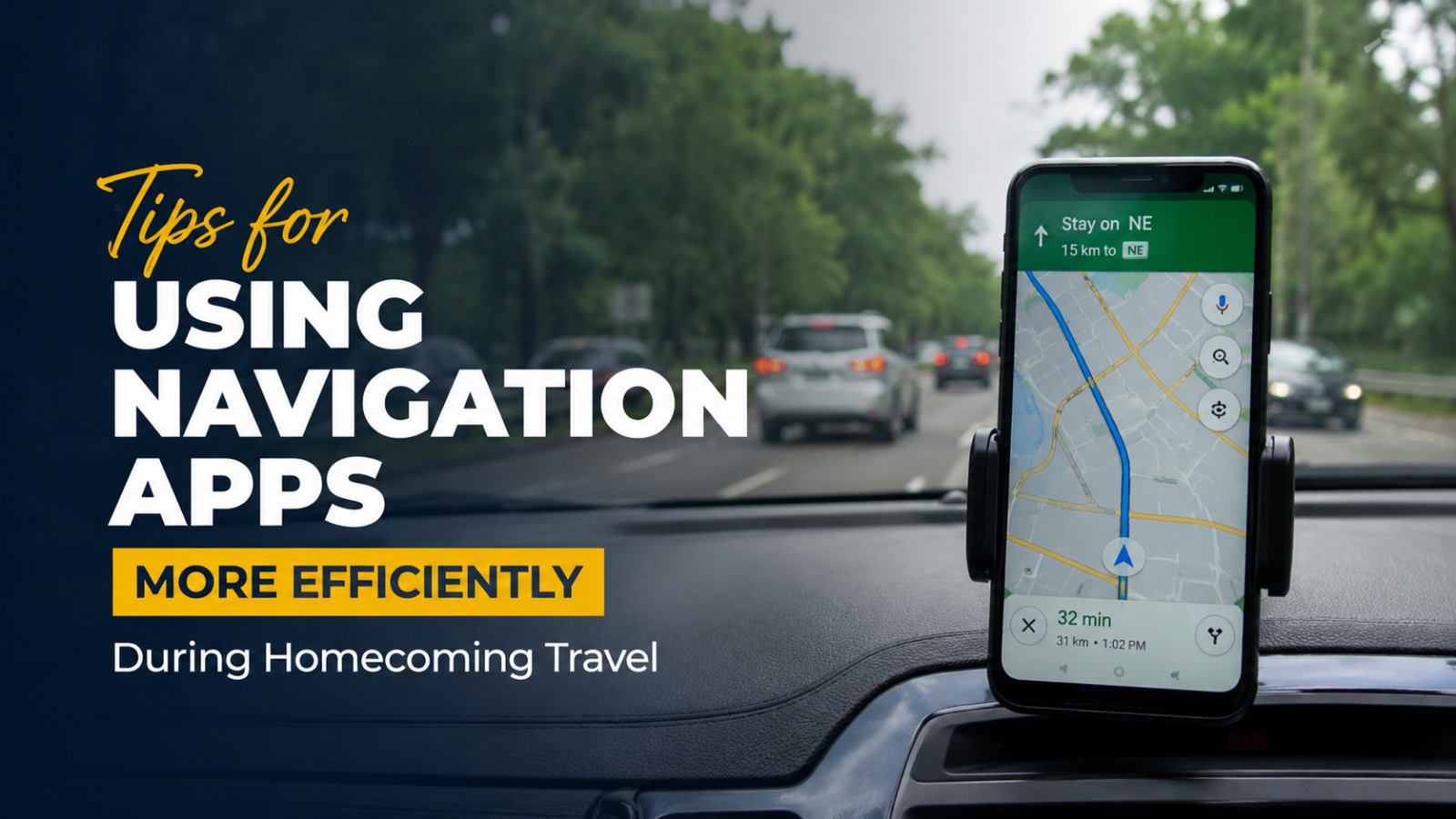
Navigation Apps have become useful tools for travelers during the homecoming season. They can help users find routes, estimate travel times, identify congestion, and locate important facilities along the journey. During periods of heavy traffic, this information can help travelers make better decisions. However, navigation applications are most effective when users understand their limitations. Travelers should use digital information together with common sense and official transportation updates.
Homecoming traffic can change very quickly because of accidents, road closures, weather, vehicle breakdowns, and sudden increases in traffic volume. A route that looks clear before departure may become congested later. Navigation applications can provide updated information, but travelers should still remain flexible. Travel Safety should always be more important than following the fastest route.
UPDATE THE NAVIGATION APP
Before starting the journey, travelers should make sure their navigation application is updated to the latest available version. Updates can improve map information, route features, and system performance. An outdated application may contain incomplete or less accurate information about roads and services. Travelers should also check whether the map data for their destination is available.
Updating the application before departure is better than trying to do it while traveling. A stable internet connection can make the process easier. Travelers should also ensure that their phone has enough storage and battery power. Proper preparation helps the navigation system work more reliably during the journey.
ENTER THE DESTINATION CORRECTLY
Accurate destination information is essential for effective Route Planning. Travelers should enter the complete destination whenever possible rather than relying only on a general location. This is especially important when several places have similar names.
Before moving, travelers should check the suggested destination on the map. Confirming the location can prevent unnecessary detours or arrival at the wrong place. A passenger can help verify the information when the vehicle is moving. Drivers should avoid entering or changing destinations while driving.
CHECK TRAFFIC CONDITIONS BEFORE DEPARTURE
Travelers should review current Traffic Updates before leaving. Navigation applications can show congestion levels and estimated travel times on many routes. This information can help users compare different departure times and route options.
However, digital traffic information may not always reflect every situation immediately. Travelers should also consider official announcements about road closures, temporary traffic arrangements, or major incidents. Comparing information from multiple reliable sources can provide a clearer picture. This approach makes Route Planning more practical and informed.
CHOOSE ALTERNATIVE ROUTES CAREFULLY
Navigation applications often suggest alternative routes when the main road becomes congested. These suggestions can be useful, but travelers should not automatically choose the route with the shortest estimated time. Some alternative roads may be narrow, poorly maintained, unfamiliar, or unsuitable for certain vehicles.
Travelers should consider road quality, lighting, traffic conditions, and safety before changing routes. Drivers should also follow official traffic instructions when temporary arrangements are in place. The goal is not simply to find the fastest route. A good alternative route should provide a reasonable balance between time, distance, and Travel Safety.
DOWNLOAD OFFLINE MAPS WHEN POSSIBLE
Internet connectivity can become unreliable in certain areas, particularly on long-distance routes. Travelers can prepare by downloading offline map information when the application supports this feature. Offline maps can provide basic navigation even when the internet connection becomes weak or unavailable.
Offline maps should be prepared before the journey. Travelers should make sure the relevant area has been downloaded and that the application can access it without an internet connection. However, offline maps may not provide current traffic information. Therefore, travelers should use them mainly as a backup navigation resource.
CHECK THE PHONE BATTERY
Navigation can consume significant battery power during long journeys. A phone with a low battery may stop providing navigation information when it is needed most. Travelers should fully charge their devices before departure and carry a reliable charging solution.
A suitable vehicle charger or power bank can provide additional support. The phone should be positioned where it can be used safely without blocking the driver's view. Drivers should never hold a phone while driving. Digital Safety is just as important as accurate navigation.
USE VOICE GUIDANCE
Voice guidance can make navigation safer because drivers do not need to constantly look at the screen. The application can provide instructions about turns, exits, and route changes through audio. This allows drivers to keep more attention on the road.
The volume should be adjusted so that instructions are easy to hear without becoming distracting. Travelers should set the route before starting whenever possible. If a route needs to be changed, the driver should stop in a safe location or ask a passenger to operate the application. Responsible use of navigation supports better Travel Safety.
DO NOT FOLLOW THE APP BLINDLY
Navigation applications are tools, not replacements for human judgment. Sometimes an application may suggest a route that is technically faster but less suitable for the vehicle or current road conditions. Drivers should pay attention to road signs, traffic officers, weather, and actual conditions around them.
If the application recommends a route that appears unsafe or conflicts with official instructions, travelers should not follow it. Safety decisions should always take priority over estimated arrival times. Smart Navigation means using technology while remaining aware of the real environment.
PLAN REST STOPS AND SERVICES
Navigation applications can also help travelers locate fuel stations, rest areas, restaurants, hospitals, and other useful facilities. Families can use this information to plan suitable stopping points before beginning a long journey. Knowing where facilities are located can reduce stress during unexpected delays.
Travelers should avoid waiting until the vehicle is almost out of fuel before searching for a station. Drivers should also plan regular rest periods to reduce fatigue. Families traveling with children can identify locations with appropriate facilities. Combining navigation with practical Travel Planning can make the journey more comfortable.
KEEP OFFICIAL TRAFFIC INFORMATION IN MIND
Navigation applications should be used alongside official transportation information. Authorities may introduce temporary traffic arrangements during periods of severe congestion. These arrangements may not always appear immediately in every navigation system.
Travelers should follow official road signs and instructions from traffic personnel. If digital directions conflict with visible signs or authorized traffic instructions, the official instructions should be followed. Technology should support traffic management rather than create confusion. Responsible travelers know when to rely on digital tools and when to follow on-site guidance.
CONCLUSION
Using Navigation Apps effectively can make homecoming travel more organized and efficient. Travelers should update their applications, enter destinations accurately, check Traffic Updates, prepare alternative routes, download offline maps, and maintain sufficient phone battery. They should also use voice guidance and avoid interacting with their phones while driving.
The most important principle is to use technology responsibly. Navigation applications can provide valuable information, but they cannot predict every road condition or replace human judgment. With careful Route Planning, reliable information, and strong Travel Safety awareness, travelers can use navigation technology to enjoy a safer and more comfortable homecoming journey.
Tentang Penulis
Gusti Ayu Tita P
Penulis — Universitas STEKOM
Penulis aktif yang berfokus pada isu-isu akademik, teknologi pendidikan, dan pengembangan sumber daya manusia di lingkungan kampus.