Tips for Visiting Temples in Indonesia Comfortably
Gusti Ayu Tita P
4 September 2026
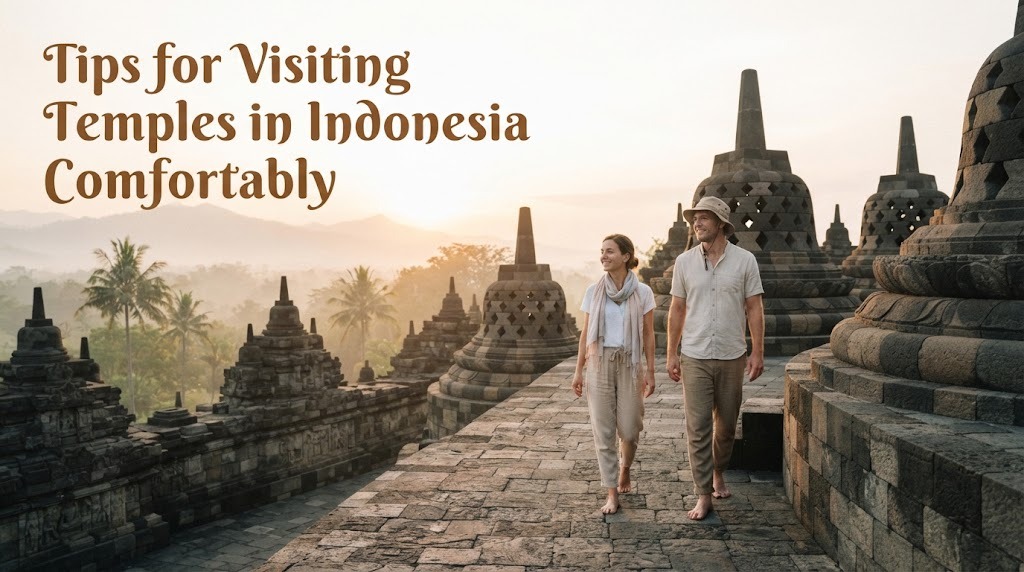
Visiting temples in Indonesia can be an exciting way to explore history, culture, architecture, and religious traditions. Many ancient temples are located in open areas, so visitors may need to walk for a considerable distance under the sun. Proper preparation can make the trip more comfortable and enjoyable. Visitors should also understand local customs and follow the rules established at each temple site. With a few simple preparations, exploring Indonesian temples can become a memorable experience.
CHOOSE THE RIGHT TIME TO VISIT
Choosing the right time is one of the easiest ways to make a temple visit more comfortable. Early morning is often a good option because the temperature is generally cooler and tourist areas may be less crowded. Visiting earlier can also provide better opportunities to explore the site without feeling rushed. Before traveling, check the opening hours and any special visiting arrangements. Weather conditions should also be considered, especially during the rainy season.
Avoid spending too much time outdoors during extremely hot periods if you are sensitive to heat. Bring sufficient drinking water and take regular breaks when necessary. If rain is expected, prepare an umbrella or lightweight rain protection. A flexible schedule can help you adjust your plans when weather conditions change.
WEAR COMFORTABLE AND APPROPRIATE CLOTHING
Comfortable clothing is important when visiting large temple complexes. Choose lightweight clothes that allow you to move easily, especially when walking or climbing stairs. Comfortable walking shoes are also recommended because some temple areas involve uneven surfaces and long walking routes. A hat or other sun protection can provide additional comfort during sunny weather. Avoid footwear that is slippery or difficult to walk in.
Visitors should also dress respectfully because many temples have religious and cultural significance. Some sites may have specific clothing requirements or restrictions for certain areas. Follow instructions from temple staff and respect local customs. Appropriate clothing allows visitors to stay comfortable while showing respect for the heritage site.
BRING ESSENTIAL TRAVEL ITEMS
Preparing a small bag with essential items can make a temple visit much easier. Drinking water is particularly useful when the site requires extensive walking. Sunscreen, tissues, a hat, and personal medication can also be included according to individual needs. A small and comfortable bag is preferable because carrying heavy luggage can make walking tiring. Keep valuable belongings secure throughout the visit.
A smartphone or camera can be useful for documenting the experience. However, visitors should check whether photography is permitted in specific areas. Avoid using equipment in ways that could disturb other visitors or damage historical objects. Taking photographs responsibly allows everyone to enjoy the site comfortably.
FOLLOW TEMPLE RULES
Every temple site may have different rules designed to protect its historical and cultural value. Visitors should read information boards and follow instructions from staff. Do not climb restricted structures, touch fragile carvings, or enter areas that are closed to the public. These actions can damage ancient materials and create safety risks. Following the rules is an important part of responsible tourism.
Visitors should also avoid making loud noises or behaving disrespectfully. Some temple complexes may still be used for religious or cultural activities. Give ceremonies and worshippers sufficient space and maintain an appropriate attitude. Respecting the site makes the experience more enjoyable for both visitors and local communities.
KEEP THE TEMPLE AREA CLEAN
Keeping the surroundings clean is a simple but important way to support temple conservation. Do not leave food packaging, plastic bottles, tissues, or other waste around the site. Use designated trash bins whenever available. If there is no nearby bin, keep your waste until you find an appropriate disposal point. A clean environment improves the experience for everyone.
Visitors should also avoid damaging plants, taking stones, or removing objects from the temple area. Even small objects may have archaeological or historical significance. Never treat parts of an ancient site as souvenirs. Respecting the surrounding environment helps preserve the entire heritage landscape.
TAKE BREAKS DURING LONG WALKS
Some Indonesian temples are located within large complexes that require significant walking. Visitors should take breaks when they feel tired rather than forcing themselves to continue. Drinking enough water is especially important in hot weather. Find designated resting areas whenever possible and avoid blocking pathways. A relaxed pace allows visitors to enjoy architectural details without unnecessary physical strain.
If traveling with children or older family members, adjust the itinerary to their physical abilities. Some temple sites have many stairs or uneven surfaces that may require extra care. Plan fewer activities if necessary and allow enough time for rest. The goal of a cultural trip should be to enjoy the experience safely rather than visit every area as quickly as possible.
CONSIDER USING A LOCAL GUIDE
A local guide can make a temple visit more informative and meaningful. Guides may explain the history, architecture, religious significance, and stories connected to the site. This information can help visitors understand details that might otherwise be overlooked. If available, choose an official or authorized guide recommended by the site management. Reliable information can make the visit both educational and enjoyable.
Visitors who prefer to explore independently can use official information boards and trusted sources. Learning about the temple before arriving can also make it easier to understand what you see. Avoid spreading historical claims that have no reliable evidence. Taking time to learn about the site can turn a simple sightseeing trip into a valuable cultural experience.
RESPECT LOCAL COMMUNITIES
Temple areas are often connected to local communities, traditions, and cultural activities. Visitors should behave politely and avoid disturbing residents or religious activities. Ask for permission before photographing local people, particularly when taking close-up photographs. Respect local customs even when they are different from your own. Small gestures of courtesy can create a more positive travel experience.
Visitors can also support nearby communities by using appropriate local services and purchasing local products. When using local services, ask about prices and conditions clearly to avoid misunderstandings. Responsible tourism can provide economic benefits while encouraging communities to continue supporting heritage preservation. Respectful interactions make temple tourism more meaningful.
CONCLUSION
Visiting temples in Indonesia comfortably requires simple but thoughtful preparation. Choose a suitable visiting time, wear comfortable and respectful clothing, bring essential items, and prepare for walking. Always follow site regulations, protect historical structures, keep the environment clean, and respect religious activities. Taking regular breaks and using a reliable local guide can also make the experience more enjoyable. With responsible behavior and good preparation, exploring Indonesian temples can be a comfortable, educational, and memorable journey.
Tentang Penulis
Gusti Ayu Tita P
Penulis — Universitas STEKOM
Penulis aktif yang berfokus pada isu-isu akademik, teknologi pendidikan, dan pengembangan sumber daya manusia di lingkungan kampus.