
Tips to Prevent Land Disputes Before Buying Property
Gusti Ayu Tita P
2 September 2026
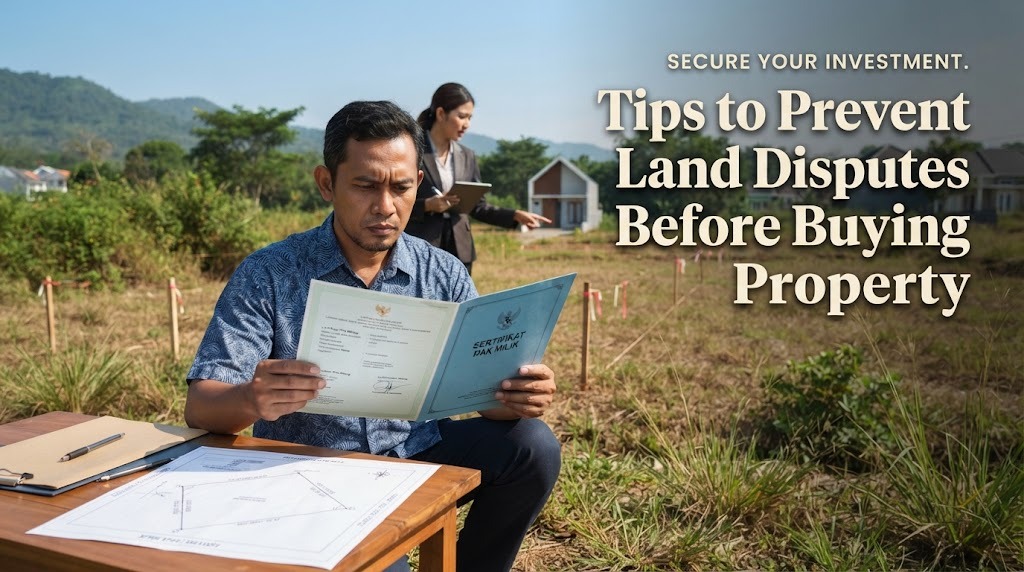
Buying land or property is a major financial decision that requires careful consideration. Besides looking at the location, price, and physical condition, buyers should make sure the property has a clear legal status. Failure to check important documents can lead to land disputes, financial losses, and lengthy legal problems. Therefore, conducting proper checks before completing a property transaction is essential.
CHECK THE LAND TITLE
The first step to prevent land disputes is checking the land title and ownership documents. Make sure the owner's name, type of land right, land area, location, and other important details match the property being offered. Buyers should verify the title through the relevant land authority or official land administration service. This can help confirm whether the document matches the official land records.
Do not rely only on photocopies provided by the seller. Ask to see the original documents and verify their validity before making a significant payment. If you find inconsistent information, suspicious changes, or unclear details, postpone the transaction until the issue has been properly explained and verified.
VERIFY THE SELLER'S IDENTITY
Buyers should make sure that the person selling the property is legally entitled to sell it. Compare the seller's identity with the name stated on the land title and other relevant documents. If the property is jointly owned, inherited, or controlled by several parties, additional documents may be required to confirm who has the legal authority to sell it. This can help prevent claims from other parties after the transaction.
If the seller is acting on behalf of another person, carefully check the power of attorney and supporting documents. Properties involving inheritance, joint ownership, or legal entities may require additional verification. Avoid making a large payment simply because the seller offers a very low price or pressures you to complete the transaction quickly.
MAKE SURE THE PROPERTY IS NOT IN DISPUTE
Before buying property, find out whether the land is currently involved in a dispute. Ask the seller about the ownership history, boundaries, previous transactions, and any objections from other parties. Information from nearby residents can also provide useful background about possible conflicts. However, such information should still be verified through reliable documents and official records.
A land dispute is not always visible from the physical condition of the property. Problems may involve ownership claims, inheritance, boundary issues, agreements, or questionable documents. Therefore, buyers should examine both the legal documents and the physical condition of the land before proceeding with the purchase.
CHECK THE LAND BOUNDARIES
The physical condition of the land should be compared with the information contained in the official documents. Check the property's boundaries, size, shape, and location directly at the site. If necessary, involve a qualified professional to help verify the measurements. This can reduce the risk of future boundary disputes with neighboring landowners.
Do not assume that an existing fence or boundary marker automatically represents the official legal boundary. Fences may have been installed incorrectly or moved over time. If there is a difference between the physical boundaries and official records, resolve the issue before completing the transaction.
REVIEW THE PROPERTY HISTORY
Reviewing the property's ownership history can help buyers understand how the land was acquired and transferred over time. Relevant documents may include previous sale agreements, inheritance documents, grants, or other evidence of legal transfer. Buyers should make sure that previous transfers were properly documented. This is particularly important when the property has changed hands several times.
Do not ignore older documents simply because the current seller has an ownership certificate. Problems from previous transactions can sometimes become the source of future disputes. If the ownership history is unclear, consider seeking assistance from a land professional or legal advisor before proceeding.
CHECK TAXES AND OTHER OBLIGATIONS
Buyers should also check whether there are outstanding property-related taxes or other obligations. Relevant tax records and payment evidence should be reviewed where applicable. This can help prevent administrative problems after ownership is transferred. Buyers should also understand which transaction costs and taxes are the responsibility of each party.
Do not focus only on the property's selling price. Additional costs can significantly affect the total amount required to complete the purchase. Ask the seller about any unpaid obligations and make sure the financial responsibilities of both parties are clearly stated in the transaction documents.
USE A QUALIFIED PROPERTY OFFICIAL
Using a qualified land or property official can help make the transaction safer and more organized. In Indonesia, a PPAT has an important role in preparing certain deeds related to legal actions involving land rights. Buyers should ensure that the transaction is handled according to applicable land regulations and procedures. Professional assistance can also help identify missing documents or potential issues before the transaction is completed.
However, buyers should still read and understand every document before signing it. Do not sign an agreement or make a major payment when important information remains unclear. If the transaction involves complicated ownership issues, obtaining independent legal advice can provide additional protection.
DO NOT RUSH INTO A CHEAP PROPERTY DEAL
A property offered at a price significantly below the market level should be examined carefully. A low price may be legitimate, but it can also be associated with ownership problems, boundary disputes, incomplete documents, or other legal issues. Compare the property's price with similar properties in the same area. A good deal should not come at the expense of legal certainty.
Buyers should also be cautious if a seller pressures them to transfer money before documents can be properly checked. Property transactions involve significant amounts of money and should not be completed in a hurry. Taking additional time to verify the property is usually safer than dealing with a dispute after the purchase.
PREPARE A CLEAR WRITTEN AGREEMENT
Important agreements between the buyer and seller should be documented clearly in writing. The agreement should identify the parties, property, purchase price, payment method, schedule, and responsibilities of each party. Where appropriate, it should also address conditions related to cancellation or completion of the transaction. Clear documentation can provide important evidence if a disagreement occurs later.
Avoid relying on verbal promises for important matters. Keep copies of payment receipts, communication records, contracts, and other relevant documents. If the transaction is complicated or involves significant legal risks, consulting a qualified legal professional can help ensure that the buyer's interests are properly protected.
CONCLUSION
Preventing land disputes before buying property requires careful document verification and proper due diligence. Buyers should check the land title, seller's identity, ownership history, boundaries, taxes, and possible disputes before making a final decision. Professional assistance can also help ensure that the transaction follows applicable legal procedures.
The most important principle is to avoid rushing into a property purchase before its legal status is clear. Careful verification at the beginning can reduce financial and legal risks in the future. By taking the necessary precautions, buyers can make property transactions more secure and confident.
Tentang Penulis
Gusti Ayu Tita P
Penulis — Universitas STEKOM
Penulis aktif yang berfokus pada isu-isu akademik, teknologi pendidikan, dan pengembangan sumber daya manusia di lingkungan kampus.