
Tka Is More Than This Grade, It's Seen In How You Answer
Gusti Ayu Tita P
1 April 2026
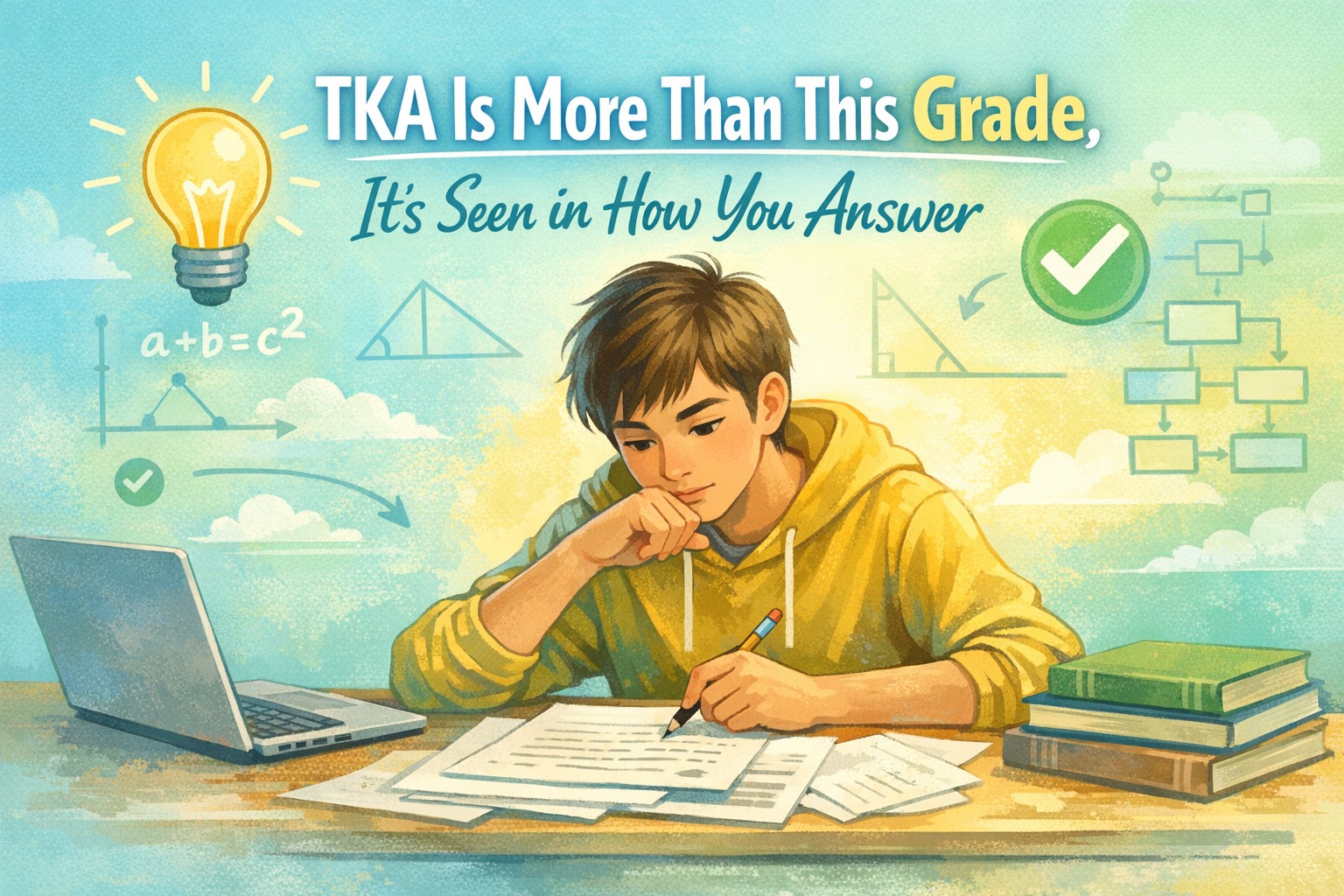
The Tes Kemampuan Akademik or TKA is often associated with scores and academic results. However, a test can also reveal how students understand information, analyze questions, and choose solutions. The way students approach a question can show their reasoning, problem solving, and critical thinking skills. Therefore, TKA preparation should not focus only on achieving a high score but also on developing a better way of thinking.
A good result is certainly valuable, but the learning process behind that result is equally important. Students who understand concepts can explain their answers and apply knowledge to different situations. They are not completely dependent on memorized examples. How students think and respond to problems can be an important part of meaningful academic learning.
USING KNOWLEDGE IN DIFFERENT SITUATIONS
TKA preparation should not depend entirely on memorizing practice questions. A familiar concept may appear in a completely different situation or be presented using different wording. Students need to recognize the underlying idea and determine how it applies. The ability to transfer knowledge shows deeper learning.
For example, knowing a formula is useful, but understanding when and why to use it is more important for solving unfamiliar problems. The same principle applies to reading, science, mathematics, and other academic areas. Students who understand concepts can adapt when the format of a question changes. Flexible knowledge is more valuable than memorized answers alone.
DEVELOPING PROBLEM SOLVING SKILLS
Problem solving requires students to move from understanding a problem toward a logical solution. They may need to compare options, identify patterns, calculate information, or apply a relevant concept. The best strategy depends on the type of problem being presented. Good problem solving requires both knowledge and reasoning.
Students can strengthen these skills through regular practice. However, they should not focus only on the number of questions they complete. After answering a question, they should review the steps taken and determine whether the strategy was appropriate. Reflecting on the process makes practice more meaningful.
LEARNING FROM WRONG ANSWERS
An incorrect answer does not always mean that a student lacks ability. It can reveal a specific problem in the learning or reasoning process. Students may have misunderstood the question, overlooked information, selected an unsuitable method, or made a calculation error. Identifying the cause of a mistake is more useful than simply memorizing the correct answer.
Students can create a simple error record while preparing for TKA. They can write down the question type, their mistake, and the correct reasoning. Reviewing these notes regularly can help identify repeated weaknesses. Mistakes can become valuable learning opportunities when they are analyzed properly.
CRITICAL THINKING BEHIND EACH ANSWER
Critical thinking encourages students to examine information before making a conclusion. They should consider whether an answer is supported by evidence and whether the reasoning is logical. This prevents them from choosing an option simply because it looks familiar. Evidence based decisions are more reliable than guesses.
Students can practice critical thinking by comparing answer choices and eliminating those that contradict the information provided. They can also ask why one option is stronger than another. This habit develops a more careful approach to academic questions. Critical thinking helps students make more informed choices.
BALANCING ACCURACY AND SPEED
A good answer is not only correct but also reached within an appropriate amount of time. Students need to analyze questions carefully while avoiding spending too long on one problem. Time management and reasoning should work together during an assessment.
Timed practice can help students develop this balance. Students can identify which question types take the most time and practice more efficient strategies. Over time, they can become faster at recognizing important information without sacrificing accuracy. The goal is efficient thinking, not careless speed.
HOW TO PREPARE FOR TKA EFFECTIVELY
Students can prepare by combining conceptual understanding, active recall, practice questions, and error analysis. They should understand the basic material before attempting increasingly difficult questions. After practicing, they should review both correct and incorrect answers to understand the reasoning involved. Consistent preparation is more effective than relying on last minute memorization.
Students should also maintain a healthy study routine. Adequate sleep, regular breaks, and realistic study targets can help maintain concentration. Studying for long periods without rest may reduce the quality of thinking. A balanced routine can support clearer reasoning and better academic performance.
CONCLUSION
TKA is more than a grade because the way students answer questions can reflect their understanding, reasoning, and problem-solving approach. A score can provide useful feedback, but it should not become the only measure of a student's academic potential. By understanding questions carefully, applying concepts, evaluating evidence, learning from mistakes, and managing time effectively, students can develop stronger thinking skills. Ultimately, the most valuable result of TKA preparation is not only a better score but a better way of thinking and solving problems.
Tentang Penulis
Gusti Ayu Tita P
Penulis — Universitas STEKOM
Penulis aktif yang berfokus pada isu-isu akademik, teknologi pendidikan, dan pengembangan sumber daya manusia di lingkungan kampus.















