
To What Extent Do Academic Competitions Create Adaptive and Visionary Graduates?
Gusti Ayu Tita P
27 Februari 2026
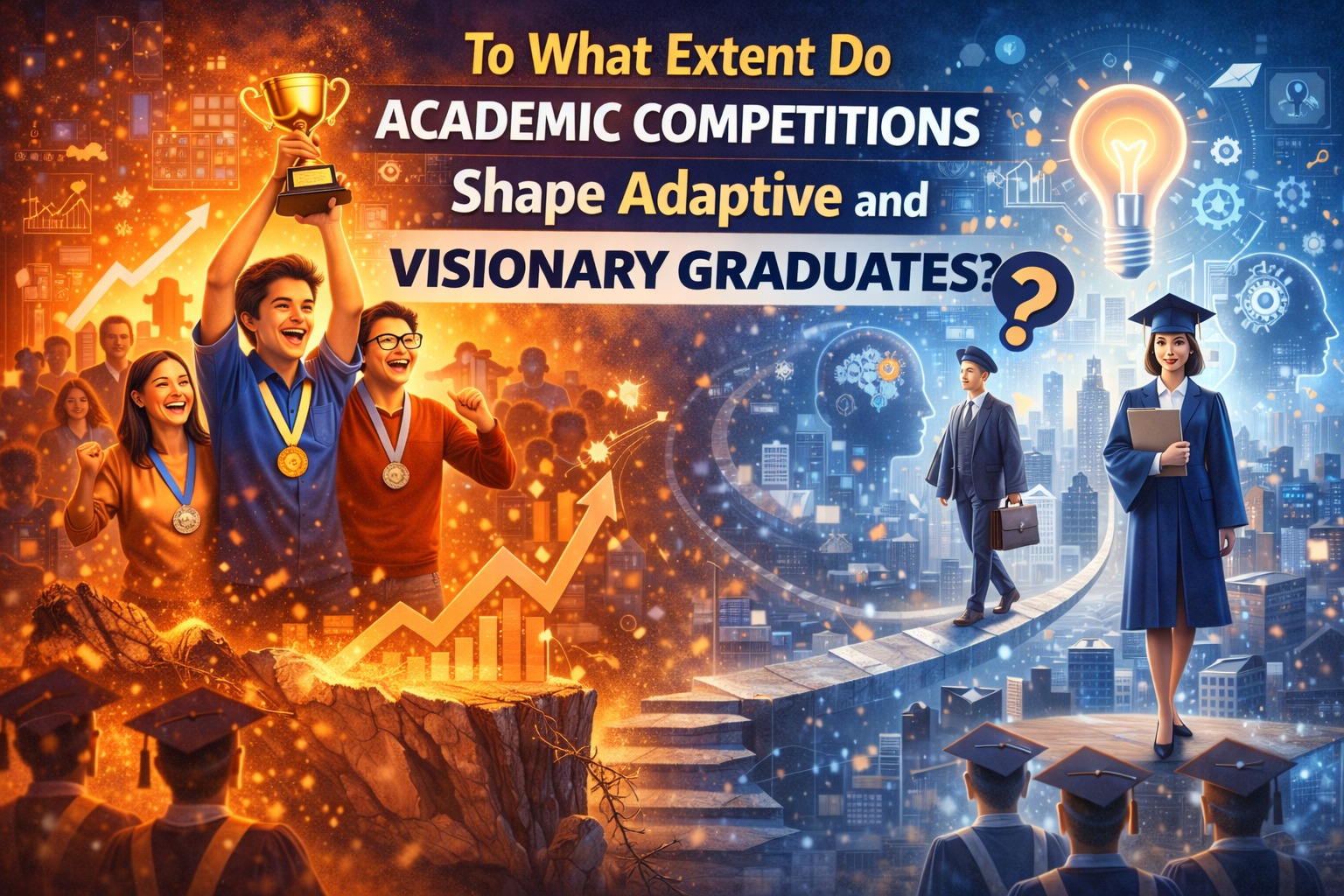
Changes in the professional world and the rapid development of knowledge require university graduates to be not only academically competent but also adaptive and visionary. One activity often considered capable of shaping these qualities is academic competition. However, to what extent do academic competitions truly contribute to producing graduates who are prepared to face future challenges?
ACADEMIC COMPETITIONS IN THE EDUCATIONAL ECOSYSTEM
Academic competitions exist as an integral part of the higher education learning ecosystem. They take various forms, including scientific writing contests, academic debates, innovative research competitions, and technology and science events. Through these competitions, students are exposed to higher assessment standards and situations that demand comprehensive readiness.
This condition positions academic competitions as an alternative learning space beyond formal classroom settings.
DEVELOPING ADAPTIVE ATTITUDES THROUGH CHALLENGES
One of the primary values of academic competitions lies in their ability to train adaptability. Students are required to quickly adjust to changing rules, themes, and competitive dynamics.
This process enhances cognitive flexibility, situational awareness, and readiness to face uncertainty. Adaptability developed during university years becomes an essential asset for graduates navigating constant changes in the professional world.
CULTIVATING A VISIONARY MINDSET
Academic competitions also encourage students to think ahead. In many competitions, participants are not only asked to solve problems but also to propose sustainable ideas with long-term impact.
A visionary mindset is formed when students become accustomed to viewing issues from a strategic perspective, anticipating future needs, and designing solutions that align with evolving trends.
SUPPORTING SKILLS DEVELOPED THROUGH COMPETITION
In addition to adaptive and visionary capabilities, academic competitions help develop other essential supporting skills. Teamwork, effective communication, time management, and leadership are often inseparable components of the competitive process.
These skills strengthen graduates’ readiness to collaborate and contribute meaningfully in dynamic work environments.
LIMITATIONS AND CHALLENGES OF ACADEMIC COMPETITIONS
Despite their many benefits, academic competitions are not the sole determinant of graduate quality. Without proper guidance and reflection, competitions may turn into mere pursuits of achievement.
Excessive pressure can also obscure learning objectives if not balanced with character development and strong academic values.
THE ROLE OF UNIVERSITIES IN MAXIMIZING IMPACT
Higher education institutions play a crucial role in ensuring that academic competitions deliver optimal impact. Mentor support, curriculum integration, and an emphasis on the learning process are key factors in shaping graduates who are truly adaptive and visionary.
A healthy academic environment helps students perceive competitions as tools for personal development rather than merely outcomes to be achieved.
CONCLUSION
Academic competitions play a significant role in shaping adaptive and visionary graduates, particularly when approached in a balanced and purposeful manner. Through challenges, pressure, and reflective processes, students learn to adapt and think strategically. However, the greatest impact can only be achieved when competitions are supported by strong learning foundations and an academic environment that promotes holistic development.
Tentang Penulis
Gusti Ayu Tita P
Penulis — Universitas STEKOM
Penulis aktif yang berfokus pada isu-isu akademik, teknologi pendidikan, dan pengembangan sumber daya manusia di lingkungan kampus.















