Types Of Yoga That Suit Different Needs And Goals
Gusti Ayu Tita P
1 September 2026
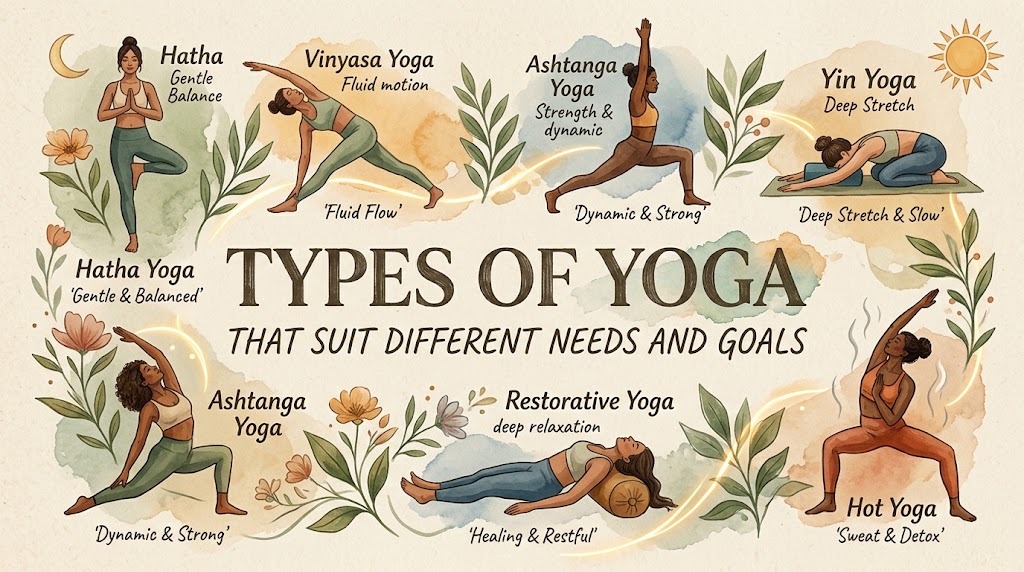
Yoga has become a popular physical activity because it can be adapted to different abilities, preferences, and personal goals. Some people practice yoga to improve flexibility, while others want to build strength, manage stress, or develop better body awareness. However, not every yoga style provides the same experience. Understanding the characteristics of different yoga types can help beginners and experienced practitioners choose a practice that suits their needs.
Choosing the right yoga style does not mean finding the most difficult or popular option. The best choice depends on fitness level, personal goals, physical condition, and preferred practice intensity. Some styles focus on gentle movement and relaxation, while others involve more active sequences. By understanding these differences, yoga can become a more comfortable and sustainable part of a healthy lifestyle.
HATHA YOGA FOR BEGINNERS
Hatha yoga is often associated with a slower and more structured approach to physical yoga practice. Sessions commonly include basic poses, breathing exercises, and periods of relaxation. Because movements can be performed at a manageable pace, it may be suitable for people who are learning fundamental yoga techniques. Beginners can use Hatha yoga to become familiar with posture, breathing, and body awareness.
The pace may also make it easier to focus on proper alignment and controlled movement. However, the exact intensity of a Hatha class can vary between instructors and studios. People should choose a class that matches their current ability. Learning the basics safely is more important than trying to perform advanced poses quickly.
VINYASA YOGA FOR ACTIVE PRACTICE
Vinyasa yoga connects movement with breathing through flowing sequences. Practitioners often move from one pose to another in a continuous rhythm. This style can feel more dynamic than slower forms of yoga and may provide a more physically active session. Vinyasa can suit people who enjoy movement and variety in their workouts.
Because the pace can be faster, beginners should first learn basic poses and transitions. Following an experienced instructor can help reduce the risk of using poor technique. The intensity of Vinyasa classes differs considerably, so checking the class description is useful. A beginner-friendly session can be a better starting point than an advanced class.
ASHTANGA YOGA FOR STRUCTURE AND DISCIPLINE
Ashtanga yoga follows a structured sequence of postures and is generally physically demanding. Practitioners repeat established sequences while coordinating movement and breathing. This approach can appeal to people who enjoy discipline, routine, and progressive physical challenges. Regular practice may also encourage familiarity with the sequence over time.
However, Ashtanga may not be the easiest starting point for everyone. The physical demands can be challenging, particularly for people with limited experience or mobility. Beginners should learn gradually and work with an appropriately qualified instructor when possible. The focus should remain on controlled movement rather than forcing the body to achieve difficult positions.
RESTORATIVE YOGA FOR RELAXATION
Restorative yoga is designed around relaxation and supported poses. Props such as bolsters, blankets, or blocks may be used to help the body remain comfortable in each position. The practice is generally slow and involves little physical intensity. This makes it an option for people who want a calming yoga experience.
Restorative yoga can be particularly appealing after a demanding day. The slower pace provides time to focus on comfortable breathing and body awareness. It should not be confused with medical treatment for stress or sleep problems. Instead, it can be used as one supportive activity within a broader healthy lifestyle.
YIN YOGA FOR GENTLE STRETCHING
Yin yoga generally involves holding selected poses for longer periods while keeping the body relatively relaxed. The practice often targets areas around the hips, pelvis, and spine. It can provide an opportunity to explore gentle stretching and stillness. However, poses should never be forced simply to achieve a deeper stretch.
People with limited flexibility may need modifications or additional support. A qualified instructor can explain how to position the body appropriately. Discomfort should be distinguished from sharp or painful sensations. Listening to the body's limits is essential during longer-held poses.
POWER YOGA FOR A MORE INTENSE WORKOUT
Power yoga is generally a more vigorous style that emphasizes strength, movement, and endurance. Unlike some traditional yoga approaches, Power Yoga does not necessarily follow one fixed sequence. Sessions can include challenging poses and flowing movements. People looking for a more active yoga workout may find this style appealing.
Because the intensity can be relatively high, beginners should choose an appropriate class level. Warming up and using correct technique are important before performing demanding movements. Resting when needed is also part of a safe practice. Yoga should challenge the body without encouraging unnecessary pain or exhaustion.
KUNDALINI YOGA FOR MIND BODY PRACTICE
Kundalini yoga combines physical postures with breathing techniques, meditation, and other practices. Sessions may place significant emphasis on breath awareness, concentration, and mental focus. Some classes also include chanting or meditation. The experience can therefore be different from yoga styles that primarily emphasize physical exercise.
People interested in the broader mind body aspects of yoga may find this approach interesting. Beginners should choose an instructor who clearly explains each technique before practice. Breathing exercises should be performed comfortably and appropriately. If any technique causes dizziness or discomfort, it should be stopped.
GENTLE YOGA FOR FLEXIBILITY AND MOBILITY
Gentle yoga uses slower movements and accessible poses that can be modified according to individual ability. It may be suitable for people who want to improve mobility without performing highly demanding sequences. Flexibility can develop gradually through consistent and comfortable movement. The goal is not to force the body into positions it cannot safely reach.
This style can also work well for people returning to physical activity after a period of inactivity. However, individual needs vary, and certain physical conditions may require professional guidance. Props can help make poses more accessible. A comfortable range of motion should always be prioritized.
HOW TO CHOOSE THE RIGHT YOGA STYLE
Choosing a yoga style should begin with identifying your main goal. If you want relaxation, restorative or gentle yoga may be more suitable, while Vinyasa or Power Yoga may appeal to people seeking a more active workout. Beginners who want to learn fundamental techniques can consider an accessible Hatha class. Your current experience and physical ability should also influence your choice.
It is perfectly acceptable to try different styles before deciding which one suits you best. A person's preferred style may also change as their goals develop. Instead of choosing based on social media trends, consider the actual demands and benefits of each practice. The most suitable yoga style is one that is safe, enjoyable, and realistic to maintain.
CONCLUSION
There are many types of yoga that suit different needs and goals, ranging from gentle practices focused on relaxation to dynamic styles that provide a more active workout. Hatha can help beginners learn basic techniques, Vinyasa offers flowing movement, while Restorative Yoga emphasizes relaxation. Yin Yoga can provide gentle stretching, whereas Power Yoga offers greater physical intensity.
There is no single yoga style that is perfect for everyone. Consider your personal goals, fitness level, comfort, and preferred intensity before choosing a practice. Start gradually and focus on proper technique rather than comparing yourself with others. With the right approach, yoga can become a flexible and enjoyable activity that supports long-term physical and mental well-being.
Tentang Penulis
Gusti Ayu Tita P
Penulis — Universitas STEKOM
Penulis aktif yang berfokus pada isu-isu akademik, teknologi pendidikan, dan pengembangan sumber daya manusia di lingkungan kampus.