Understanding Nuclear Power Plants and How They Work
Gusti Ayu Tita P
1 September 2026
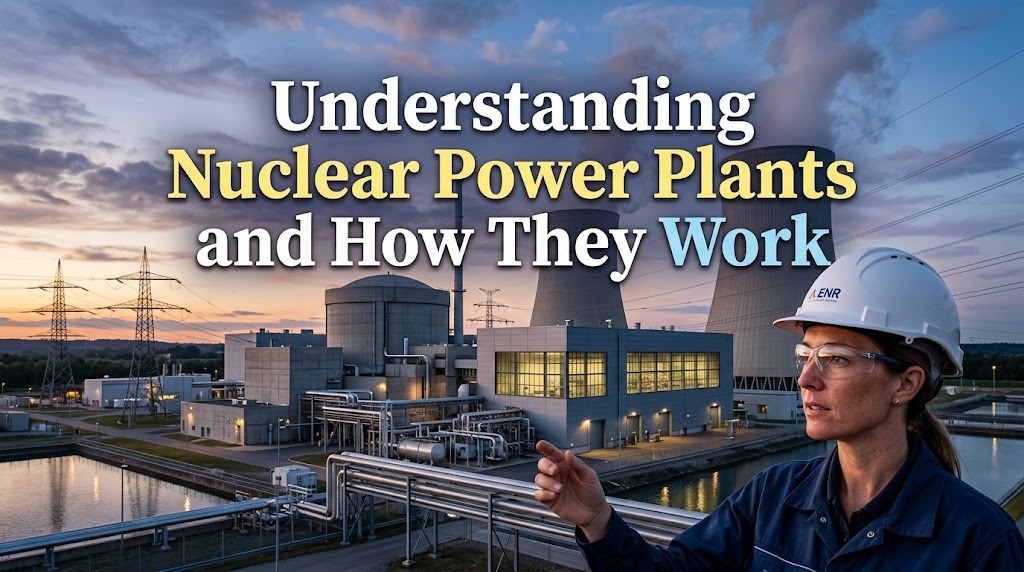
Nuclear power plants are facilities that generate electricity by using heat produced from nuclear reactions. Unlike coal or gas power plants, nuclear plants do not rely on burning fossil fuels to create heat. Most operating nuclear power plants use nuclear fission, a process in which the nucleus of a heavy atom such as uranium is split to release energy. This technology can produce large amounts of electricity while generating very low direct carbon dioxide emissions during operation.
Although nuclear energy may sound highly complex, its basic electricity generation process is relatively easy to understand. Heat from the reactor is used to produce steam, the steam turns a turbine, and the turbine drives a generator. The main difference from conventional thermal power plants is the source of the heat. Nuclear power plants also require specialized safety systems and careful management of radioactive materials.
WHAT IS A NUCLEAR POWER PLANT
A nuclear power plant is a facility that converts nuclear energy into electrical energy. Inside the reactor, controlled nuclear fission produces heat that can be transferred to water or another coolant. The resulting thermal energy is then used in a steam cycle to drive a turbine and generator. This process allows nuclear fuel to provide a continuous source of energy for electricity production.
Most commercial reactors use uranium fuel arranged in fuel assemblies inside the reactor core. When fission occurs, energy is released as heat and additional neutrons are produced. These neutrons can cause further fission, creating a controlled chain reaction. The reactor is designed to regulate this process so that heat can be produced safely and consistently.
HOW NUCLEAR FISSION PRODUCES HEAT
Nuclear fission occurs when the nucleus of an atom such as uranium absorbs a neutron and becomes unstable. The nucleus then splits into smaller nuclei while releasing energy and additional neutrons. The released energy appears largely as kinetic energy from the fission products and is eventually converted into heat within the reactor. This heat is the starting point for the electricity generation process.
The chain reaction must remain controlled during normal operation. Control rods or other reactor control systems are used to manage the number of neutrons available for further fission. The coolant carries heat away from the reactor core to prevent excessive temperatures. Together, these systems allow the reactor to maintain a stable operating condition.
HOW A NUCLEAR POWER PLANT GENERATES ELECTRICITY
The electricity generation process begins when nuclear fission produces heat inside the reactor core. A coolant transfers this heat away from the core. Depending on the reactor design, the heat may directly produce steam or may first heat a separate water circuit that produces steam. The steam is then directed toward a turbine.
As high pressure steam passes through the turbine, it causes the turbine blades to rotate. The turbine is connected to an electrical generator, which converts mechanical energy into electricity. After leaving the turbine, the steam is cooled and converted back into water. The water can then be returned to the system, allowing the cycle to continue.
MAIN COMPONENTS OF A NUCLEAR POWER PLANT
A nuclear power plant contains several major systems that work together. The reactor core contains the nuclear fuel where fission takes place. The coolant system transfers heat from the reactor, while the steam system provides steam to the turbine in many reactor designs. The turbine and generator then convert thermal energy into electrical energy.
Other systems are equally important even though they do not directly generate electricity. Cooling systems remove excess heat, while containment structures provide an important physical barrier around the reactor system. Monitoring and control equipment continuously tracks operating conditions. Multiple safety systems are also included to respond to abnormal conditions and help protect workers and the surrounding environment.
TYPES OF NUCLEAR REACTORS
There are several types of nuclear reactors, each using different designs to manage heat and the nuclear chain reaction. Pressurized Water Reactors or PWRs use pressurized water as coolant and keep the primary water circuit at high pressure. Boiling Water Reactors or BWRs allow water in the reactor vessel to boil and produce steam that can be sent to the turbine. These are among the reactor designs used commercially around the world.
Other designs use different coolants or operating principles. For example, some advanced reactor concepts use gas or molten salt as part of their designs. Small Modular Reactors are another category being developed with a focus on modular construction and potentially different deployment options. Each technology has its own engineering characteristics, advantages, challenges, and regulatory requirements.
SAFETY SYSTEMS IN NUCLEAR POWER PLANTS
Safety is one of the most important aspects of nuclear power generation. Nuclear plants use multiple layers of protection to control the reactor and prevent or limit the release of radioactive materials. These layers can include reactor control systems, cooling systems, physical barriers, monitoring equipment, and emergency procedures. The goal is to prevent abnormal events from developing into more serious accidents.
Nuclear safety also depends on trained personnel, strong operating procedures, regular maintenance, and independent regulatory oversight. Operators are trained to respond to both normal and abnormal operating conditions. Safety systems are designed with different levels of protection so that a single failure does not necessarily lead to a severe consequence. Continuous assessment and improvement are also important throughout the plant's operating life.
NUCLEAR FUEL AND RADIOACTIVE WASTE
Uranium is the most common fuel used in commercial nuclear reactors. Before it can be used in many reactor designs, uranium undergoes several stages of processing and fuel fabrication. Nuclear fuel can produce a large amount of energy from a relatively small quantity of material. However, spent fuel remains radioactive and requires careful handling after it is removed from the reactor.
Radioactive waste comes in different forms and levels, so it is not all managed in the same way. Spent nuclear fuel may initially be stored in cooling pools before being transferred to other storage systems. Other radioactive materials can be processed and packaged according to their characteristics. Long term waste management is an important part of responsible nuclear energy planning.
ADVANTAGES OF NUCLEAR POWER
One major advantage of nuclear power is its ability to produce large amounts of electricity consistently. Nuclear plants can operate for long periods and are not directly dependent on weather conditions such as sunlight or wind. This makes nuclear power potentially useful for supporting reliable electricity systems. Nuclear generation also has relatively low greenhouse gas emissions over its life cycle compared with fossil fuel based electricity generation.
Nuclear fuel also has very high energy density. A relatively small amount of fuel can release a large amount of energy compared with conventional fossil fuels. This can reduce the physical volume of fuel needed for electricity production. However, these advantages must be considered alongside construction costs, safety requirements, radioactive waste management, and other challenges.
ROLE OF NUCLEAR POWER IN THE ENERGY FUTURE
Nuclear power can be one part of a broader strategy to reduce dependence on fossil fuels. It can complement renewable energy sources such as solar and wind by providing electricity that can be generated consistently. A balanced energy system may combine several technologies rather than depending on a single source. The appropriate mix depends on each country's electricity demand, infrastructure, resources, economic conditions, and energy policies.
Future nuclear technologies may also offer new options for electricity generation and industrial applications. Advanced reactors and Small Modular Reactors are being developed with goals that can include improved safety features, modular construction, and flexible applications. However, emerging technologies still require careful testing, regulation, and economic evaluation. Long term planning remains essential for any nuclear energy program.
CONCLUSION
Nuclear power plants generate electricity by using heat from controlled nuclear fission. The heat is transferred through a reactor system, used to produce steam, and converted into mechanical energy by a turbine. The turbine then drives a generator to produce electricity. Although the basic process resembles other thermal power plants, the heat source and safety requirements are fundamentally different.
Nuclear power offers several potential benefits, including reliable electricity generation, high energy density, and low direct carbon emissions during operation. At the same time, nuclear energy requires strict safety measures, skilled personnel, strong regulation, and responsible radioactive waste management. Understanding both its benefits and challenges is essential when considering the role of nuclear power in a future low carbon energy system.
Tentang Penulis
Gusti Ayu Tita P
Penulis — Universitas STEKOM
Penulis aktif yang berfokus pada isu-isu akademik, teknologi pendidikan, dan pengembangan sumber daya manusia di lingkungan kampus.