
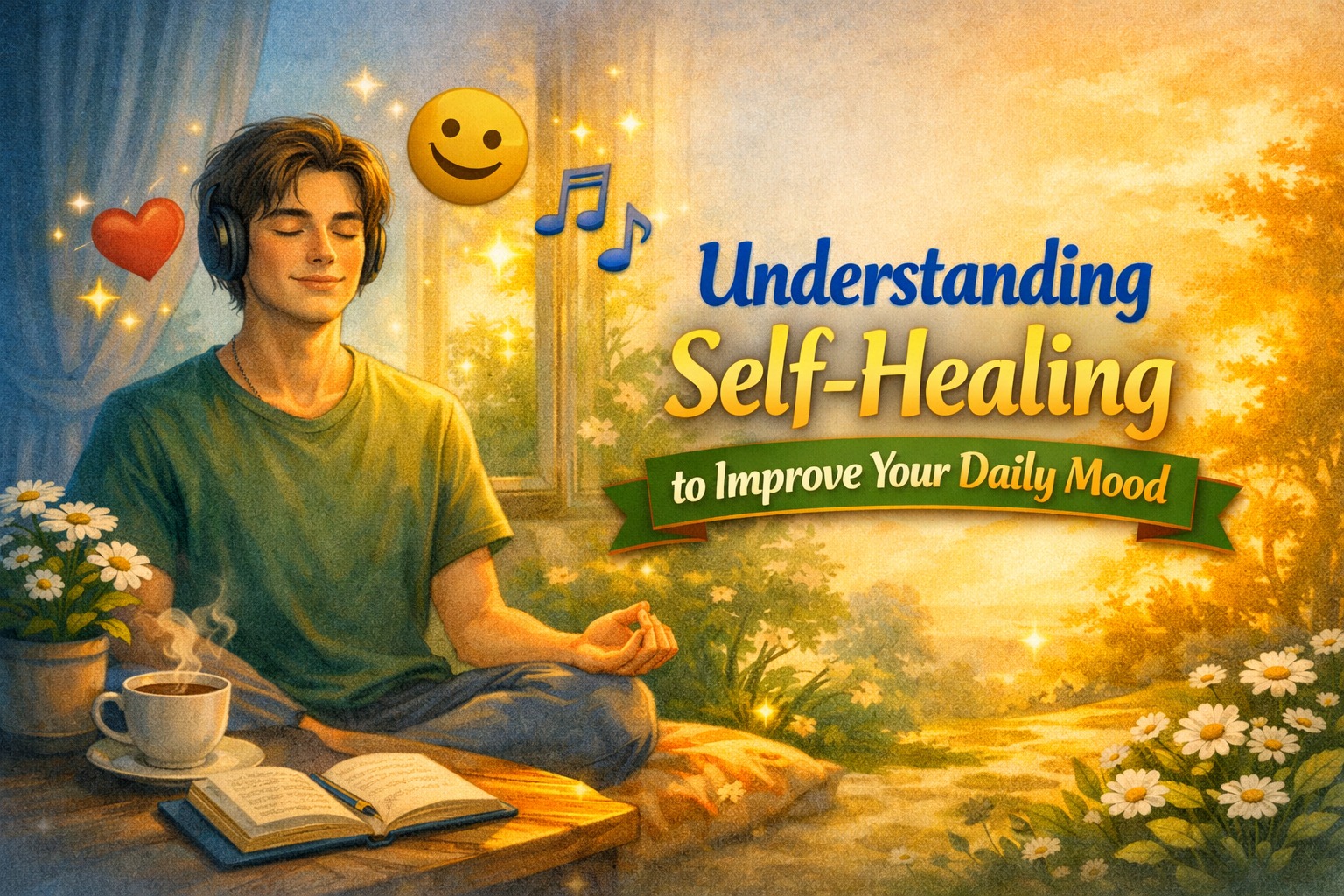
In today’s fast-paced world, many people experience stress, emotional exhaustion, and mood swings that affect their daily lives. Self-healing has become an important practice for maintaining emotional balance and improving mental well-being. By understanding self-healing techniques, you can create a healthier mindset, reduce negative emotions, and enjoy a more positive daily mood.
WHAT IS SELF-HEALING?
Self-healing is the process of restoring emotional, mental, and physical balance through healthy habits and self-awareness. It involves recognizing emotional pain, reducing stress, and taking intentional actions to improve overall well-being. Self-healing does not happen instantly, but it is a gradual journey that helps individuals feel calmer, happier, and more confident.
This practice can include activities such as mindfulness, meditation, exercise, journaling, positive thinking, and spending time with supportive people. The main purpose of self-healing is to reconnect with yourself and develop healthier emotional responses.
WHY SELF-HEALING IS IMPORTANT FOR DAILY MOOD?
Daily mood is strongly influenced by thoughts, experiences, and lifestyle choices. When emotional stress is ignored, it can lead to anxiety, sadness, irritability, and mental fatigue. Self-healing helps release emotional burdens and encourages inner peace.
People who regularly practice self-healing often experience:
- Better emotional control
- Reduced stress levels
- Improved self-confidence
- Higher energy and motivation
- Stronger relationships with others
By improving emotional balance, self-healing allows people to face challenges more calmly and positively.
SIMPLE SELF-HEALING METHODS YOU CAN TRY
There are many easy self-healing practices that can be included in daily routines. These methods can gradually improve your mood and emotional health.
1.PRACTICE GRATITUDE
Taking a few minutes every day to appreciate positive things in life can shift your mindset toward happiness. Writing down things you are grateful for helps reduce negative thinking and increases emotional resilience.
2.GET ENOUGH REST
Lack of sleep can negatively affect mood and mental health. Quality sleep allows the mind and body to recover from daily stress. Creating a healthy sleep routine is an important step in self-healing.
3.SPEND TIME IN NATURE
Nature has a calming effect on the mind. Walking in a park, enjoying fresh air, or simply observing natural surroundings can reduce stress and improve emotional well-being.
4.LIMIT NEGATIVE ENVIRONMENTS
Constant exposure to negativity can drain emotional energy. Choosing supportive friendships and reducing toxic influences can help maintain a healthier mindset.
5.DO ACTIVITIES YOU ENJOY
Hobbies and enjoyable activities can improve mood naturally. Listening to music, drawing, reading, cooking, or exercising can help release emotional tension and create positive feelings.
THE CONNECTION BETWEEN SELF-HEALING AND MENTAL HEALTH
Self-healing supports mental health by helping individuals understand their emotions more clearly. It encourages self-acceptance and emotional awareness, which are essential for reducing stress and anxiety.
Although self-healing is beneficial, professional help may still be necessary for serious mental health conditions. Combining healthy self-healing habits with professional guidance can create stronger emotional recovery and long-term well-being.
HOW TO BUILD A SELF-HEALING ROUTINE?
Creating a consistent routine can make self-healing more effective. Start with small daily habits and focus on progress rather than perfection. Here are a few tips:
- Set aside quiet time each day
- Practice positive self-talk
- Avoid comparing yourself to others
- Stay physically active
- Be patient with your emotional journey
Consistency is the key to building emotional strength and improving daily mood over time.
CONCLUSION
Understanding self-healing is essential for improving emotional well-being and maintaining a positive daily mood. By practicing healthy habits, managing stress, and developing self-awareness, individuals can create a more balanced and peaceful life. Self-healing is not about becoming perfect, but about learning how to care for yourself emotionally and mentally every day.
Tentang Penulis
Gusti Ayu Tita P
Penulis — Universitas STEKOM
Penulis aktif yang berfokus pada isu-isu akademik, teknologi pendidikan, dan pengembangan sumber daya manusia di lingkungan kampus.