Understanding the Social Impact of Mass Protests
Gusti Ayu Tita P
1 September 2026
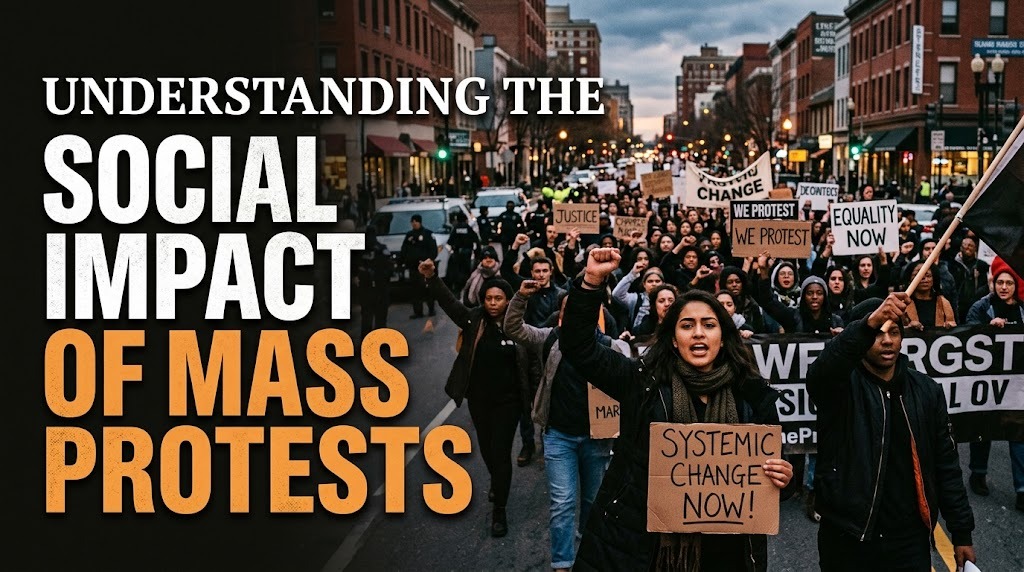
Mass protests can have a significant impact on society because they bring public concerns into a visible and collective space. People may gather to express disagreement with policies, highlight social problems, or demand changes from institutions. The effects of these actions can extend beyond the participants and influence public discussion, relationships between communities, and institutional responses. Social impact does not always mean immediate change because some effects may appear gradually. Understanding these impacts helps explain why mass protests remain an important part of modern civic life.
MASS PROTESTS AND PUBLIC AWARENESS
One of the most visible impacts of mass protests is the increase in public awareness. Issues that were previously discussed by a limited group can receive wider attention when thousands of people express similar concerns. News coverage and social media can further expand the reach of the messages presented during a demonstration. People who are not directly involved may begin learning about the background of the issue. This can encourage broader conversations within families, workplaces, educational institutions, and communities.
Greater awareness does not necessarily mean that everyone will agree with protesters. Some people may support the demands, while others may question the arguments or methods used. Different reactions are a natural part of public discussion. What matters is that the issue becomes more visible and receives opportunities for public debate. Through this process, citizens can examine different perspectives before forming their own conclusions.
STRENGTHENING COLLECTIVE SOLIDARITY
Mass protests can bring together people who share similar experiences or concerns. Individuals who previously felt that their problems were personal may discover that many others face comparable situations. This can create social solidarity and a stronger sense of collective identity. Groups from different backgrounds may cooperate around common demands. Such connections can continue even after a demonstration has ended.
Solidarity can also encourage communities to become more active in addressing social problems. People may establish new organizations, participate in discussions, or support community initiatives after becoming involved in a movement. However, solidarity does not mean that every participant has exactly the same opinion. Shared goals can connect people while allowing different perspectives to remain. Respecting these differences is important for maintaining constructive cooperation.
INFLUENCING PUBLIC DISCUSSION
A large demonstration can change the subjects that receive attention in public conversations. Issues raised by protesters may become topics discussed by journalists, academics, policymakers, community leaders, and ordinary citizens. This can increase pressure on institutions to explain their decisions or respond to public concerns. Public discourse can therefore become one of the important social effects of mass protests.
The influence of a protest on public discussion depends on several factors. The importance of the issue, clarity of demands, media coverage, and public reaction can all affect how long the topic remains visible. Some protests generate extensive discussion, while others receive limited attention. Clear communication can make it easier for the public to understand what protesters are asking for. This can reduce confusion and create better conditions for dialogue.
EFFECTS ON GOVERNMENT AND INSTITUTIONS
Mass protests can encourage government institutions to review public concerns and explain their policies. When demonstrations receive significant attention, policymakers may face greater pressure to respond. Responses can include public statements, consultations, policy reviews, or negotiations. However, institutional response varies depending on the issue and political context. A protest does not automatically result in the acceptance of all demands.
The long-term impact may depend on what happens after the demonstration. Continued public monitoring can keep attention on an issue and encourage institutions to follow through on commitments. Citizens can also use formal channels to provide feedback or participate in policy discussions. Civic engagement therefore remains important after people leave the streets. Sustainable change usually requires more than a single public gathering.
ECONOMIC AND COMMUNITY EFFECTS
Large protests can affect local economic activity, particularly when they take place in busy commercial or transportation areas. Businesses may experience reduced customer access, while traffic disruptions can affect workers and residents. At the same time, protests may draw attention to economic problems that directly affect those same communities. Economic impact can therefore have both short-term costs and broader social dimensions.
The effect on communities also depends on the size, location, duration, and management of a demonstration. Clear planning can reduce unnecessary disruption to transportation and public services. Participants can help by respecting public facilities and considering the needs of surrounding communities. Community responsibility can make public demonstrations safer and more manageable. Balancing public expression with everyday activities is an important part of responsible civic participation.
SOCIAL MEDIA EXPANDS THE IMPACT
Social media allows the effects of a protest to extend far beyond its physical location. Photos, videos, statements, and discussions can reach people in other cities or countries almost immediately. Online users can participate by sharing information, discussing demands, or following developments without being physically present. Digital participation has therefore become an important part of modern social movements.
However, online discussions can also create challenges. Misleading information, edited videos, and unverified claims can spread rapidly during controversial events. Emotional content can sometimes receive more attention than accurate explanations. Digital literacy helps users check information before accepting or sharing it. Responsible online communication can reduce misinformation and support more productive public discussion.
POLARIZATION AND SOCIAL DIVISION
Mass protests can sometimes strengthen divisions within society. People who strongly support a demonstration may develop increasingly negative views toward those who oppose it. Political identities and social networks can reinforce these differences. Social polarization can become stronger when people rely only on information that confirms their existing beliefs. This can make meaningful dialogue more difficult.
Polarization is not an unavoidable result of protest. Communities can reduce unnecessary division by encouraging respectful discussion and recognizing legitimate differences of opinion. Media users can also compare information from different perspectives instead of relying on one-sided narratives. Mutual respect allows disagreement without turning political or social differences into personal hostility. This is important for maintaining healthy democratic relationships.
IMPACT ON YOUNGER GENERATIONS
Mass protests can influence how young people understand citizenship and public participation. Students and young adults may learn about social issues through direct involvement, news reports, or social media discussions. Participation can encourage them to become more aware of public policies and community problems. Youth civic engagement can develop when young people believe their voices can contribute to meaningful discussions.
However, young people also need reliable information when engaging with controversial issues. Emotional online content can influence perceptions without providing sufficient context. Education in critical thinking and media literacy can help younger citizens evaluate claims more carefully. Informed participation allows young people to contribute to public life without being easily influenced by misinformation.
LONG TERM SOCIAL CHANGE
The most important social effects of protests may not appear immediately. A demonstration can introduce an issue into public discussion, strengthen community networks, and encourage institutions to reconsider certain decisions. Over time, these processes can contribute to changes in policies, public attitudes, or social norms. Long-term social change usually develops through repeated participation rather than a single event.
The success of a movement can also depend on what happens after the initial protest. Continued advocacy, dialogue, research, community organization, and institutional engagement can help maintain momentum. Without follow-up, public attention may decline and demands may receive less consideration. Sustained civic participation can therefore determine whether temporary attention develops into lasting influence.
CONCLUSION
Understanding the social impact of mass protests requires looking beyond the size of a crowd. Protests can increase public awareness, strengthen solidarity, influence public discussion, encourage institutional responses, and contribute to social change. They can also create challenges such as economic disruption, misinformation, polarization, and tension between different groups. These effects can vary depending on the issue, participants, location, media coverage, and responses from institutions.
Ultimately, mass protests are one part of a wider process of civic participation. Peaceful expression, accurate information, responsible organization, respectful dialogue, and continued engagement can help maximize their positive social impact. When citizens and institutions are willing to listen to one another, public demonstrations can become opportunities for understanding and constructive change. In this way, mass protests can influence not only immediate public discussions but also the longer-term development of society.
Tentang Penulis
Gusti Ayu Tita P
Penulis — Universitas STEKOM
Penulis aktif yang berfokus pada isu-isu akademik, teknologi pendidikan, dan pengembangan sumber daya manusia di lingkungan kampus.