
University or Online Courses Which Path Secures a Better Future
Gusti Ayu Tita P
26 Februari 2026
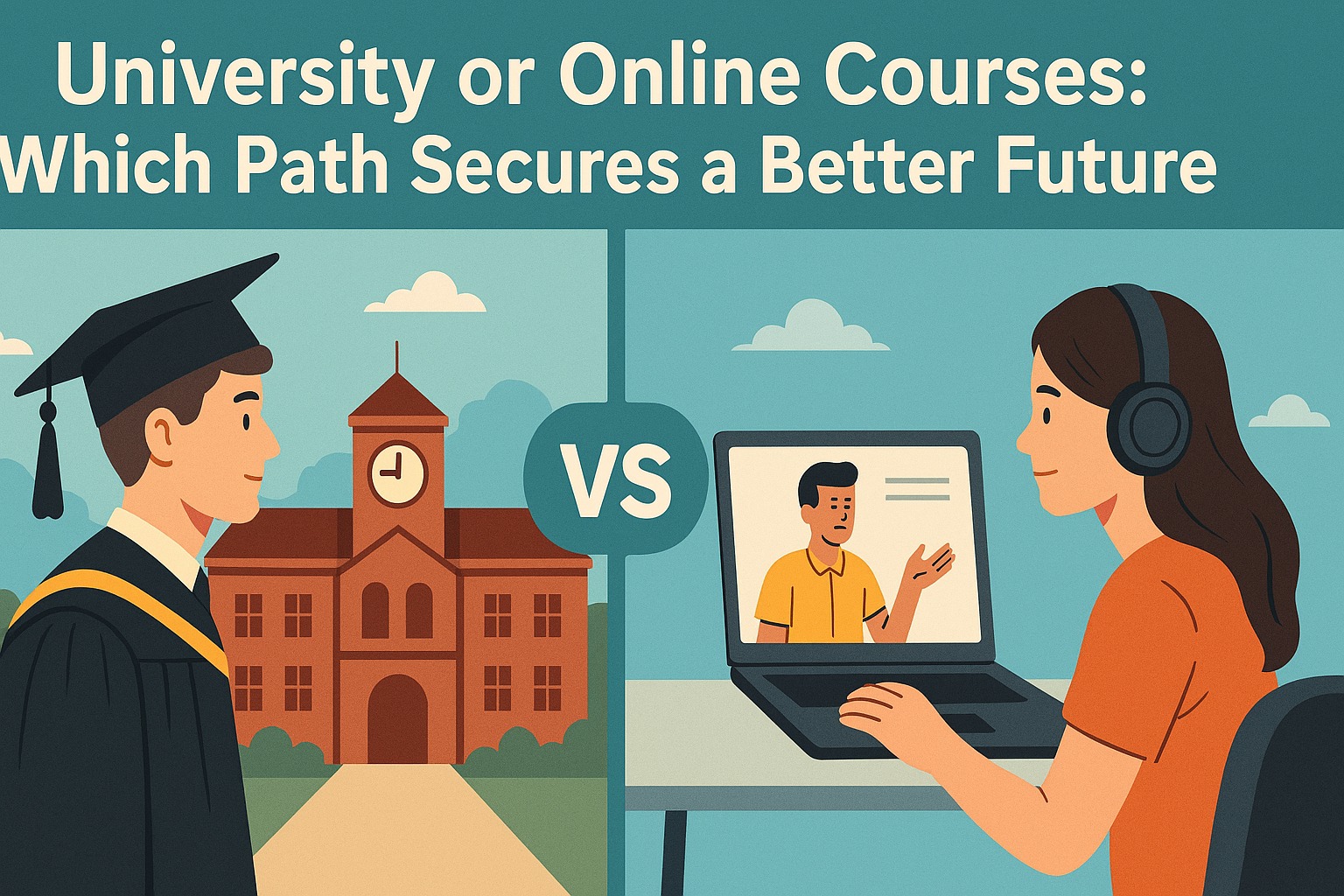
The way people learn and build careers has changed dramatically over the past decade. With the rapid growth of digital platforms and flexible education models, many students and professionals now face a crucial decision: university or online courses—which path secures a better future?
Traditional higher education has long been viewed as the safest route to career stability. However, online courses offer affordability, flexibility, and industry-focused skills that appeal to modern learners. This article explores the advantages and limitations of both options to help determine which path may lead to long-term success.
THE ENDURING VALUE OF UNIVERSITY EDUCATION
Universities provide structured academic programs designed to develop comprehensive knowledge over several years. Students gain theoretical foundations, research experience, and critical thinking skills that are difficult to replicate in short-term programs.
Beyond academics, university life offers networking opportunities, mentorship, extracurricular activities, and exposure to diverse perspectives. These experiences contribute to personal growth and professional maturity.
In regulated professions such as medicine, law, engineering, and education, a university degree remains essential. For these careers, formal education is not only valuable but mandatory.
THE RISE OF ONLINE COURSES AND DIGITAL LEARNING
Online courses have revolutionized access to education. Learners can now acquire in-demand skills—such as coding, digital marketing, graphic design, and data analysis—without committing to a multi-year degree program.
Digital learning platforms provide flexibility, allowing individuals to study at their own pace while working or managing other responsibilities. Many courses are affordable and updated frequently to reflect current industry trends.
Employers in technology-driven sectors increasingly recognize certifications and practical portfolios earned through online training, especially when candidates can demonstrate real-world results.
COST, FLEXIBILITY, AND RETURN ON INVESTMENT
One of the main differences between university education and online courses lies in cost and time commitment. University programs typically require significant financial investment and several years of study. In contrast, online courses are often shorter and more budget-friendly.
However, return on investment depends on career goals. Some high-level positions still require formal degrees, while other roles prioritize skills and experience over academic credentials.
The key question is not which option is universally better, but which aligns with individual ambitions and industry expectations.
COMBINING BOTH PATHS FOR MAXIMUM IMPACT
Rather than choosing one path exclusively, many professionals benefit from combining university education with online certifications. A degree can provide foundational knowledge and credibility, while online courses offer specialized, up-to-date skills.
Continuous learning has become essential in a rapidly evolving job market. Those who actively upgrade their expertise—regardless of the learning format—tend to remain competitive and adaptable.
In the modern workforce, adaptability often determines long-term career growth.
CONCLUSION
So, university or online courses—which path secures a better future? The answer depends on career objectives, financial considerations, and industry requirements. University education remains powerful for building strong foundations and accessing regulated professions, while online courses excel in delivering practical, market-driven skills.
Ultimately, a better future is secured not by the format of education alone, but by commitment to lifelong learning, skill development, and strategic career planning.
Tentang Penulis
Gusti Ayu Tita P
Penulis — Universitas STEKOM
Penulis aktif yang berfokus pada isu-isu akademik, teknologi pendidikan, dan pengembangan sumber daya manusia di lingkungan kampus.



