Viewing Mass Protests Through a Social Perspective
Gusti Ayu Tita P
1 September 2026
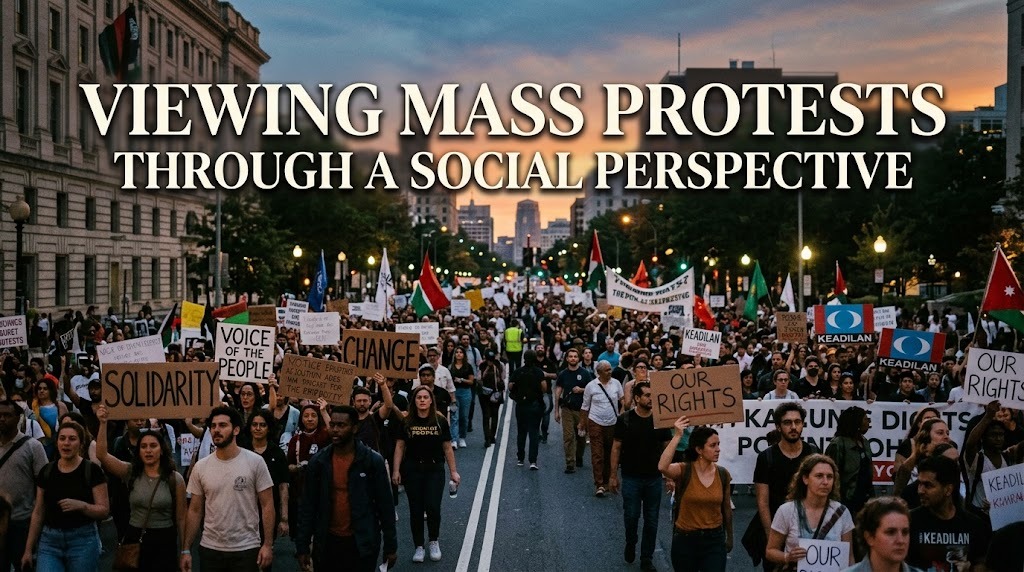
Mass protests are not only large gatherings in public spaces but also social events that reflect the concerns, relationships, and expectations of communities. People may participate because they experience similar problems or believe that an issue deserves greater attention. From a social perspective, a protest can reveal how individuals interact, build solidarity, and respond to changes around them. Social conditions and collective experiences often influence why people decide to express their concerns together.
Looking at mass protests from a social perspective helps people understand the situation beyond political arguments. A demonstration can involve different groups with different backgrounds, motivations, and expectations. Some participants may seek policy changes, while others simply want their concerns to be heard. Understanding these social dynamics can provide a more balanced view of why mass protests occur and how they affect society.
MASS PROTESTS AS A FORM OF SOCIAL EXPRESSION
A mass protest provides people with an opportunity to express concerns collectively. Individuals who might feel powerless when speaking alone can find strength when they are part of a larger group. Shared participation can make certain issues more visible to society. Collective expression can therefore become an important way for communities to communicate their expectations.
The message of a protest can involve many aspects of everyday life. People may discuss employment, education, economic conditions, public services, social justice, or government decisions. These issues can affect different groups in different ways. Public concerns become more visible when people communicate them through collective action.
SOCIAL CONDITIONS BEHIND MASS PROTESTS
Protests often develop within specific social conditions. Economic difficulties, unequal opportunities, limited access to services, and dissatisfaction with institutions can influence public attitudes. When these conditions affect many people, individual frustrations may become shared concerns. Social pressure can then encourage communities to consider collective action.
The background of participants can also influence the character of a protest. Students, workers, community members, professionals, and other groups may participate for different reasons. Their concerns may overlap even though their daily experiences are not identical. Social diversity is therefore an important part of understanding mass protests.
COLLECTIVE IDENTITY STRENGTHENS SOCIAL MOVEMENTS
People often become more involved when they feel connected to others who share similar concerns. This connection can create a collective identity that encourages participation. Individuals may begin to see a personal problem as part of a broader social issue. A shared identity can also strengthen communication among participants.
Collective identity does not require everyone to think exactly alike. A large movement can contain different opinions while maintaining a common objective. Participants may disagree about methods or priorities but still support a broader demand. Shared goals can provide a foundation for cooperation despite differences.
SOLIDARITY AMONG PARTICIPANTS
Solidarity is another important social element of mass protests. People may support one another because they believe that their concerns are connected. This sense of unity can provide emotional support and encourage continued participation. Social solidarity can also help communities feel that they are not facing problems alone.
Strong solidarity can extend beyond the protest itself. Participants may continue communicating, organizing community activities, or supporting related causes afterward. However, solidarity can weaken if internal disagreements become too strong. Open communication and mutual respect are important for maintaining relationships within a movement.
THE ROLE OF SOCIAL MEDIA IN SOCIAL MOVEMENTS
Social media has changed how people form relationships around public issues. Individuals can communicate with others who share their concerns even when they live in different locations. Posts, videos, and online discussions can create communities around particular topics. Digital communities can therefore support the development of social movements.
However, online interaction also has limitations. People may encounter only information that supports their existing opinions, while misleading content can spread rapidly. Online disagreements can also become more intense when users communicate without understanding different perspectives. Responsible digital participation is essential for keeping social discussions productive.
MASS PROTESTS AND SOCIAL POLARIZATION
Mass protests can sometimes reveal existing divisions within society. Different groups may have opposing views about government policies, social values, or the methods used during demonstrations. When these differences become intense, they can contribute to social polarization. People may begin to view those with different opinions as opponents rather than fellow members of society.
Polarization is not an unavoidable outcome of protest. Respectful communication can help people disagree without creating deeper hostility. Citizens can also seek information from different perspectives before forming conclusions. Constructive disagreement allows social differences to remain part of democratic discussion without becoming unnecessary conflict.
THE IMPACT ON SURROUNDING COMMUNITIES
A mass protest can affect people who are not directly involved. Large crowds may influence traffic, public transportation, business activity, and access to certain areas. These effects can create frustration among residents and workers. Community impact should therefore be considered when examining a protest from a social perspective.
Responsible organization can help reduce unnecessary disruption. Participants can respect public spaces and the rights of people who are not involved in the demonstration. Organizers can also communicate information clearly to reduce confusion. Community consideration can help maintain a healthier relationship between protesters and surrounding residents.
MEDIA SHAPES SOCIAL PERCEPTION
The media plays an important role in how society understands mass protests. News reports, photographs, videos, and online discussions can introduce the event to people who were not present. The information people receive can influence whether they view the protest positively, negatively, or neutrally. Media perception can therefore affect the wider social impact of a demonstration.
Different media sources may emphasize different parts of an event. Some may focus on the protesters' demands, while others may highlight disruption or conflict. Audiences should compare reliable information rather than depending on one perspective. Critical media literacy can help people develop a more balanced understanding.
YOUNG PEOPLE AND SOCIAL PARTICIPATION
Young people can play an important role in contemporary mass protests. Students and young adults often use digital platforms to discuss social issues and communicate with wider communities. Their participation can introduce new perspectives and communication styles into public movements. Youth participation can therefore influence the development of social discussions.
Participation can also help young people learn about civic responsibility. They can become more aware of how policies and social conditions affect their communities. At the same time, young participants need reliable information to avoid being influenced by misleading claims. Informed participation is important for making civic involvement constructive.
MASS PROTESTS AND SOCIAL CHANGE
From a social perspective, protests can contribute to changes in public attitudes and community relationships. An issue that was previously overlooked may become more widely discussed after a demonstration. Continued discussion can encourage institutions and communities to reconsider existing practices. Social change may therefore begin with increased awareness before producing visible changes in policies or behavior.
However, one protest rarely changes society immediately. Long-term change often requires continued communication, organization, education, and public participation. People may need to remain engaged after the initial demonstration has ended. Sustained civic involvement can help transform temporary attention into longer-term social development.
CONCLUSION
Viewing mass protests through a social perspective means examining more than the number of people involved or the immediate events surrounding a demonstration. Protests can reflect shared concerns, social pressure, collective identity, solidarity, inequality, and changing public expectations. They can strengthen connections among certain groups while also revealing divisions within society. Their influence can extend through media, social networks, communities, and ongoing public discussions.
Ultimately, mass protests are part of the broader relationship between citizens and society. Respect, accurate information, peaceful participation, social awareness, and constructive dialogue can help ensure that collective action contributes positively to public life. Understanding the social background of a protest allows people to see the reasons behind participation rather than judging an event only from its appearance. This broader perspective can support a more informed understanding of social change.
Tentang Penulis
Gusti Ayu Tita P
Penulis — Universitas STEKOM
Penulis aktif yang berfokus pada isu-isu akademik, teknologi pendidikan, dan pengembangan sumber daya manusia di lingkungan kampus.