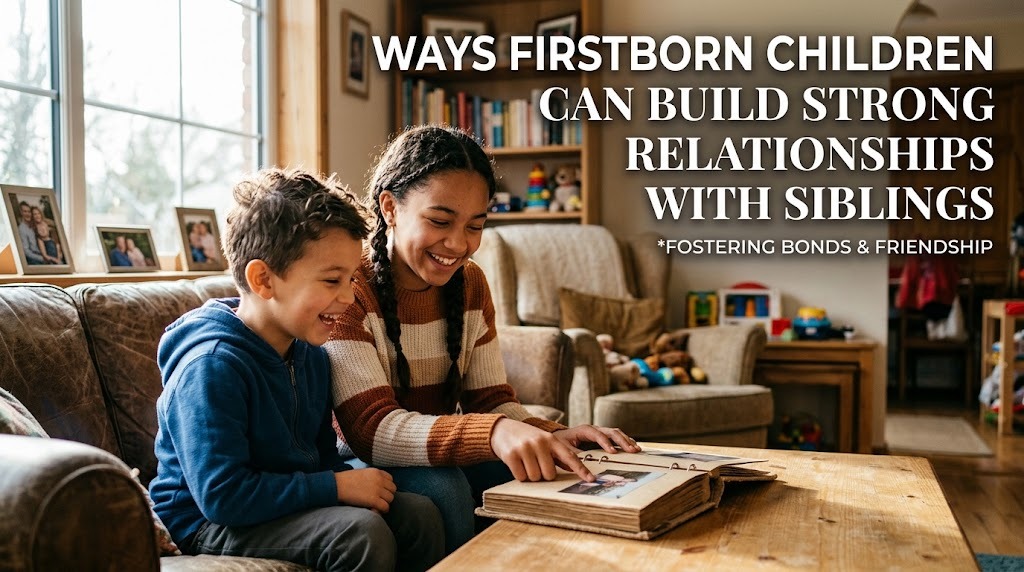
Ways Firstborn Children Can Build Strong Relationships with Siblings?
Gusti Ayu Tita P
7 September 2026
INTRODUCTION
Being the firstborn child often means having a unique position within the family. As the oldest sibling, a firstborn may experience different expectations, responsibilities, and relationships compared with younger children. These experiences can influence how they communicate and interact with their siblings. However, being the oldest does not mean that the firstborn must always act as a parent or take complete responsibility for everyone. A healthy sibling relationship should be built on trust, respect, communication, and mutual support.
Strong relationships between siblings can provide emotional support throughout different stages of life. Although disagreements are normal, firstborn children can take positive steps to create a more comfortable and supportive family environment. By understanding their siblings and avoiding excessive control, they can develop a relationship based on friendship rather than authority.
BUILD OPEN AND HONEST COMMUNICATION
Good communication is one of the most important foundations of a strong sibling relationship. Firstborn children can make their younger siblings feel comfortable by listening to their opinions without immediately judging them. Instead of always giving instructions, the oldest child can ask questions and allow younger siblings to explain what they think or feel. This approach can reduce misunderstandings and create greater trust between siblings. Simple conversations about school, hobbies, daily experiences, or personal concerns can gradually strengthen their connection.
Firstborn children should also learn how to express their own feelings appropriately. If they feel tired, ignored, or overwhelmed by family responsibilities, they can communicate these feelings instead of keeping everything inside. Honest communication helps siblings understand each other better and prevents small problems from becoming larger conflicts. When both sides feel heard, conversations can become more relaxed and meaningful.
AVOID ACTING LIKE A SECOND PARENT
Because they are older, firstborn children may naturally feel responsible for younger siblings. Helping with homework, offering advice, or protecting a younger sibling can be positive. However, constantly giving orders or trying to control every decision can create emotional distance. A firstborn child should act as a supportive sibling rather than trying to replace the role of a parent.
Younger siblings also need opportunities to make their own decisions and learn from their experiences. The oldest child can provide guidance when it is needed while still respecting personal boundaries. This balance allows younger siblings to feel trusted rather than controlled. Respecting independence can make sibling relationships more equal, comfortable, and long lasting.
SPEND QUALITY TIME TOGETHER
Spending meaningful time together can help siblings develop stronger emotional connections. Quality time does not always require expensive activities or complicated plans. Firstborn children can invite their siblings to watch a movie, play games, exercise, cook, study, or simply talk together. Shared activities create positive memories that can strengthen sibling bonds over time.
It is also helpful to choose activities based on mutual interests. If siblings have different personalities, they can take turns choosing what to do together. This makes everyone feel valued and prevents one person from controlling the relationship. Regular moments of togetherness can make communication easier and help siblings become more comfortable with each other.
HANDLE CONFLICT WITH RESPECT
Arguments between siblings are normal, especially when they have different personalities, opinions, and needs. Firstborn children should avoid assuming that being older automatically makes them right. During disagreements, it is better to listen carefully and understand the situation before responding. Respectful conflict management can prevent temporary disagreements from damaging long term sibling relationships.
When emotions become intense, taking a short break can be more effective than continuing an argument. Once everyone is calmer, siblings can discuss the problem and look for a solution together. Firstborn children can also learn to apologize when they make mistakes instead of expecting younger siblings to apologize first. The ability to forgive, apologize, and compromise is an important part of maintaining a healthy sibling relationship.
SHOW SUPPORT WITHOUT COMPARING
Every child has different abilities, interests, personalities, and goals. Firstborn children can strengthen their relationships by appreciating these differences rather than comparing themselves with their siblings. Statements about who is smarter, more successful, or more responsible can create unnecessary competition. Encouragement is usually more beneficial than comparison because it helps siblings feel appreciated for who they are.
The oldest sibling can celebrate younger siblings when they achieve something important. They can also offer support when a sibling experiences failure or disappointment. At the same time, firstborn children should recognize that they also deserve support from their siblings. A healthy relationship involves giving and receiving encouragement rather than creating a one sided relationship.
BUILD TRUST AND RESPECT OVER TIME
Strong sibling relationships do not develop instantly. They grow through consistent actions, honest communication, shared experiences, and mutual respect. Firstborn children can build trust by keeping promises, respecting private matters, and avoiding unnecessary criticism. Trust becomes stronger when siblings know that they can depend on each other without feeling judged or controlled.
As siblings grow older, their relationships may change because their priorities, lifestyles, and responsibilities also change. The firstborn child should allow the relationship to develop naturally instead of expecting younger siblings to remain the same. Staying connected through regular conversations and meaningful support can help preserve closeness even when siblings live separately. A strong sibling bond can become an important source of friendship and emotional support throughout adulthood.
CONCLUSION
Firstborn children have an important opportunity to create positive and lasting relationships with their siblings. They can strengthen these relationships by communicating openly, respecting boundaries, spending quality time together, managing conflicts calmly, avoiding comparisons, and building trust. Being the oldest sibling does not require someone to control or raise their younger siblings. Instead, the firstborn can become a trusted companion who offers guidance while respecting the independence of others.
A strong sibling relationship is based on mutual understanding rather than age or family position. When firstborn children treat their siblings with patience and respect, they can help create a warmer and more supportive family environment. Small acts of kindness and consistent communication can make sibling relationships stronger for many years.
Tentang Penulis
Gusti Ayu Tita P
Penulis — Universitas STEKOM
Penulis aktif yang berfokus pada isu-isu akademik, teknologi pendidikan, dan pengembangan sumber daya manusia di lingkungan kampus.