
What Are the Duties and Functions of the Education Office in Education?
Gusti Ayu Tita P
15 September 2026
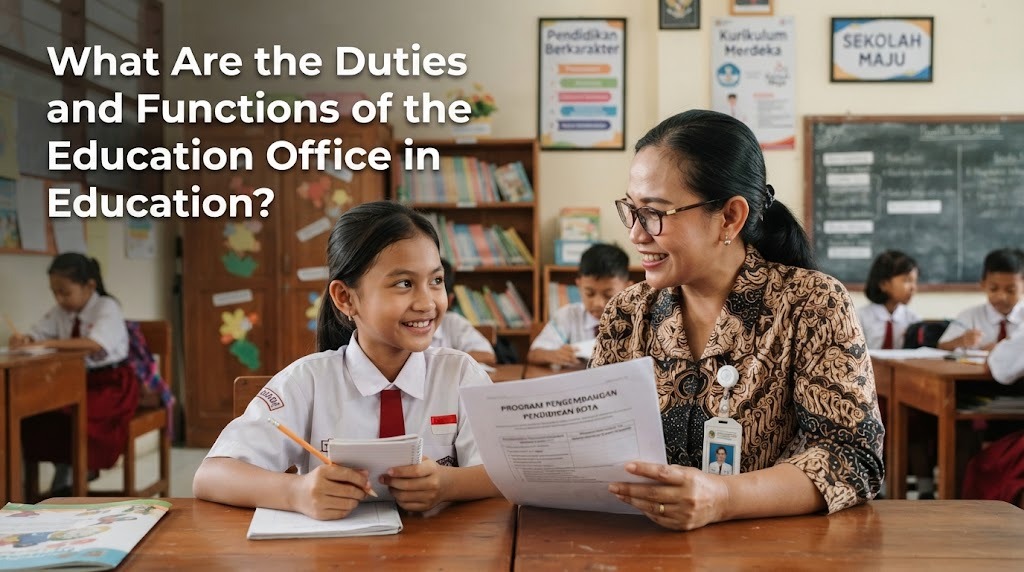
Education plays an important role in developing knowledge, skills, character, and future opportunities. To ensure that education runs properly, government institutions are needed to manage programs, policies, and public services. One of the important institutions is the Education Office, which manages and supports educational activities within its administrative area. Its responsibilities cover various aspects, including schools, teachers, students, educational programs, and public services.
Understanding the duties and functions of the Education Office can help the public recognize how educational services are managed. The institution also works with schools and other stakeholders to improve the quality and accessibility of education.
EDUCATION OFFICE DUTIES
The Education Office is responsible for implementing government policies in the education sector at the regional level. Its duties generally include managing educational programs, coordinating schools, supporting teachers, and providing education-related public services. The office may also supervise the implementation of education policies according to applicable regulations. Through these responsibilities, the Education Office helps ensure that educational activities operate in an organized manner.
Another important duty is identifying educational needs in its area. These needs can include school facilities, teacher development, student services, learning resources, and educational programs. The Education Office can use information and data from schools to determine appropriate programs and priorities. This approach helps educational policies become more relevant to local conditions.
EDUCATION POLICY IMPLEMENTATION
The Education Office plays an important role in implementing Education Policy issued by the central or regional government. Policies may relate to curriculum implementation, teacher development, student services, school management, or access to education. The office helps communicate these policies to schools so they can be understood and implemented correctly. It can also provide guidance when schools experience difficulties in applying educational regulations.
Effective policy implementation requires coordination between government institutions, schools, teachers, and the community. The Education Office therefore acts as a link between Government Policy and educational institutions in the field. Regular communication can reduce misunderstandings and help schools follow established regulations. Proper implementation also supports more consistent educational services.
SCHOOL QUALITY DEVELOPMENT
One of the important functions of the Education Office is supporting School Quality improvement. This can involve programs related to teacher competency, learning facilities, school management, and educational evaluation. The office may coordinate development programs that help schools improve their educational services. Schools can then use these programs to identify weaknesses and develop appropriate improvements.
Improving school quality requires continuous evaluation and cooperation. The Education Office can encourage schools to use educational data and performance information when planning improvements. School Development should consider the needs of students, teachers, and the surrounding community. With systematic support, schools can gradually create a better learning environment.
TEACHER COMPETENCY SUPPORT
Teachers have a major influence on the quality of learning, so improving teacher competency is an important part of educational development. The Education Office can organize or facilitate Teacher Training, workshops, seminars, and other professional development activities. These programs may help teachers improve teaching methods, classroom management, assessment skills, and digital abilities. Continuous development allows teachers to respond more effectively to changes in education.
Teacher competency is not limited to academic knowledge. Teachers also need communication skills, creativity, adaptability, and the ability to use appropriate learning technology. Through professional development programs, the Education Office can encourage teachers to improve these abilities. Strong teacher competency can contribute to more effective and meaningful learning experiences for students.
STUDENT EDUCATION SERVICES
The Education Office also supports various services related to students. These services can include programs that improve access to education, support student development, and address educational needs within the region. The office may coordinate with schools to ensure that students receive appropriate educational services. Student Services should be designed to support students' learning, development, and participation in education.
Education services also need to consider equality and accessibility. Students may have different economic conditions, abilities, learning needs, and geographical circumstances. The Education Office can help develop programs that reduce barriers to education within its authority. This support is important for creating a more inclusive and equitable education system.
EDUCATIONAL DATA MANAGEMENT
Accurate data is important for making effective educational decisions. The Education Office may collect and manage information related to schools, teachers, students, facilities, and educational programs. Reliable Education Data can help identify problems and determine which areas require greater attention. Data can also support the planning, monitoring, and evaluation of education programs.
Digital technology has made data management increasingly important. Education offices and schools need to maintain accurate, updated, and properly managed information. Good data management can reduce administrative errors and support faster decision-making. It also helps government institutions understand educational conditions more clearly.
PUBLIC EDUCATION SERVICES
The Education Office provides public services related to education for students, parents, teachers, schools, and the wider community. Information services may cover educational programs, regulations, school-related matters, teacher development, and other services within its authority. Clear information helps people understand available educational opportunities and procedures. Public Services should therefore be accessible, informative, and responsive.
The use of digital platforms can make education services easier to access. Websites, online information systems, and digital communication channels can help people obtain information without always visiting the office directly. However, digital services should be supported by accurate information and clear procedures. Good public services can increase public trust in educational institutions.
COOPERATION WITH SCHOOLS
The Education Office cannot improve education alone. Cooperation with schools is necessary because schools directly implement learning activities and understand the conditions of students and teachers. The Education Office can provide guidance, coordination, and program support based on information received from schools. Strong cooperation allows educational programs to be implemented more effectively.
Communication should be conducted regularly and professionally. Schools can provide feedback about their challenges, while the Education Office can offer appropriate guidance or coordinate available support. This two-way communication helps ensure that educational programs are not only well planned but also relevant to actual conditions. School Cooperation is therefore an important part of sustainable education development.
CONCLUSION
The Education Office has an important role in managing and supporting education at the regional level. Its duties can include Education Policy implementation, school quality development, teacher competency support, student services, data management, and public education services. Through cooperation with schools and other stakeholders, the office can help create more organized and accessible educational services. Effective management, accurate data, professional teachers, and responsive public services are important foundations for improving education. Ultimately, the Education Office contributes to creating an education system that supports students, teachers, schools, and the wider community.
Tentang Penulis
Gusti Ayu Tita P
Penulis — Universitas STEKOM
Penulis aktif yang berfokus pada isu-isu akademik, teknologi pendidikan, dan pengembangan sumber daya manusia di lingkungan kampus.



