
What Challenges Does the Education Office Face in the Digital Era?
Gusti Ayu Tita P
15 September 2026
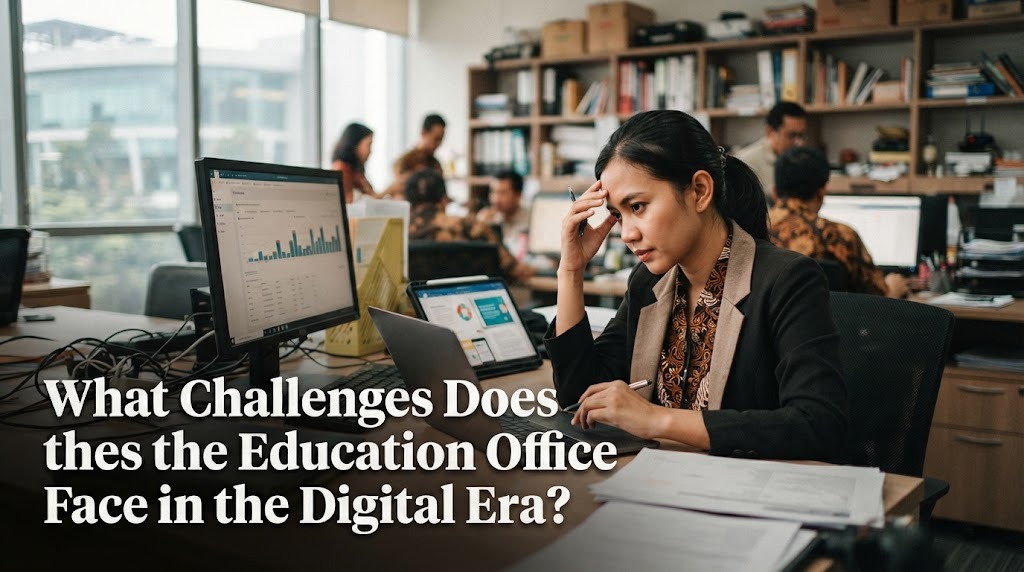
The digital era has brought major changes to education management and public services. The Education Office must use technology to provide faster, more efficient, and accessible services. However, digital transformation also creates challenges related to infrastructure, security, employee skills, and information management. These challenges need to be handled carefully so technology can support education effectively. Understanding these issues is important for building better digital education services.
DIGITAL INFRASTRUCTURE CHALLENGES
Digital infrastructure is one of the main foundations for education services in the digital era. The Education Office needs reliable internet connections, computers, servers, and digital platforms to support its activities. However, infrastructure quality can differ between regions and schools. Limited internet access or outdated equipment can make digital services less effective. Therefore, improving Digital Infrastructure is important for creating more equal access to education technology.
Regular maintenance is also needed to keep digital systems functioning properly. Technical problems can interrupt administrative activities and delay public services. The Education Office needs to identify infrastructure problems and provide appropriate solutions. Cooperation with schools and technology providers can also support infrastructure development. Reliable infrastructure helps education services operate more efficiently and consistently.
DATA SECURITY AND PRIVACY
The Education Office manages various types of education data from schools, teachers, students, and other stakeholders. This information needs to be protected from unauthorized access and misuse. Digital systems can increase efficiency, but they may also create cybersecurity risks. Strong security systems and proper access controls are needed to protect important information. Data Security must therefore become a priority in digital education management.
Employees also need to understand basic data protection practices. They should use secure passwords, protect accounts, and avoid sharing confidential information carelessly. System updates and security checks should be conducted regularly. Clear procedures are also needed when a security problem occurs. Good data protection can maintain public trust and reduce the risk of information misuse.
STAFF DIGITAL COMPETENCY
Technology continues to develop, requiring Education Office employees to improve their digital abilities. Employees may need to use databases, administrative applications, online communication tools, and digital reporting systems. Different levels of digital competency can affect work efficiency. Training can help employees understand new systems and use technology correctly. Digital Skills are therefore important for supporting professional performance.
Digital training should focus on practical skills related to employees' daily responsibilities. Employees can learn document management, data processing, online communication, and basic technical problem solving. Continuous learning can also help them adapt to new digital systems. Teamwork allows employees to share knowledge and help each other when facing technical difficulties. Competent employees can provide faster and more effective education services.
ADAPTING TO DIGITAL SERVICES
The transition from traditional services to digital services requires adjustment from both employees and the public. Some users may still be more familiar with direct services and manual procedures. The Education Office needs to provide digital platforms that are simple and easy to understand. Clear instructions can help users access services without unnecessary difficulties. Digital Services should be designed according to the needs and abilities of different users.
The quality of digital services should also be evaluated regularly. Feedback from schools, teachers, students, and communities can help identify problems. The Education Office can use this feedback to improve digital platforms and service procedures. Assistance should also be available for users who have limited digital skills. Accessible digital services can make education administration more practical and inclusive.
MAINTAINING ACCURATE INFORMATION
The rapid spread of information creates another challenge for the Education Office. Education information published through digital platforms needs to be accurate, updated, and easy to understand. Incorrect information can cause confusion and lead to mistakes among the public. Information should therefore be checked before being published through official channels. Accurate Information is essential for maintaining reliable education services.
The Education Office should establish clear procedures for collecting, checking, updating, and publishing information. Employees responsible for digital information need to pay attention to details and verify important data. Official websites and social media platforms should provide consistent information. Corrections should be made quickly when inaccurate information is discovered. Reliable information can strengthen public confidence in education services.
CONCLUSION
The digital era provides opportunities to improve education services while creating several new challenges. The Education Office needs to address digital infrastructure, data security, employee competency, digital services, and information accuracy. Continuous training, regular system maintenance, strong security, and careful information verification can help overcome these challenges. Cooperation between education institutions, employees, schools, and communities is also important. With proper digital management, education services can become more effective, accessible, and reliable.
Tentang Penulis
Gusti Ayu Tita P
Penulis — Universitas STEKOM
Penulis aktif yang berfokus pada isu-isu akademik, teknologi pendidikan, dan pengembangan sumber daya manusia di lingkungan kampus.



