What Do Students Learn in a Visual Communication Design Major?
Gusti Ayu Tita P
26 September 2026
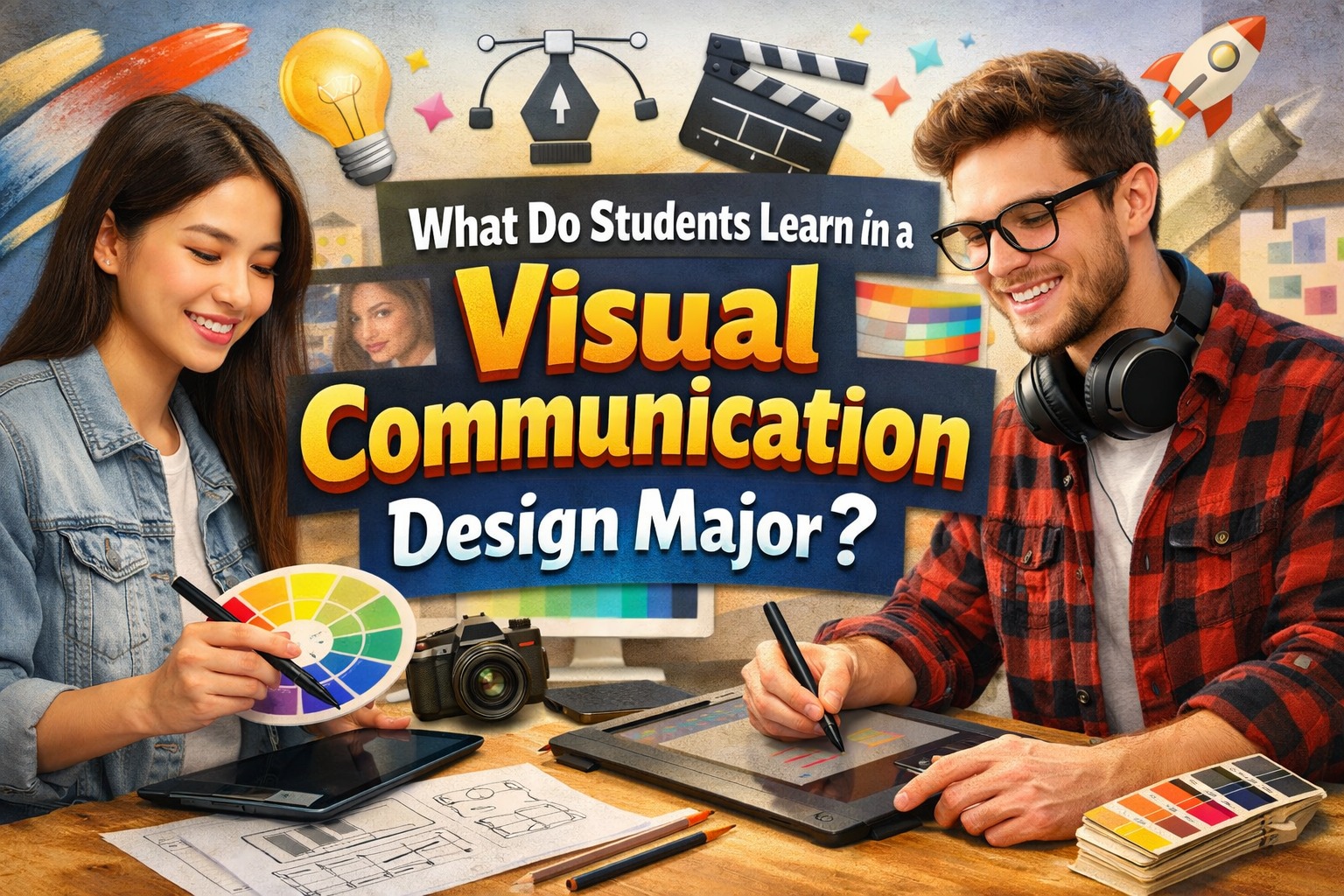
Visual Communication Design (VCD) is one of the most popular majors among creative students who are interested in art, technology, and communication. This field focuses on how visual elements can effectively deliver messages to audiences through various media. Students learn not only how to create attractive designs but also how to solve communication problems through visual solutions. As digital industries continue to grow, the demand for skilled visual designers is increasing in many sectors. Understanding what students learn in this major can help prospective students determine whether it matches their interests and career goals.
FUNDAMENTALS OF VISUAL COMMUNICATION DESIGN
The first thing students learn in a Visual Communication Design major is the foundation of design principles. They study topics such as color theory, typography, layout composition, and visual hierarchy. These elements help designers create visuals that are both aesthetically pleasing and easy to understand. Students also learn how different design components work together to communicate specific messages effectively.
In addition, students explore the history and development of visual communication. They analyze how design trends have evolved over time and how cultural influences shape visual messages. This knowledge helps them create designs that are relevant, meaningful, and suitable for different audiences. A strong understanding of these fundamentals becomes the basis for all future design projects.
DIGITAL DESIGN AND CREATIVE SOFTWARE
A significant part of the curriculum focuses on digital design tools and industry-standard software. Students gain hands-on experience using applications for graphic design, illustration, photo editing, and digital publishing. Learning these tools allows them to transform creative ideas into professional visual products that meet industry expectations.
Beyond technical skills, students are taught how to use software efficiently to improve productivity and creativity. They work on projects such as posters, brochures, social media content, and digital advertisements. Through continuous practice, students develop the confidence needed to handle real-world design challenges and client requirements.
BRANDING, ADVERTISING, AND VISUAL STRATEGY
Visual Communication Design students also learn about branding and advertising strategies. They study how companies build strong visual identities through logos, color systems, packaging, and promotional materials. Understanding branding helps students create designs that represent a company's values and connect with target audiences.
Furthermore, students learn how visual communication supports marketing goals. They explore consumer behavior, audience analysis, and campaign development. By combining creativity with strategy, students can design materials that not only look appealing but also deliver measurable communication results.
USER EXPERIENCE AND DIGITAL MEDIA DESIGN
As digital platforms become increasingly important, students learn about User Experience (UX) and User Interface (UI) Design. These subjects focus on creating digital products that are functional, user-friendly, and visually engaging. Students study how users interact with websites, mobile applications, and other digital platforms.
They also learn research methods, wireframing, prototyping, and usability testing. These skills enable them to design digital experiences that meet user needs while maintaining strong visual appeal. The integration of design and technology makes graduates more competitive in the modern creative industry.
PROJECT DEVELOPMENT AND PROFESSIONAL PORTFOLIOS
Throughout their studies, students work on various design projects that simulate professional environments. They learn project management, teamwork, presentation techniques, and client communication skills. These experiences help prepare them for the expectations of the workplace after graduation.
Another important aspect is building a professional portfolio. Students compile their best works to showcase their creativity, technical abilities, and problem-solving skills. A strong portfolio often becomes one of the most valuable assets when applying for internships, freelance opportunities, or full-time positions in the creative industry.
CAREER OPPORTUNITIES AFTER GRADUATION
Graduates of Visual Communication Design have access to diverse career opportunities. They can work as graphic designers, branding specialists, UI/UX designers, illustrators, art directors, content creators, and digital marketers. The skills acquired during their studies are applicable across many industries, including technology, education, media, retail, and entertainment.
As businesses increasingly rely on visual content to communicate with customers, the need for qualified design professionals continues to grow. This makes a Visual Communication Design degree a valuable choice for students who want to combine creativity, communication, and technology in their future careers.
CONCLUSION
A Visual Communication Design major provides students with a comprehensive combination of creative thinking, technical expertise, and communication skills. From learning design fundamentals and digital software to developing branding strategies and user experiences, students gain the knowledge needed to succeed in modern creative industries. The practical projects and portfolio development process further prepare graduates for professional challenges. For individuals who enjoy creativity and visual storytelling, this major offers exciting opportunities for personal and career growth.
Tentang Penulis
Gusti Ayu Tita P
Penulis — Universitas STEKOM
Penulis aktif yang berfokus pada isu-isu akademik, teknologi pendidikan, dan pengembangan sumber daya manusia di lingkungan kampus.