What Factors Make a Hiking Trail Difficult?
Gusti Ayu Tita P
1 September 2026
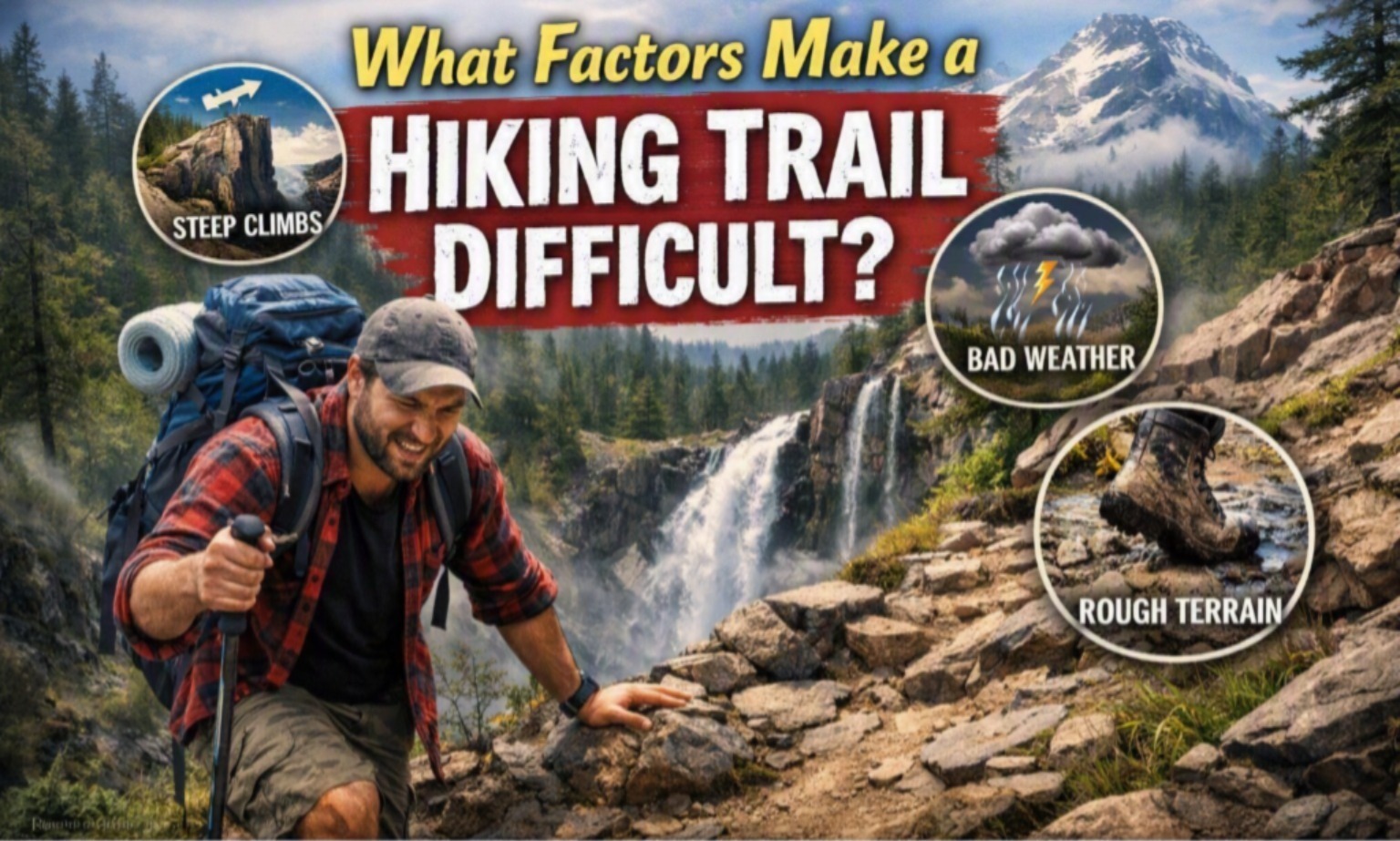
Hiking trails can vary greatly in difficulty, even when they are located on the same mountain or natural area. A route that feels comfortable for an experienced hiker may be challenging for a beginner because of differences in terrain, elevation, distance, weather, and trail conditions. Understanding these factors is important before choosing a hiking route. It helps hikers prepare their physical fitness, equipment, time, and safety plan according to the actual demands of the trail.
ELEVATION GAIN AND STEEP SLOPES
One of the biggest factors that makes a hiking trail difficult is elevation gain. A trail with a large increase in elevation requires more physical effort because hikers must continuously move uphill against gravity. Steep slopes can make the climb even harder, especially when they continue for a long distance without many flat sections. Beginners may become tired quickly if they are not accustomed to sustained uphill walking.
The steepness of a trail can also affect balance and movement. Some sections may require hikers to use their hands for support, particularly when the path becomes very steep or rocky. Elevation gain should therefore be considered together with distance rather than viewed as a separate factor. A short trail with a very steep climb can sometimes feel more difficult than a longer route with gradual elevation changes.
TERRAIN AND TRAIL SURFACE
The condition of the terrain has a major influence on hiking difficulty. Smooth and well-maintained paths are generally easier to walk on than routes covered with loose rocks, roots, mud, sand, or uneven ground. Rocky sections can require careful foot placement, while muddy trails may become slippery and unstable. Hikers need better balance and concentration when walking across challenging surfaces.
Some trails also contain scrambling sections, narrow ridges, river crossings, or areas with exposed rocks. These features can increase the technical demands of a hike and may require appropriate footwear or additional skills. Even if the elevation gain is moderate, difficult terrain can make a route physically and mentally demanding. Checking recent information about trail conditions is therefore useful before starting a hike.
TRAIL DISTANCE AND HIKING DURATION
Trail distance is another important factor when determining how difficult a hiking route may be. Longer routes require hikers to spend more time walking and can lead to increasing fatigue throughout the journey. The difficulty becomes greater when a long trail also includes significant elevation gain or challenging terrain. Hikers should consider the total distance of the route, including the return journey if the trail is out and back.
Hiking duration also affects energy management and safety. A route that takes several hours requires sufficient food, water, rest, and time to complete before darkness or changing weather conditions. A hiker who starts too late may feel pressured to move faster, increasing the risk of exhaustion or mistakes. Choosing a route that matches available time and personal endurance is therefore essential.
WEATHER AND ENVIRONMENTAL CONDITIONS
Weather can significantly change the difficulty of a hiking trail. Rain, strong wind, extreme heat, cold temperatures, and fog can make a route much harder than it would be under normal conditions. Rain can turn soil into mud and make rocks slippery, while strong winds can affect balance on exposed sections. Hot weather can also increase dehydration and fatigue, particularly on trails with little shade.
Environmental conditions can change rapidly in mountainous areas. Fog and poor visibility may make navigation more difficult, while cold temperatures can become dangerous if hikers are not properly equipped. For this reason, hikers should check the weather forecast and understand the typical conditions of the area before leaving. Proper clothing, navigation equipment, water, and emergency supplies should be adjusted according to the expected environment.
TRAIL TECHNICALITY AND NAVIGATION
Some hiking trails are difficult because they require more than ordinary walking. Technical difficulty may involve scrambling, steep rock sections, exposed terrain, ladders, ropes, or other obstacles. Such routes may require specific skills and experience, even when their total distance is relatively short. Beginners should avoid assuming that a short trail is automatically easy.
Navigation difficulty can also increase the challenge of a hike. Poorly marked trails, confusing intersections, dense vegetation, and limited phone reception can make it harder to follow the correct route. Hikers should understand the route beforehand and consider carrying an offline map, compass, or reliable GPS device. Good navigation preparation can reduce the risk of getting lost and prevent unnecessary physical exertion.
FITNESS LEVEL AND HIKING EXPERIENCE
A trail's difficulty is not determined only by its physical characteristics. Fitness level and hiking experience strongly influence how a person experiences the same route. Someone who regularly hikes may handle steep climbs and long distances more comfortably than someone who rarely exercises. Beginners may need more breaks and more time to complete the same trail.
Experience also helps hikers respond to changing conditions. Experienced hikers are often more familiar with pacing, hydration, route assessment, weather changes, and basic trail safety. However, experience should not lead to overconfidence, because even skilled hikers can face unexpected hazards. The safest approach is to choose a trail that matches current ability rather than personal ambition alone.
LOAD AND EQUIPMENT
The weight carried by a hiker can make a noticeable difference to trail difficulty. A heavy backpack increases the effort required during climbs and can place additional stress on the legs, shoulders, and back. Carrying unnecessary equipment may cause fatigue sooner, especially on long or steep routes. Hikers should therefore pack according to the trail length, weather, and expected conditions.
At the same time, reducing weight should not mean leaving behind essential safety equipment. Water, food, navigation tools, suitable clothing, first aid supplies, and emergency equipment may be necessary depending on the route. Proper hiking footwear is also important because it can improve traction and stability on uneven surfaces. The goal is to carry the right equipment without adding unnecessary weight.
HOW TO ASSESS A TRAIL BEFORE HIKING?
Before choosing a route, hikers should examine several factors rather than relying only on a simple difficulty label. Check the distance, elevation gain, terrain, estimated duration, weather, technical sections, and navigation requirements. Trail descriptions, official park information, and recent reports can provide useful details about current conditions. Comparing these factors with your own fitness and experience will help you select a more suitable route.
It is also important to prepare a realistic hiking plan. Start early when appropriate, bring enough water and food, and allow extra time for rest stops and unexpected delays. If the conditions become unsafe or the route is beyond your ability, turning back is a responsible decision rather than a failure. Careful preparation makes hiking more enjoyable while reducing unnecessary risks.
CONCLUSION
A hiking trail can become difficult because of a combination of elevation gain, steep slopes, terrain, distance, weather, technical challenges, navigation, fitness, experience, and backpack weight. These factors can interact with one another and make a route considerably more demanding than its distance alone suggests. Understanding them allows hikers to prepare more effectively and choose routes that match their abilities.
For a safer hiking experience, always evaluate the trail before departure and prepare according to the expected conditions. Good planning, appropriate equipment, realistic pacing, and respect for changing weather are essential parts of responsible hiking. With the right preparation, hikers can enjoy challenging trails while managing their safety and energy more effectively.
Tentang Penulis
Gusti Ayu Tita P
Penulis — Universitas STEKOM
Penulis aktif yang berfokus pada isu-isu akademik, teknologi pendidikan, dan pengembangan sumber daya manusia di lingkungan kampus.