What Happens When Inner Conflict Is Kept Hidden for Too Long?
Gusti Ayu Tita P
21 September 2026
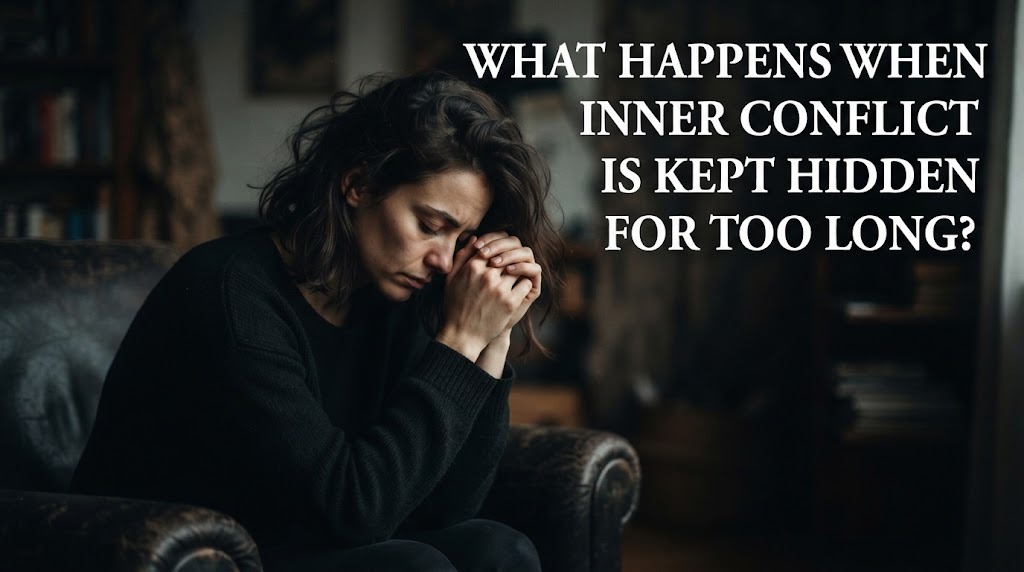
Inner conflict can become more difficult to manage when a person keeps it hidden for a long time. Someone may choose to remain silent because they do not want to worry others, create problems, or appear vulnerable. However, avoiding communication does not always make the underlying issue disappear. Over time, unresolved emotions, repeated overthinking, and emotional pressure may affect daily life and relationships. Understanding what can happen when inner conflict remains hidden can encourage healthier ways of dealing with difficult thoughts and feelings.
WHY DO PEOPLE HIDE THEIR INNER CONFLICT?
People may hide inner conflict for many different reasons. Some fear being judged, misunderstood, criticized, or rejected by others. Others may believe that they should be strong enough to handle everything on their own. In some situations, a person may not even fully understand what they are feeling, making it difficult to explain the problem.
Keeping certain personal thoughts private is not automatically unhealthy. Everyone has a right to personal boundaries and privacy. The concern arises when someone consistently avoids addressing an important problem even though it continues to create significant emotional pressure. When silence becomes the main way of dealing with conflict, the underlying issue may remain unresolved.
HOW CAN HIDDEN INNER CONFLICT AFFECT EMOTIONS?
When difficult thoughts remain unexpressed, they can continue occupying a person's attention. This may contribute to emotional stress, frustration, worry, or mental fatigue. A person might appear calm on the outside while spending considerable time internally thinking about the same problem. The difference between outward behavior and internal experience can become exhausting.
Over time, emotional pressure may also make ordinary situations feel more difficult. Someone who is already struggling internally may have less patience or emotional energy for everyday challenges. This does not mean that hidden conflict automatically causes serious emotional problems, but persistent unresolved stress can affect overall well-being. Recognizing these changes can help a person understand when additional support may be useful.
CAN HIDING INNER CONFLICT INCREASE OVERTHINKING?
Yes, hiding an unresolved problem can contribute to repetitive thinking because there may be no opportunity to organize or discuss the thoughts. A person may repeatedly replay conversations, imagine different outcomes, or question whether they made the right decision. Without new information or a practical way forward, this mental cycle can continue.
Overthinking can also make the original problem seem larger and more complicated. Instead of focusing on what can actually be done, the mind may become occupied with possibilities that cannot be controlled. Writing down thoughts, identifying facts, and separating realistic concerns from assumptions can help break this cycle. Discussing the issue with someone trustworthy may also provide a perspective that is difficult to reach alone.
HOW CAN HIDDEN CONFLICT AFFECT RELATIONSHIPS?
Hidden inner conflict can influence communication and relationships even when a person does not intend it to. Someone may become quieter, less responsive, or more distant because they are using their emotional energy to deal with an internal problem. Other people may not know the real reason and could interpret the behavior as anger, rejection, or a lack of interest.
This can create misunderstandings that add another layer of stress. For example, avoiding an important conversation may temporarily prevent disagreement but can leave the other person confused. Honest and respectful communication can reduce this uncertainty without requiring someone to reveal every private thought. Explaining that you are dealing with something personal and need some time can be healthier than suddenly withdrawing without explanation.
WHAT HAPPENS WHEN EMOTIONAL PRESSURE BUILDS UP?
When emotional pressure continues without appropriate coping, a person may feel increasingly overwhelmed or emotionally exhausted. They may have difficulty concentrating, lose interest in activities, or find everyday responsibilities harder to manage. These effects can vary greatly from person to person and can have many possible causes.
The important point is to pay attention to changes in normal functioning. If unresolved inner conflict begins interfering with work, education, relationships, sleep, or other important parts of daily life, it deserves attention. Taking the problem seriously does not mean assuming the worst. It means recognizing that the situation may require healthier coping strategies or additional support.
HOW CAN YOU STOP INNER CONFLICT FROM REMAINING HIDDEN?
The first step is to acknowledge that the conflict exists. A person can identify the main concern, write down competing thoughts, and consider which emotions or values are involved. Speaking with a trusted friend, family member, mentor, or other appropriate support person can also make complicated thoughts easier to organize. The goal is not necessarily to find an immediate solution but to understand the situation more clearly.
It is also helpful to take small practical steps instead of demanding a perfect solution immediately. Setting boundaries, having an honest conversation, gathering information, or making a simple plan can gradually reduce uncertainty. If the conflict remains persistent and significantly affects daily functioning, speaking with a qualified mental health professional can provide structured support. Asking for help is a practical option when personal coping strategies are no longer enough.
CONCLUSION
Keeping inner conflict hidden for too long can allow unresolved thoughts and emotions to continue creating emotional pressure. It may contribute to overthinking, communication difficulties, emotional distance, and problems with daily functioning. However, having inner conflict does not mean that something is automatically wrong with a person. Self-awareness, healthy communication, personal boundaries, and appropriate support can help people manage difficult internal experiences more effectively. Addressing an inner conflict does not always require sharing everything with everyone; it means finding a safe and constructive way to understand and manage what is happening inside.
Tentang Penulis
Gusti Ayu Tita P
Penulis — Universitas STEKOM
Penulis aktif yang berfokus pada isu-isu akademik, teknologi pendidikan, dan pengembangan sumber daya manusia di lingkungan kampus.