
What Is The Connection Between Family Cards, BPJS, And Public Services?
Gusti Ayu Tita P
2 September 2026
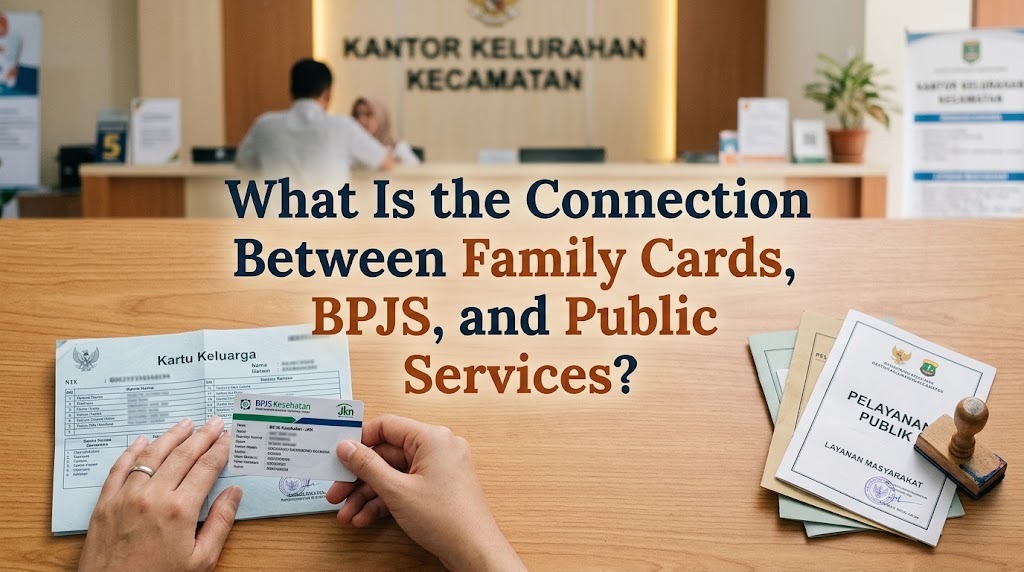
A Family Card or Kartu Keluarga is an important population document in Indonesia. It records information about family members, including names, NIK, family relationships, and residential details. BPJS services and other public services may also use population information to verify the identity of residents.
The connection between these documents and services is mainly related to data verification and administrative accuracy. When population information is consistent, it can make certain registration, verification, or service processes easier. However, the exact documents required depend on the specific service and institution.
UNDERSTAND THE ROLE OF FAMILY CARDS
A Family Card provides information about the members registered within a family. It can help establish family relationships, household information, and population identity during administrative processes. This makes the document useful as supporting information for various government and private services.
The information on the Family Card should match other official population records. If a name, NIK, address, or family relationship is incorrect, an institution may need additional verification. Keeping the Family Data accurate can therefore reduce potential administrative difficulties.
UNDERSTAND THE ROLE OF BPJS
BPJS provides national social security programs, including health and employment-related services. When residents register or manage certain BPJS administration, personal identification and population information may be relevant to the process. The exact requirements depend on the BPJS program and type of service.
Population data can help connect a person's identity with the appropriate administrative record. If information differs between records, the applicant may need to complete a correction or verification process. Therefore, maintaining accurate population records is useful when managing BPJS administration.
CONNECT FAMILY DATA WITH PUBLIC SERVICES
Family Card information can also be relevant to other public services that require identity or household verification. Examples may include education administration, social assistance, healthcare administration, and other government programs. Each institution determines its own document and verification requirements.
The Family Card does not automatically guarantee eligibility for a particular service. Instead, it may function as one of several supporting documents used to verify information. Applicants should always check the requirements of the specific public service they want to access.
KEEP NIK AND FAMILY DATA CONSISTENT
One important connection between the Family Card, BPJS, and public services is the need for consistent NIK and personal information. NIK is a key population identifier that can be used in administrative verification. Differences in names, dates of birth, addresses, or other information may require clarification.
Families should review their population documents when there are important changes. Marriage, birth, death, divorce, or relocation can affect family information. Updating the Family Card through the appropriate Dukcapil procedure helps keep the records current.
FIX DATA PROBLEMS THROUGH OFFICIAL SERVICES
If Family Card or population information does not match the data used by another service, do not change the document yourself. Contact the relevant Dukcapil Service to determine the correct procedure for correcting population data. After the population record is corrected, follow the relevant institution's instructions for updating its records.
This approach helps maintain reliable information across different administrative systems. Keep supporting documents available when verification is required. Most importantly, use official service channels when handling personal data.
PROTECT PERSONAL INFORMATION
The connection between Family Cards, BPJS, and public services also means that residents should be careful when sharing personal documents. A Family Card may contain information about several family members, while other services may require additional identity details. Only provide documents to authorized institutions when they are genuinely required.
Avoid sharing Family Card images, NIK, account information, or verification codes with unknown individuals. Be careful with unofficial websites and suspicious messages claiming to represent government services. Good data security practices can help protect families from unauthorized use of personal information.
CONCLUSION
The connection between Family Cards, BPJS, and public services is largely based on population data verification. Accurate Family Card information can help support administrative processes when residents register for or access certain services.
Families should keep their NIK and population data consistent, update records when circumstances change, and correct errors through official Dukcapil channels. At the same time, personal documents should be shared carefully and only with authorized institutions for legitimate administrative purposes.
Tentang Penulis
Gusti Ayu Tita P
Penulis — Universitas STEKOM
Penulis aktif yang berfokus pada isu-isu akademik, teknologi pendidikan, dan pengembangan sumber daya manusia di lingkungan kampus.