
What Skills Are Needed to Work at the Education Office?
Gusti Ayu Tita P
15 September 2026
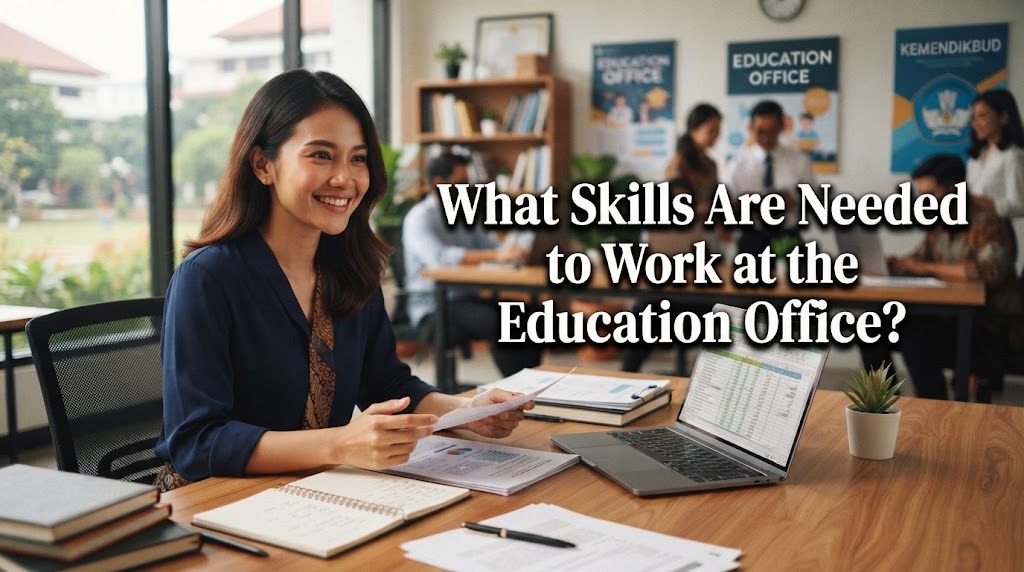
Working at the Education Office requires a combination of technical abilities, communication, organizational skills, and professional attitudes. Employees may handle administrative tasks, educational programs, data, public services, or digital systems. Each position can have different requirements depending on its responsibilities and applicable regulations. Therefore, developing a broad range of skills can help individuals prepare for opportunities in the education sector.
Strong skills also help employees complete their responsibilities accurately and efficiently. In a professional environment, employees need to communicate with different people and follow established procedures. Continuous learning is important because education services and technology continue to develop.
ADMINISTRATIVE SKILLS
Administrative work is common in many education-related positions. Employees may need to manage documents, reports, schedules, correspondence, and records. Good Administrative Skills help ensure that information is organized and tasks are completed accurately. Attention to detail is especially important when handling official documents.
Employees should also understand basic office procedures and digital tools. They may use word processors, spreadsheets, email, and document management systems in their daily work. Document Management skills can improve efficiency and reduce errors. Organized administrative work also supports better public and institutional services.
COMMUNICATION SKILLS
Education Office employees interact with teachers, students, parents, schools, government institutions, and members of the public. Effective Communication Skills help employees explain information clearly and respond to questions appropriately. Good communication also involves listening carefully and understanding the needs of others. These abilities are useful in both direct and digital communication.
Professional communication should be polite, clear, and adapted to the situation. Employees may need to explain procedures or educational information to people with different levels of understanding. Public Communication can therefore influence how effectively educational services are delivered. Strong communication also supports teamwork among employees.
DIGITAL SKILLS
Modern education administration increasingly depends on digital technology. Employees may work with information systems, spreadsheets, online platforms, databases, or digital communication tools. Digital Skills help employees perform administrative and information-related tasks more efficiently. Basic technology knowledge is useful even for positions that are not specifically technical.
Digital competence also involves responsible use of information. Employees should understand basic data security, privacy, password protection, and safe digital communication. Technology Skills need to be updated as systems and workplace requirements change. Continuous practice can help employees remain confident when using new digital tools.
ANALYTICAL AND PROBLEM SOLVING SKILLS
Education Office employees may encounter problems involving administrative procedures, data, programs, or public services. Problem Solving skills help employees identify the cause of a problem and consider appropriate solutions. Analytical thinking can also help when reviewing information and making work-related decisions. Employees should avoid making conclusions without sufficient information.
Problem solving often requires patience and careful evaluation. Employees may need to compare information, communicate with relevant parties, and follow established procedures before taking action. Analytical Skills can support accurate decisions and improve the quality of administrative work. These abilities become increasingly valuable when employees handle complex tasks.
PROFESSIONAL AND TEAMWORK SKILLS
Technical abilities are not enough without a strong professional attitude. Employees need Professional Skills such as discipline, responsibility, integrity, punctuality, adaptability, and attention to detail. They should also respect regulations and handle official information responsibly. Professional behavior helps build trust within the workplace and with the public.
Teamwork is equally important because education services involve cooperation among different people and institutions. Employees need to share information, coordinate tasks, respect colleagues, and contribute to common goals. Teamwork Skills can make programs and administrative processes more efficient. A cooperative work environment also supports better public services.
CONCLUSION
Working at the Education Office requires a combination of Administrative Skills, Communication Skills, Digital Skills, Problem Solving, and Professional Skills. The exact requirements depend on the position and responsibilities involved. Individuals who want to work in this field should develop both technical abilities and interpersonal qualities. Continuous learning can help employees adapt to changes in education, technology, and public services. With appropriate preparation and a responsible attitude, these skills can support a successful career in education administration.
Tentang Penulis
Gusti Ayu Tita P
Penulis — Universitas STEKOM
Penulis aktif yang berfokus pada isu-isu akademik, teknologi pendidikan, dan pengembangan sumber daya manusia di lingkungan kampus.



