WHEN ALL LEARNING MATERIALS ARE WITHIN REACH, ARE STUDENTS MORE READY TO FACE SNBT OR FINDING IT HARDER TO MANAGE CONCENTRATION?
Gusti Ayu Tita P
14 Juni 2026
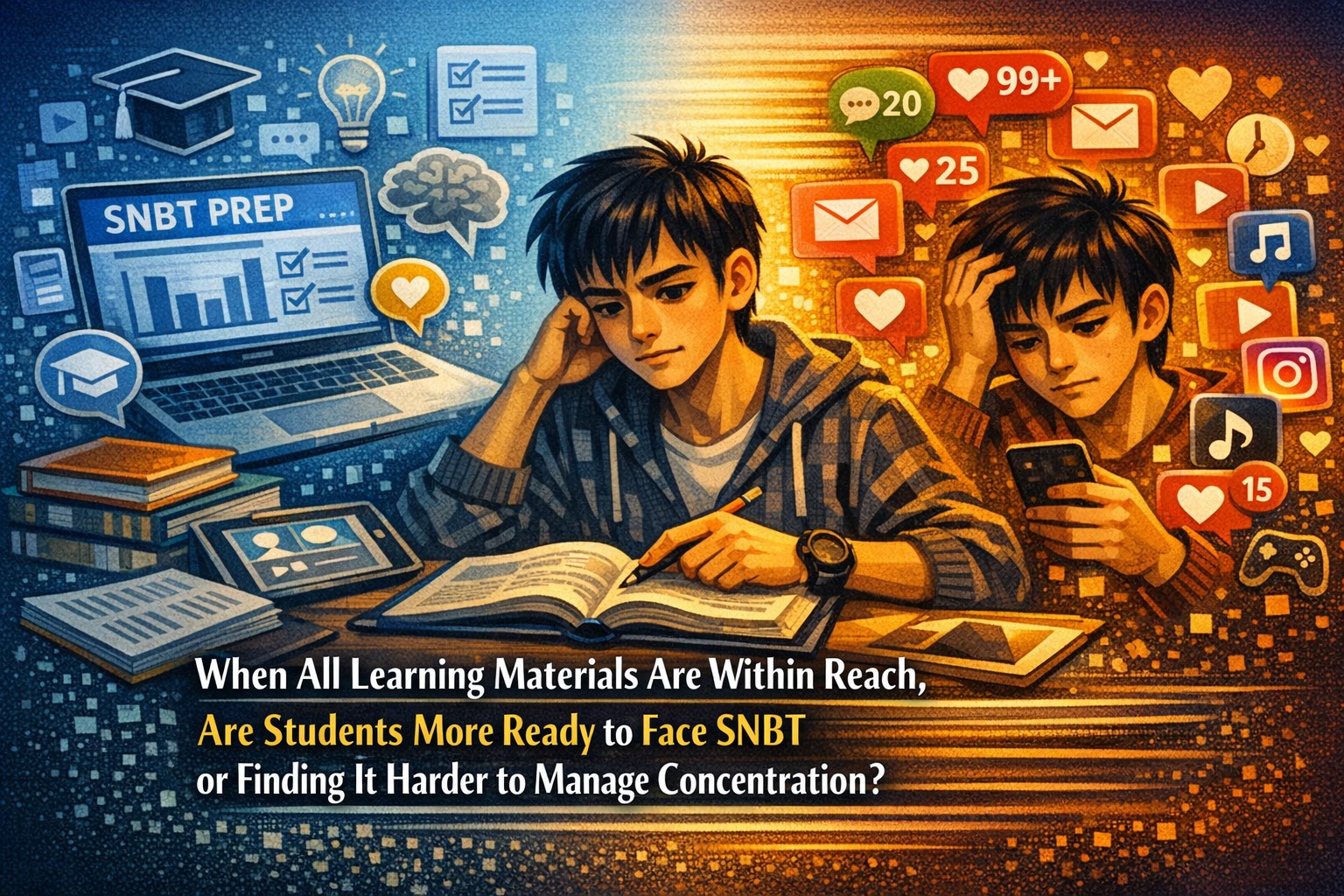
Preparing for SNBT (Seleksi Nasional Berdasarkan Tes) in today’s digital era feels very different from the learning experience of previous generations. Students no longer need to depend only on school textbooks, classroom explanations, or expensive tutoring centers. With just a smartphone and an internet connection, thousands of learning materials are available instantly. Video lessons, online tryouts, practice questions, academic forums, and discussion groups can all be accessed from anywhere and at any time.
At first glance, this seems like the perfect academic advantage. Students have more opportunities to learn, more flexibility in managing study schedules, and more resources to improve weak subjects. Access to information has become faster and wider than ever before. Many people believe this should automatically make students more prepared to face SNBT.
However, reality often tells a more complicated story. When everything is available, students do not always become more focused. Instead, many feel overwhelmed. They save too many study resources, switch between platforms too often, and struggle to decide what should be prioritized. The abundance of learning materials can create confusion rather than clarity.
This raises an important question: when all learning materials are within reach, are students truly becoming more ready for SNBT, or are they finding it harder to manage concentration and maintain effective study habits?
The answer depends not on the amount of information available, but on how students organize attention, discipline, and purpose. Technology can make preparation stronger, but without focus, it can also become another source of academic pressure.
THE DIGITAL EXPLOSION OF LEARNING RESOURCES
The internet has transformed education into an open and accessible system. In the past, students often struggled because learning opportunities were limited by geography, cost, or school quality. Now, students from different regions can access the same educational videos, online courses, and national-level tryouts.
For SNBT preparation, this is highly beneficial because the exam requires broad reasoning skills, literacy understanding, and strong problem-solving abilities. Students can search for explanations from multiple teachers and compare different methods until they find the one they understand best.
This creates greater academic independence. Students no longer wait passively for information. They can actively build their own learning path.
The availability of digital resources also helps students who need flexible schedules. Learning can happen early in the morning, late at night, or during short breaks between daily activities.
Education becomes more personal and adaptable.
Still, unlimited access can be both a gift and a challenge. The problem is no longer finding materials, but choosing wisely among too many options.
WHY MORE MATERIAL DOES NOT ALWAYS MEAN BETTER PREPARATION
Many students assume that having more resources automatically means better results. In reality, more material can sometimes reduce efficiency.
Students often collect dozens of PDF files, save countless educational videos, and join multiple study groups without finishing any of them. They feel productive because they are gathering information, but real learning has not yet happened.
This creates the illusion of preparation. Students become busy organizing instead of understanding.
When there are too many choices, decision-making becomes exhausting. Students waste mental energy asking which book is best, which teacher explains better, or which strategy is most effective.
This condition is known as decision fatigue. It reduces motivation before actual studying even begins.
Sometimes fewer resources with stronger consistency produce better results than unlimited materials with scattered attention.
Preparation is measured by mastery, not by how much content is saved.
THE PROBLEM OF DIVIDED ATTENTION
Concentration is one of the most valuable skills in SNBT preparation, yet it is also one of the easiest to lose.
The same device used for studying also contains social media, entertainment, online shopping, and personal messages. Students may open a mathematics lesson but quickly become distracted by unrelated notifications.
This constant switching weakens deep focus. The brain needs time to fully engage with difficult concepts, especially in reasoning-based subjects. Frequent interruptions break this process and reduce memory retention.
Many students believe they can multitask effectively, but studying while checking messages or scrolling short videos often leads to shallow understanding.
Divided attention creates slower progress and greater frustration. Students feel they have studied for hours, but their actual comprehension remains weak.
Focus is not only about time spent, but about the quality of attention during that time.
HOW TECHNOLOGY CAN MAKE STUDENTS MORE READY
Despite the challenges, technology remains one of the strongest tools for academic success when used intentionally.
Online tryouts help students simulate real exam pressure. Time management becomes easier to train, and score analysis helps identify weaknesses clearly.
Performance-based platforms allow students to study more strategically. Instead of reviewing every topic equally, they can focus on the subjects that need the most improvement.
Educational communities also provide emotional support. Students preparing for SNBT often feel stressed and isolated. Discussion groups and mentoring programs create a sense of shared struggle and motivation.
Technology also improves equal access. Students in remote areas can learn from high-quality educators without needing expensive relocation or private classes.
This shows that digital learning can increase readiness significantly.
The key is not access alone, but structured use.
INFORMATION OVERLOAD AND ACADEMIC STRESS
Too much information can become mentally exhausting.
Students preparing for SNBT are often exposed to endless advice, study methods, motivational content, and academic success stories. While some of this is helpful, too much input creates pressure.
They begin to feel that they must study all the time. Rest feels like failure. Every new strategy creates doubt about whether their current method is good enough.
This leads to academic stress and burnout. Students become emotionally tired, even when they are still physically studying.
Social media makes this worse. Seeing others post high tryout scores or acceptance announcements can trigger unhealthy comparison. Students may feel behind even when they are progressing normally.
Mental fatigue reduces confidence and focus.
Sometimes the most productive action is simplifying the learning process, not adding more to it.
ACTIVE LEARNING VS PASSIVE CONSUMPTION
One major danger of digital learning is passive consumption.
Watching videos, listening to explanations, and reading summaries can feel productive because students remain connected to academic content. However, understanding is not the same as mastery.
SNBT requires active thinking. Students must solve questions independently, analyze mistakes, and practice under pressure.
Passive learning creates comfort, but active learning creates growth.
Many students spend hours watching study content without writing notes, solving problems, or reviewing errors. This leads to false confidence because familiarity feels like understanding.
True preparation requires interaction with the material. Students need to pause, reflect, answer, and struggle with difficult concepts.
Technology should support action, not replace it.
Learning becomes stronger when students participate, not just observe.
BUILDING A STUDY SYSTEM THAT PROTECTS FOCUS
Success in the digital era depends heavily on personal systems.
Students need clear study routines to prevent technology from controlling their attention. Without structure, even the best resources become distractions.
Creating a daily study plan helps reduce random decision-making. Knowing exactly what to study improves discipline and lowers mental resistance.
Turning off unnecessary notifications during study sessions protects concentration. Some students also benefit from using separate applications or devices for learning and entertainment.
The study environment matters too. A clean desk, enough sleep, and regular breaks improve focus more than many students realize.
Consistency is more powerful than intensity. Studying two focused hours every day often produces better results than ten chaotic hours once a week.
Strong systems reduce dependence on temporary motivation.
THE ROLE OF PARENTS AND TEACHERS IN MODERN PREPARATION
Students do not manage digital learning alone. Their environment shapes academic habits significantly.
Parents should understand that screen time is not always negative. Many students genuinely study through digital platforms. The goal is not banning technology, but helping students use it responsibly.
Supportive conversations are more effective than constant pressure. Students preparing for SNBT already face strong internal stress. They need guidance, not only expectations.
Teachers also play an important role by helping students choose reliable resources and realistic study strategies. Clear direction prevents confusion caused by too many options.
Schools should promote digital literacy alongside academic content. Students need to learn how to manage attention, evaluate online information, and build healthy study routines.
A strong support system makes independent learning more sustainable.
BALANCING ACCESS AND CONCENTRATION FOR SNBT SUCCESS
The real challenge of modern education is balance.
Students need access to information, but they also need protection from overload. They need flexibility, but also discipline. They need motivation, but also emotional stability.
Having all learning materials within reach is not automatically an advantage if concentration is constantly broken.
Success in SNBT does not come from collecting the most resources. It comes from choosing the right ones and using them consistently with full attention.
Technology should reduce academic barriers, not create new mental obstacles.
Students who learn to control focus will always have a stronger advantage than students who only collect information.
In the end, readiness for SNBT is not determined by how much content is available on the screen, but by how well students can turn that access into real understanding.
Learning materials may be everywhere, but concentration remains a personal responsibility.
Tentang Penulis
Gusti Ayu Tita P
Penulis — Universitas STEKOM
Penulis aktif yang berfokus pada isu-isu akademik, teknologi pendidikan, dan pengembangan sumber daya manusia di lingkungan kampus.