When College Seats Are at Stake, Does SNBT Teach Struggle or Increase the Fear of Failure?
Gusti Ayu Tita P
5 Juni 2026
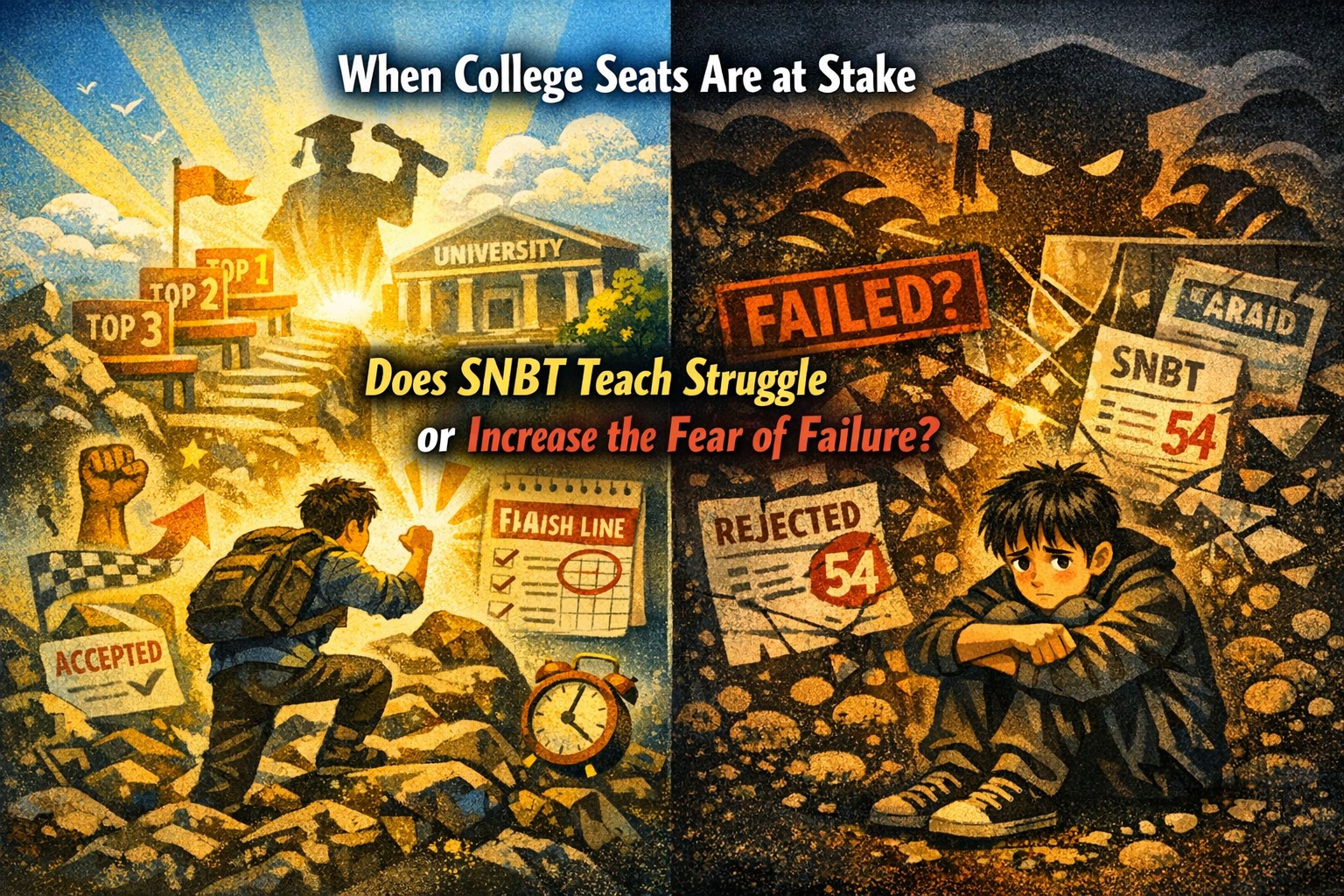
For many high school students in Indonesia, entering university is not only an academic goal but also a life milestone that carries emotional meaning. Higher education is often seen as the first strong step toward independence, career success, and social recognition. Among the various admission pathways available, SNBT (Seleksi Nasional Berdasarkan Tes) has become one of the most competitive and most discussed systems. It is considered a fair national test, but for students, it often feels much bigger than that.
Every year, thousands of students compete for limited seats in public universities. They spend months preparing through private tutoring, intensive practice sessions, mock exams, and endless discussions about passing grades and university rankings. The competition is intense because the number of applicants is far greater than the number of available seats. In this situation, one exam score can appear to decide everything.
This reality creates an important question. Does SNBT truly teach students the value of struggle, discipline, and persistence, or does it mostly increase the fear of failure and emotional pressure? The answer is not simple because both experiences exist at the same time. Some students become stronger through the process, while others feel trapped by expectations and anxiety.
Education should help students grow as individuals, not simply measure them through rankings. That is why understanding the deeper impact of SNBT is essential—not only for academic success, but also for student well-being and long-term personal development.
SNBT AS A LESSON IN STRUGGLE AND PERSEVERANCE
One of the strongest arguments in favor of SNBT is that it teaches students how to struggle for something meaningful. Unlike ordinary school exams, SNBT requires long-term preparation, strategic planning, and emotional consistency. Students must stay committed for months, often while balancing school assignments and personal responsibilities.
This process helps students develop discipline. They learn to manage time wisely, reduce distractions, and create realistic study routines. Preparing for a competitive national exam forces them to take responsibility for their own progress rather than relying entirely on classroom learning.
SNBT also introduces students to the importance of persistence. Not every tryout result is satisfying, and many students experience repeated disappointment before they improve. Learning to face failure without giving up is an important life lesson that goes beyond academic achievement.
In addition, students often become more aware of their own strengths and weaknesses. They begin to understand which subjects require more attention and how different learning strategies affect performance. This self-awareness supports independent learning and stronger academic maturity.
For students who approach the process with balance, SNBT becomes more than an entrance exam. It becomes a personal journey that teaches patience, resilience, and the reality that meaningful goals require real effort.
WHEN LIMITED SEATS CREATE EXCESSIVE PRESSURE
However, the positive side of competition can quickly turn into harmful pressure when students focus too much on the scarcity of university seats. The phrase “limited seats” itself creates urgency and fear. Students begin to feel that every mistake could destroy their future.
The competition becomes emotionally heavy because many students believe that entering a public university is the only acceptable path to success. Families, schools, and social environments often strengthen this belief by treating top campuses as symbols of intelligence and prestige.
As a result, students do not simply prepare for an exam—they prepare under the fear of losing opportunities, disappointing parents, and being compared with others. The pressure becomes personal rather than academic.
Many students start measuring their worth based on acceptance possibilities. If they fail a tryout or receive a low score, they may feel embarrassed, hopeless, or ashamed. Instead of seeing the result as feedback, they see it as proof that they are falling behind.
This fear becomes even stronger when students constantly hear stories of competition ratios, high passing grades, and success statistics. Rather than motivating them, these numbers can create panic and emotional exhaustion.
THE FEAR OF FAILURE THAT GROWS SILENTLY
Fear of failure during SNBT preparation often grows quietly. It does not always appear through dramatic breakdowns. Sometimes it appears through sleepless nights, constant overthinking, and the inability to enjoy normal daily life.
Students begin asking themselves difficult questions: What if I fail? What if I disappoint my parents? What if everyone else succeeds except me? These thoughts create internal pressure that is difficult to explain to others.
Some students develop anxiety before every tryout exam. They feel nervous even before opening the question paper because they believe every score represents their future. This constant tension affects concentration and makes learning less effective.
Others experience burnout after months of intense preparation. They continue studying, but without motivation or emotional energy. Learning becomes mechanical, driven by fear instead of curiosity. Rest feels like guilt, and relaxation feels like wasted time.
Because academic stress is normalized, many students hide these feelings. They continue appearing strong while silently struggling with mental fatigue. This hidden pressure is dangerous because it can slowly damage confidence and emotional stability.
THE ROLE OF PARENTS, TEACHERS, AND SOCIAL EXPECTATIONS
Students do not face SNBT alone. Their emotional experience is shaped heavily by parents, teachers, and the larger culture around them. Support can become strength, but expectations can also become invisible weight.
Parents often have good intentions. They want their children to succeed and have better opportunities. However, when support becomes constant pressure—such as repeated demands to enter a specific university—it can make students feel loved only when they achieve certain results.
Teachers also influence student confidence. Some educators motivate through encouragement and realistic guidance, while others focus too much on rankings and competition. Students need reminders that progress matters, not only final acceptance results.
Society adds another layer of pressure by celebrating only certain definitions of success. Public universities are often treated as the ultimate goal, while private institutions or alternative educational paths are unfairly underestimated.
Social media intensifies this issue. Students see friends sharing achievements, high tryout scores, and acceptance announcements, which can create unhealthy comparison. They begin to believe that everyone else is moving forward faster.
A healthier environment requires emotional support, honest communication, and the understanding that one exam should not define a person’s entire future.
LEARNING THAT FAILURE IS NOT THE END
One of the most important lessons students need during SNBT preparation is that failure does not mean the end of their dreams. Unfortunately, many students see rejection from a dream university as a complete personal defeat.
This belief is dangerous because it gives one exam too much power. In reality, life offers many paths toward success. Private universities, vocational education, scholarships, entrepreneurship, and professional experience can all lead to meaningful achievement.
Sometimes failure teaches more than success. Students learn resilience, adaptability, and emotional strength when they face disappointment and continue moving forward. These qualities are often more valuable than academic prestige alone.
A student who does not enter a top university can still build an extraordinary future through hard work and consistent growth. Success is not owned by one campus or one admission letter.
Changing the meaning of failure helps reduce fear. When students understand that rejection is redirection rather than destruction, they can prepare with ambition but without emotional collapse.
BUILDING A HEALTHIER DEFINITION OF SUCCESS
The real challenge is not removing competition from education, but creating a healthier definition of success. Students should be encouraged to work hard without believing that their entire identity depends on one exam result.
Success should include emotional resilience, integrity, discipline, and the ability to continue learning after setbacks. A high score is valuable, but it is not the only proof of intelligence or potential.
Schools should create spaces where students can talk openly about stress and fear. Counseling support, academic guidance, and realistic career discussions are just as important as tryout practice and test preparation.
Families can help by appreciating effort, not only outcomes. A student who studies consistently and honestly deserves recognition even if the final result is not perfect. This builds confidence that lasts longer than temporary rankings.
Students themselves also need to protect balance. Rest, friendships, physical health, and self-respect are not distractions from success—they are part of it. Sustainable achievement comes from a healthy mind, not constant exhaustion.
Ultimately, SNBT should remain a tool for opportunity, not a source of emotional damage. It should challenge students to become stronger, not make them afraid of their own future.
When college seats are at stake, struggle is unavoidable. Competition is real, and effort is necessary. But struggle should teach courage, not permanent fear. Education should prepare students for life, not convince them that one moment of failure defines everything.
SNBT can teach discipline and perseverance, but only if students are supported by understanding rather than pressure. Without that balance, the fear of failure can grow louder than the desire to learn.
The goal of education should never be perfection at the cost of mental health. It should be growth with dignity, ambition with balance, and success that does not require students to lose themselves along the way.
Tentang Penulis
Gusti Ayu Tita P
Penulis — Universitas STEKOM
Penulis aktif yang berfokus pada isu-isu akademik, teknologi pendidikan, dan pengembangan sumber daya manusia di lingkungan kampus.