When Social Standards Make Personal Growth Feel Difficult?
Gusti Ayu Tita P
8 September 2026
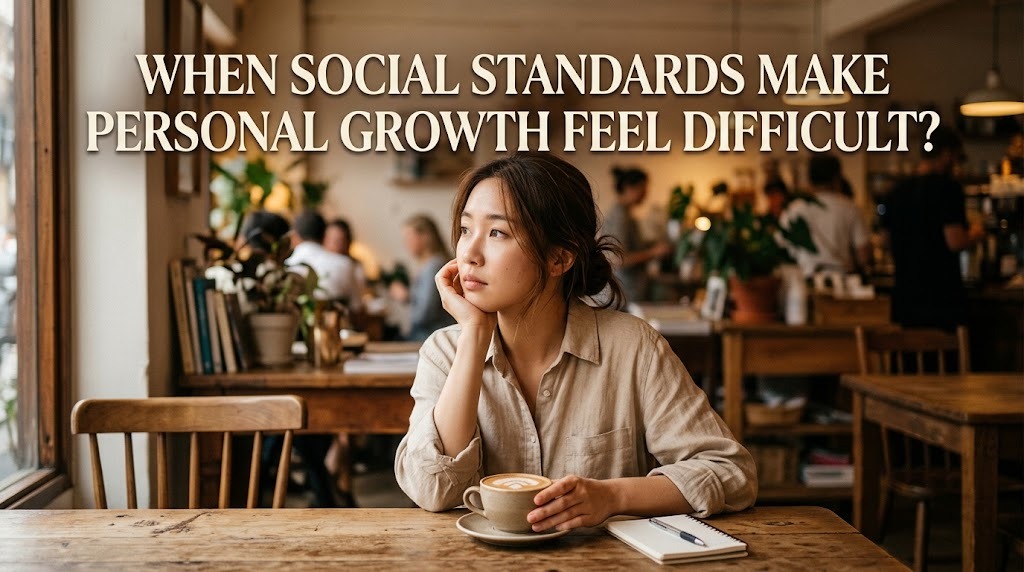
Social standards influence how people view success, appearance, education, careers, relationships, and lifestyle. They can provide useful guidance about how to interact with others, but they can also create pressure when people feel required to meet the same expectations. This pressure may become stronger when individuals constantly compare themselves with people around them. Personal growth can feel difficult when social approval becomes more important than individual needs and goals.
Everyone develops at a different pace and under different circumstances. However, social expectations can create the impression that everyone should follow a similar path. A person may feel behind simply because their achievements do not match those of their peers. Understanding the difference between healthy standards and unrealistic expectations is important for maintaining confidence while continuing to grow.
SOCIAL STANDARDS CAN CREATE UNREALISTIC EXPECTATIONS
Social standards often develop from common beliefs about what people should achieve or how they should behave. For example, certain careers may be viewed as more successful, while specific lifestyles may be considered more desirable. These standards can become stressful when they are treated as requirements rather than choices.
People may begin to believe that they are unsuccessful because they do not meet these expectations. They might ignore their own strengths and focus only on what they supposedly lack. This can make personal development feel like a constant race against others. Growth becomes healthier when goals are based on personal circumstances rather than social comparison.
COMPARISON CAN MAKE PROGRESS FEEL INSUFFICIENT
Comparing personal achievements with those of others is a common source of pressure. Someone may see a friend graduating earlier, getting a better job, or reaching financial goals and conclude that they are falling behind. The problem is that comparison often ignores differences in opportunities, resources, abilities, and personal priorities.
Another person's progress does not determine the value of an individual's journey. People can reach similar goals at different times and through different paths. Instead of asking whether they are ahead or behind others, individuals can evaluate how much they have developed compared with their past selves. Personal progress is often a more realistic measure of growth.
SOCIAL MEDIA CAN STRENGTHEN SOCIAL PRESSURE
Social media makes comparison easier because users can see other people's achievements and lifestyles at any time. Photos of successful careers, attractive appearances, travel, relationships, and expensive purchases may create an idealized image of everyday life. Repeated exposure to carefully selected content can make unrealistic standards seem normal.
The problem is that online content rarely shows the complete story. People usually share moments they want others to see, while difficulties and failures may remain private. Comparing everyday life with another person's best moments can create unnecessary dissatisfaction. Using social media critically can help people separate online presentation from reality.
FEAR OF JUDGMENT CAN LIMIT PERSONAL GROWTH
Personal growth often requires trying new things and accepting the possibility of mistakes. However, fear of criticism can prevent people from taking these opportunities. Someone may avoid learning a new skill or pursuing a different goal because they are worried about what others will think.
This fear can become especially strong when a person's environment expects conformity. They may choose familiar options even when those options do not match their interests. Over time, avoiding risks can limit exploration and development. Healthy growth requires accepting that not every decision will receive approval from everyone.
EXTERNAL APPROVAL CAN BECOME THE MAIN MOTIVATION
Recognition from others can feel rewarding. Praise from family, friends, teachers, or coworkers can encourage people to continue improving. However, personal growth becomes difficult when approval is the only reason for making progress. A person may lose motivation when recognition is absent, even if the activity is personally meaningful.
A stronger approach is to combine external feedback with internal motivation. Consider whether an activity develops useful skills, supports personal values, or contributes to long-term goals. Internal motivation can provide a more stable foundation for continuous growth.
SOCIAL EXPECTATIONS CAN AFFECT CAREER AND EDUCATION CHOICES
Education and career decisions are often influenced by family and society. Certain fields may be considered more prestigious or financially secure than others. While these factors can be useful when making decisions, they should not completely replace personal interests, abilities, and circumstances.
A career that looks impressive from the outside may not be suitable for every person. Someone may perform better and feel more fulfilled in a field that receives less social recognition. Taking time to understand strengths and interests can lead to more appropriate choices. A meaningful career should consider both practical needs and personal suitability.
PERFECTIONISM CAN GROW FROM SOCIAL STANDARDS
When people believe they must meet high expectations, they may become overly focused on avoiding mistakes. This can develop into perfectionistic behavior, where anything less than an ideal result feels unacceptable. The fear of making mistakes can prevent people from taking action or learning through experience.
Personal growth requires room for trial and error. Skills usually improve through practice, feedback, and repeated attempts. A mistake can provide information about what needs to change. Progress does not require perfection; it requires consistent learning and adjustment.
ACCEPTING A DIFFERENT PACE OF GROWTH
There is no universal timeline for personal development. People may reach educational, career, financial, or personal milestones at different ages and stages. Having a slower path does not automatically mean someone is failing.
Instead of following an external timeline, individuals can set realistic goals based on their current situation. Goals can be reviewed and adjusted as circumstances change. This approach allows people to grow without creating unnecessary pressure. A different pace can still lead to meaningful progress.
SET HEALTHY BOUNDARIES AGAINST UNHELPFUL EXPECTATIONS
Healthy boundaries can protect personal goals from excessive social pressure. People can respectfully explain when a particular expectation does not match their abilities, priorities, or current circumstances. Setting boundaries does not mean rejecting other people's opinions; it means deciding how much influence those opinions should have.
Not every comment requires a response, and not every expectation needs to be accepted. Individuals can listen to useful advice while declining demands that are unrealistic or harmful. Clear boundaries create space for independent decision-making and personal development.
BUILD CONFIDENCE THROUGH PERSONAL ACHIEVEMENTS
Confidence becomes stronger when people recognize their own efforts and progress. Small achievements can provide evidence that improvement is possible. Recognizing personal accomplishments helps reduce dependence on external validation.
Keep track of skills learned, challenges overcome, and goals completed. These experiences can provide a more accurate picture of development than comparing yourself with others. Confidence grows when people trust their ability to learn, adapt, and continue moving forward.
CREATE AN ENVIRONMENT THAT SUPPORTS GROWTH
The people around us can influence how comfortable we feel when developing in our own way. Supportive relationships allow individuals to make mistakes, ask questions, and pursue different goals. A healthy environment encourages growth without forcing everyone to follow the same path.
If an environment constantly creates shame, comparison, or fear of judgment, its influence should be reconsidered. Spending more time with people who provide constructive feedback can make personal growth easier. Supportive relationships can help individuals remain confident while making independent choices.
CONCLUSION
Social standards can make personal growth feel difficult when they become rigid expectations about how people should live and succeed. Comparison, social media, fear of judgment, and the need for approval can make individuals doubt their own progress. When these influences become too strong, people may stop pursuing goals that genuinely match their interests and abilities.
The solution is not to ignore society completely, but to develop self awareness, critical thinking, healthy boundaries, and realistic personal goals. Everyone has a different pace and path of development. By measuring progress through personal growth rather than constant comparison, individuals can continue improving without allowing social standards to control their sense of worth.
Tentang Penulis
Gusti Ayu Tita P
Penulis — Universitas STEKOM
Penulis aktif yang berfokus pada isu-isu akademik, teknologi pendidikan, dan pengembangan sumber daya manusia di lingkungan kampus.