
When Studying Is No Longer Just About Seeking Knowledge, Does SNBT Become a Driver of Achievement or a Psychological Burden for Students?
Gusti Ayu Tita P
8 Juni 2026
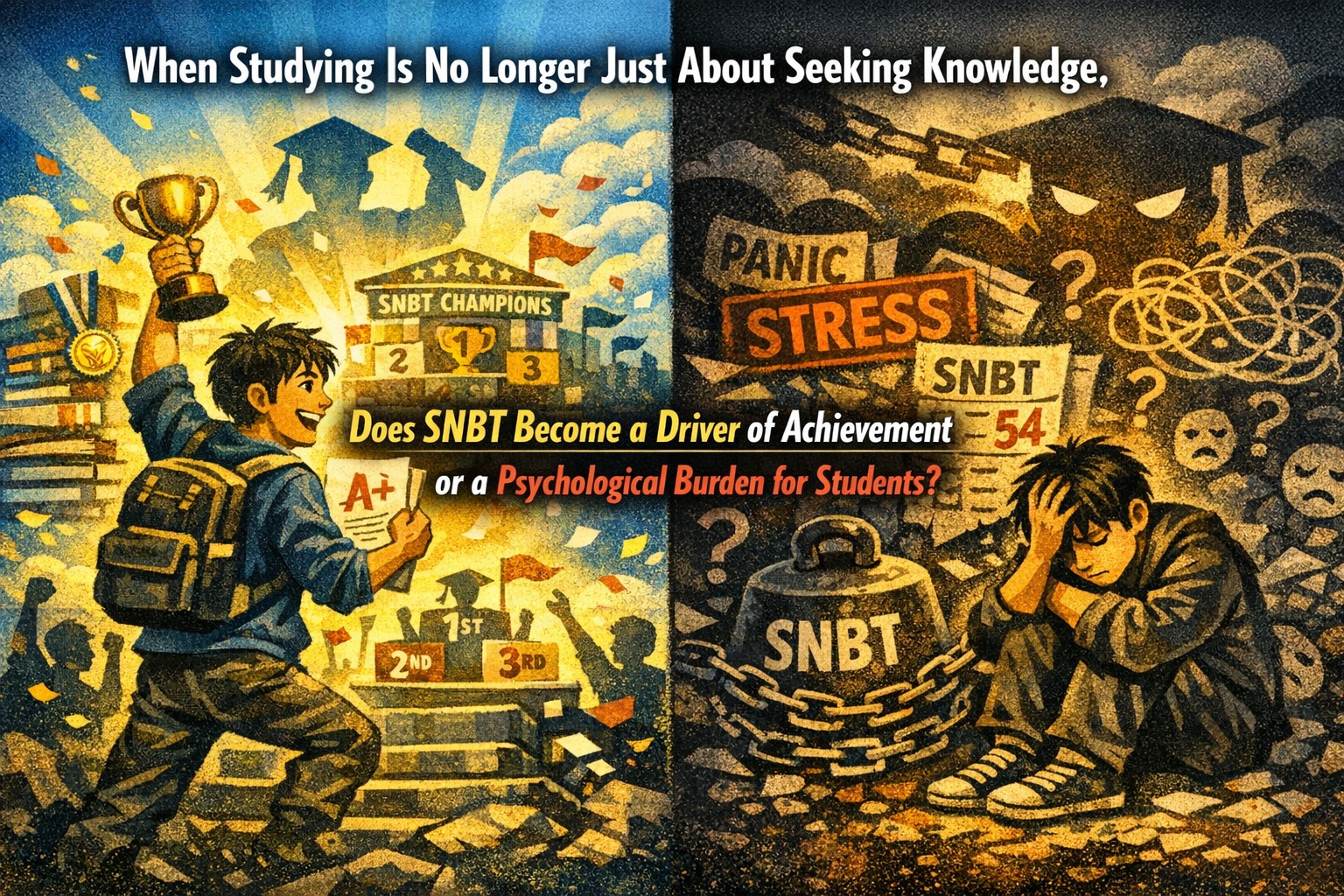
For many students in Indonesia, studying was once associated with curiosity, personal growth, and the simple desire to understand the world better. Learning in school was meant to help students build knowledge, discover interests, and prepare for future opportunities. However, as students approach graduation and begin preparing for university entrance, studying often changes its meaning. It becomes less about understanding and more about surviving competition.
One of the strongest reasons behind this shift is SNBT (Seleksi Nasional Berdasarkan Tes), the national entrance examination used as a major pathway into public universities. For thousands of students, SNBT is not just an exam. It is seen as a gateway to dreams, a measure of intelligence, and sometimes even a test of personal worth. Because of this, the learning process becomes emotionally heavier than ever before.
Students spend months attending tutoring sessions, completing endless practice questions, comparing tryout scores, and adjusting their lives around academic targets. Parents invest money and hope, teachers push for better results, and society often treats university acceptance as the ultimate proof of success. In this environment, studying is no longer simply about knowledge—it becomes deeply connected to fear, expectations, and identity.
This raises an important question: does SNBT truly become a driver of achievement that motivates students to grow, or does it create a psychological burden that quietly damages confidence and mental health? The answer is complex because both realities exist at the same time.
For some students, SNBT encourages discipline, focus, and resilience. For others, it creates stress, burnout, and the painful feeling of never being enough. Understanding both sides is necessary if education is meant to support not only academic success but also emotional well-being.
SNBT AS A DRIVER OF ACHIEVEMENT AND SELF-DISCIPLINE
One of the strongest positive impacts of SNBT is the way it gives students a clear academic goal. Many students who previously studied without strong direction begin to feel more focused once they decide on a target university and major. The dream of becoming a doctor, architect, teacher, engineer, psychologist, or economist creates real motivation.
This purpose helps students become more disciplined. They learn how to organize study schedules, reduce distractions, and remain consistent over long periods. Success in SNBT cannot be achieved through last-minute effort. It requires patience, strategy, and daily commitment.
Students also develop stronger responsibility for their own learning. They realize that school lessons alone are not enough and begin searching for additional materials, joining study groups, and evaluating weaknesses independently. This process builds maturity and academic independence.
Facing repeated tryouts and difficult questions also teaches resilience. Students experience failure, disappointment, and moments of doubt, but they learn how to recover and continue. This emotional endurance becomes valuable far beyond university entrance exams.
When approached with balance, SNBT can become a healthy challenge that teaches students how achievement is built through consistency and effort rather than instant results.
WHEN LEARNING TURNS INTO FEAR OF FAILURE
The problem begins when studying is no longer motivated by understanding, but by fear. Many students preparing for SNBT study not because they love learning, but because they are afraid of failing. Fear replaces curiosity, and education becomes emotional survival.
This happens when students believe that one exam score will determine their entire future. Instead of seeing SNBT as one opportunity among many, they see it as the only path to success. This belief creates constant pressure because every mistake feels dangerous.
A low tryout score can suddenly destroy confidence. Students may feel ashamed, compare themselves to others, and question their intelligence. Instead of asking how they can improve, they begin asking whether they are good enough at all.
Fear also changes study habits. Some students become obsessed with productivity and feel guilty whenever they rest. Others lose motivation completely because the pressure feels too heavy. In both cases, learning loses its original purpose.
When failure feels like personal rejection, studying becomes emotionally exhausting. This is where the line between motivation and psychological burden becomes very thin.
THE INVISIBLE PSYCHOLOGICAL BURDEN STUDENTS CARRY
The psychological burden of SNBT is often invisible. Students may continue attending school, smiling in class, and following routines normally, while inside they are struggling with anxiety, overthinking, and emotional exhaustion.
One of the most common experiences is constant worry. Students think about scores before sleeping, worry about university acceptance during meals, and imagine disappointing their families during quiet moments. The exam becomes mentally present almost all the time.
Burnout is another serious issue. Many students believe that resting means losing progress, so they continue studying without balance. Over time, they feel physically tired, mentally empty, and emotionally disconnected from their goals.
Some students also isolate themselves socially. They stop joining hobbies, avoid meeting friends, and feel guilty whenever they spend time outside studying. Their lives become centered entirely around one examination.
Because academic stress is often considered normal, these struggles are frequently ignored. Students may be praised for working hard while silently experiencing anxiety that grows deeper each day. Without support, this pressure can seriously affect long-term mental health.
THE ROLE OF PARENTS, TEACHERS, AND SOCIAL EXPECTATIONS
Students do not carry the pressure of SNBT alone. Parents, teachers, and society all contribute to how the exam is experienced. Their support can build confidence, but unrealistic expectations can turn preparation into emotional burden.
Parents usually want the best for their children, but repeated demands such as “you must pass” or “you have to enter this university” can make students feel that love depends on achievement. This creates fear instead of motivation.
Teachers can also unintentionally increase stress by focusing too much on rankings and university prestige. While competition is real, students also need reminders that effort and growth matter, not only final results.
Social expectations are equally powerful. Public universities are often treated as the highest symbol of intelligence, while other educational paths are underestimated. This makes students feel that anything less than top admission is failure.
Social media strengthens comparison culture. Seeing friends post high scores and acceptance announcements can create insecurity and panic. Students may feel left behind even when they are progressing well.
A healthier environment requires empathy, realistic guidance, and emotional safety. Students need encouragement, not constant fear of disappointing others.
WHEN SCORES START DEFINING SELF-WORTH
A dangerous effect of intense academic competition is when students begin to define themselves through scores. High scores bring temporary confidence, while low scores create shame and self-doubt. Their identity becomes dependent on numbers.
This mindset is harmful because self-worth becomes unstable. Confidence rises and falls with every tryout result. Students stop seeing exams as tools for improvement and start treating them as judgments of personal value.
Comparison becomes stronger. Instead of focusing on personal growth, students measure success based on whether they are better than others. They feel successful only when they rank higher, not when they truly understand the material.
This emotional dependence on scores creates long-term insecurity. Even successful students may feel empty because they constantly fear losing their position. Achievement becomes difficult to enjoy.
Education should help students discover strengths and purpose, not reduce them to percentages and rankings. When numbers define identity, students risk losing both confidence and joy in learning.
REDEFINING SUCCESS BEYOND EXAM RESULTS
One of the most important changes needed in education is redefining success. Many students believe that entering a top public university is the only proof of intelligence and future potential. This belief creates unnecessary pressure and emotional damage.
In reality, success has many paths. Private universities, vocational institutions, scholarships, entrepreneurship, creative industries, and work experience all offer meaningful opportunities. One exam result should never define an entire life.
Failure in SNBT is not the end of ambition. Sometimes rejection leads students to paths that better match their talents and long-term goals. What matters most is not the campus name, but the willingness to keep learning and growing.
Students need to understand that discipline, resilience, integrity, and adaptability are qualities that shape long-term success more than one score ever could. A person’s future is built through continuous effort, not one moment of selection.
When success is understood more broadly, SNBT becomes less frightening. It remains important, but it no longer controls identity or emotional peace.
Ultimately, studying should return to its true purpose: growth, understanding, and preparation for meaningful contribution to life. Achievement matters, but it should never come at the cost of mental well-being.
When studying is no longer just about seeking knowledge, SNBT can either become a powerful driver of achievement or a psychological burden that students carry silently. The difference depends on how the system is framed and how students are supported.
If education values only scores, pressure will dominate. But if education values both achievement and humanity, students can pursue excellence without losing themselves.
Because in the end, true success is not only entering university—it is becoming someone who can learn, adapt, and move forward with confidence and peace of mind.
Tentang Penulis
Gusti Ayu Tita P
Penulis — Universitas STEKOM
Penulis aktif yang berfokus pada isu-isu akademik, teknologi pendidikan, dan pengembangan sumber daya manusia di lingkungan kampus.