Which Small Business Is Best for College Students?
Gusti Ayu Tita P
29 September 2026
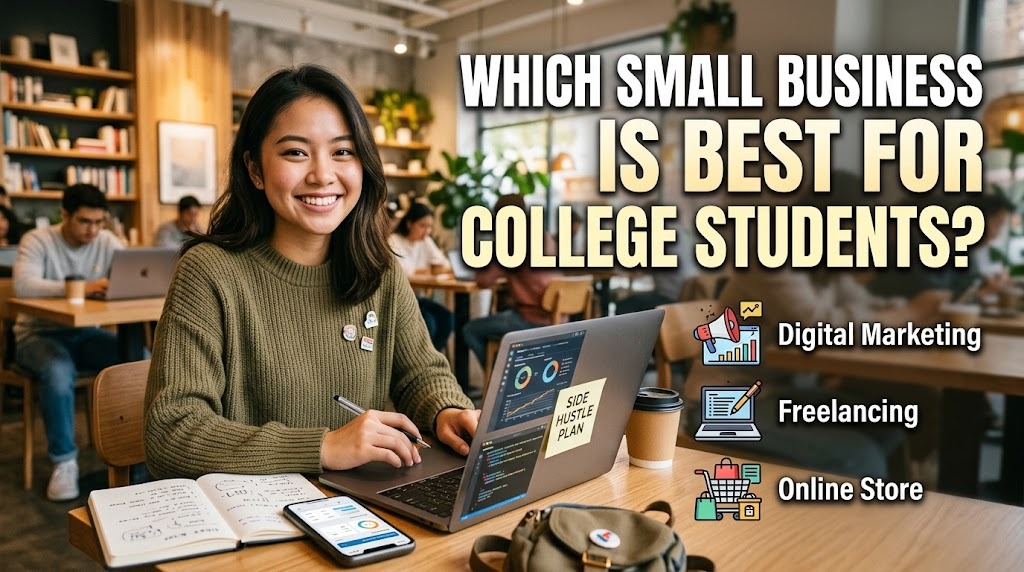
College students have many opportunities to explore small business ideas while continuing their education. A business can provide practical experience in marketing, customer service, financial management, and communication. However, the right business should fit the student's schedule, skills, budget, and ability to manage academic responsibilities.
There is no single business model that works equally well for every student. A student with strong creative skills may prefer freelancing, while someone who enjoys teaching may choose tutoring. Understanding the different options can help students select a small business for college students that is realistic and manageable.
FREELANCE SERVICES FOR STUDENTS WITH DIGITAL SKILLS
Freelancing can be a suitable option for students who already have skills that can be offered as services. Examples include graphic design, writing, translation, video editing, illustration, presentation design, and social media management. These services can often be handled remotely and scheduled around classes.
Students can begin by creating a freelance portfolio that demonstrates their abilities. Small projects can provide initial experience and help students understand customer expectations. As their skills and experience develop, they may be able to take on more complex projects when their academic schedule allows.
ONLINE SELLING AND RESELLING
Online selling is another small business option that can be managed through marketplaces or social media. Students can sell products such as accessories, stationery, clothing, snacks, or handmade items. Reselling can also allow students to promote products from suppliers without having to manufacture them themselves.
Before starting an online store, students should research potential customers and calculate costs carefully. Product prices should account for expenses such as purchasing, packaging, shipping, platform fees, and promotion. Understanding these factors can help students manage their online student business more effectively.
TUTORING AND EDUCATIONAL SERVICES
Students who have strong knowledge of a particular subject can consider tutoring as a small business. They can provide academic assistance to younger students or help learners practice specific skills. Depending on the situation, tutoring can be conducted online or in person.
Tutoring can be started with a limited number of students so that the schedule remains manageable. Students should set clear session times and avoid accepting more learners than they can reasonably support. In addition to earning income, tutoring can help develop communication and teaching skills.
FOOD, DRINK, AND PRE-ORDER PRODUCTS
Students who enjoy cooking or baking can explore a small food business. Snacks, desserts, beverages, or simple meals can be offered to classmates, campus communities, or customers in nearby areas, depending on local circumstances and applicable requirements.
A pre-order model can help students control the amount of food they prepare. Instead of producing a large quantity without knowing the demand, students can prepare products based on confirmed orders. Careful attention should be given to ingredients, pricing, packaging, hygiene, and delivery to maintain consistent product quality.
DIGITAL PRODUCTS AND CONTENT CREATION
Students with creative skills can create digital products such as templates, planners, illustrations, presentation materials, or other original resources. Because these products can be delivered digitally, students do not need to manage physical inventory. However, they still need to consider promotion, platform requirements, intellectual property, and customer support.
Content creation is another possibility for students interested in producing videos, articles, photographs, or educational content. Building an audience may take time, so students should approach it as a long-term activity rather than expecting immediate results. Consistent content creation can also help students develop communication and digital marketing skills.
CONCLUSION
Suitable small businesses for college students include freelance services, online selling, tutoring, food and drink businesses, digital products, and content creation. Each option requires different skills, resources, and levels of time commitment. Students should therefore consider their personal abilities, interests, budget, target customers, and academic schedule before making a choice.
The most suitable business is one that can be managed responsibly without unnecessarily interfering with education. Starting small allows students to test an idea, learn from customers, and improve their operations gradually. Through a realistic approach to student entrepreneurship, business activities can become a valuable source of practical experience during college.
Tentang Penulis
Gusti Ayu Tita P
Penulis — Universitas STEKOM
Penulis aktif yang berfokus pada isu-isu akademik, teknologi pendidikan, dan pengembangan sumber daya manusia di lingkungan kampus.