Why a Big Family Matters in Social Life?
Gusti Ayu Tita P
8 September 2026
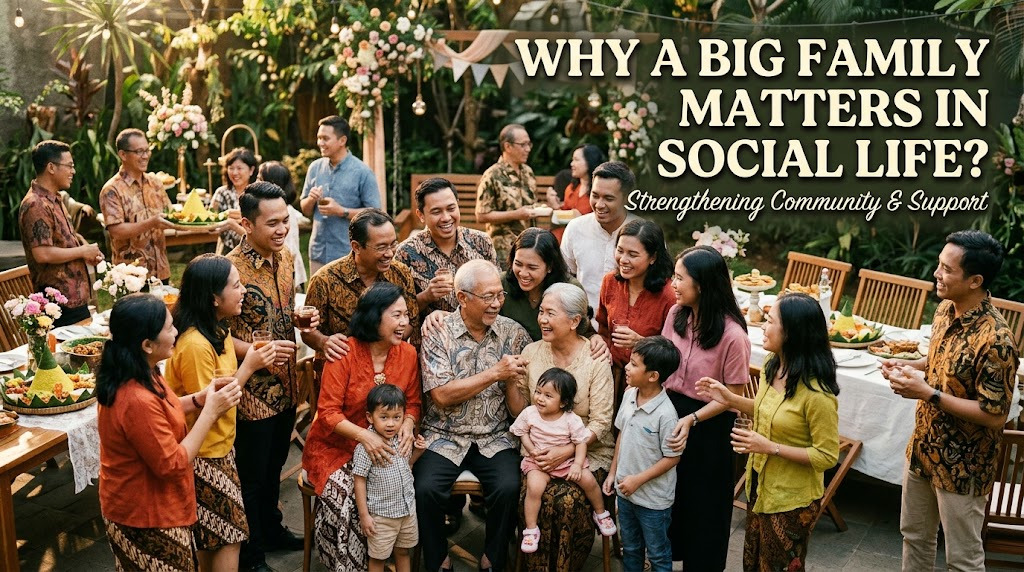
A big family can play an important role in shaping a person's social life. Growing up with many family members gives children and young people opportunities to communicate, cooperate, and understand different personalities. Daily interactions within the family can become an early form of social learning. Through these experiences, family members can develop habits that are useful when interacting with people outside the home.
A Big Family can also provide a wider social environment where individuals learn about responsibility, empathy, respect, and cooperation. These values can influence how someone builds relationships at school, work, and within the community. For this reason, a big family is not only a place for emotional support but can also contribute to social development.
A BIG FAMILY IS THE FIRST PLACE TO LEARN SOCIAL SKILLS
Family is often the first environment where children learn how to communicate and interact with others. In a big family, children may regularly interact with parents, siblings, grandparents, cousins, or other relatives. These interactions help them learn how to express their thoughts while also listening to other people. They can gradually understand that every person may have different needs, opinions, and personalities.
Regular interaction also teaches children how to cooperate in everyday situations. They may learn to share, take turns, help others, and respect household rules. These simple experiences can become important foundations for developing positive Social Skills. As they grow older, these skills can help them build healthier relationships outside the family.
HELPING FAMILY MEMBERS UNDERSTAND DIFFERENCES
A big family usually includes people from different ages, personalities, interests, and perspectives. Interacting with these differences can help family members become more open-minded. They can learn that disagreement does not always mean that a relationship has to become difficult. Instead, differences can be handled through communication and mutual understanding.
Learning to accept differences is useful in wider social environments. At school, university, workplaces, and communities, people meet individuals with different backgrounds and ways of thinking. A person who is accustomed to differences within the family may find it easier to communicate respectfully with others. This can support stronger Social Relationships over time.
BUILDING A HABIT OF HELPING ONE ANOTHER
Living in a big family can create many opportunities to practice cooperation. Family members may help each other with household activities, provide support during difficult situations, or work together when organizing family events. These experiences can teach individuals that cooperation can make responsibilities easier to manage. They can also develop a stronger awareness of the needs of other people.
The habit of helping others can extend beyond the family environment. Someone who learns the importance of cooperation at home may be more willing to participate in group activities and community projects. This can encourage a sense of responsibility toward others. In this way, Family Support can contribute to positive social behavior.
EXPANDING SOCIAL CONNECTIONS AND EXPERIENCES
A big family can provide individuals with a wider network of relationships. Family gatherings may bring together relatives who live in different places or have different life experiences. Through these interactions, individuals can hear new stories, learn different perspectives, and become familiar with various ways of communicating. Such experiences can make their social understanding broader.
Family relationships can also introduce children and young people to wider social environments. Relatives may have different professions, interests, communities, and experiences. These connections can help individuals understand that society contains many different roles and perspectives. As a result, a Big Family can become an important source of social experience.
DEVELOPING SOCIAL VALUES AND CHARACTER
A big family can help shape important social values such as respect, responsibility, empathy, patience, and cooperation. These values are often learned through everyday interactions rather than only through formal lessons. When family members practice these values consistently, children can observe and gradually apply them in their own behavior. This process can influence how they treat people in their wider community.
Strong social values can help individuals become more responsible members of society. They can learn to consider other people's feelings, respect differences, and contribute positively to group situations. These qualities are useful in friendships, education, work, and community life. Therefore, the role of a Family Relationship can extend beyond the home and influence a person's social development.
CONCLUSION
A Big Family can be important for social life because it provides an early environment for learning communication, cooperation, respect, and empathy. Family interactions can help individuals understand differences, build social connections, and develop positive character. These experiences can become valuable foundations for interacting with people in wider social environments. With healthy communication and mutual respect, a big family can support both emotional well-being and social development.
Tentang Penulis
Gusti Ayu Tita P
Penulis — Universitas STEKOM
Penulis aktif yang berfokus pada isu-isu akademik, teknologi pendidikan, dan pengembangan sumber daya manusia di lingkungan kampus.