Why Are Waste Banks a Community Based Waste Management Solution?
Gusti Ayu Tita P
20 Agustus 2026
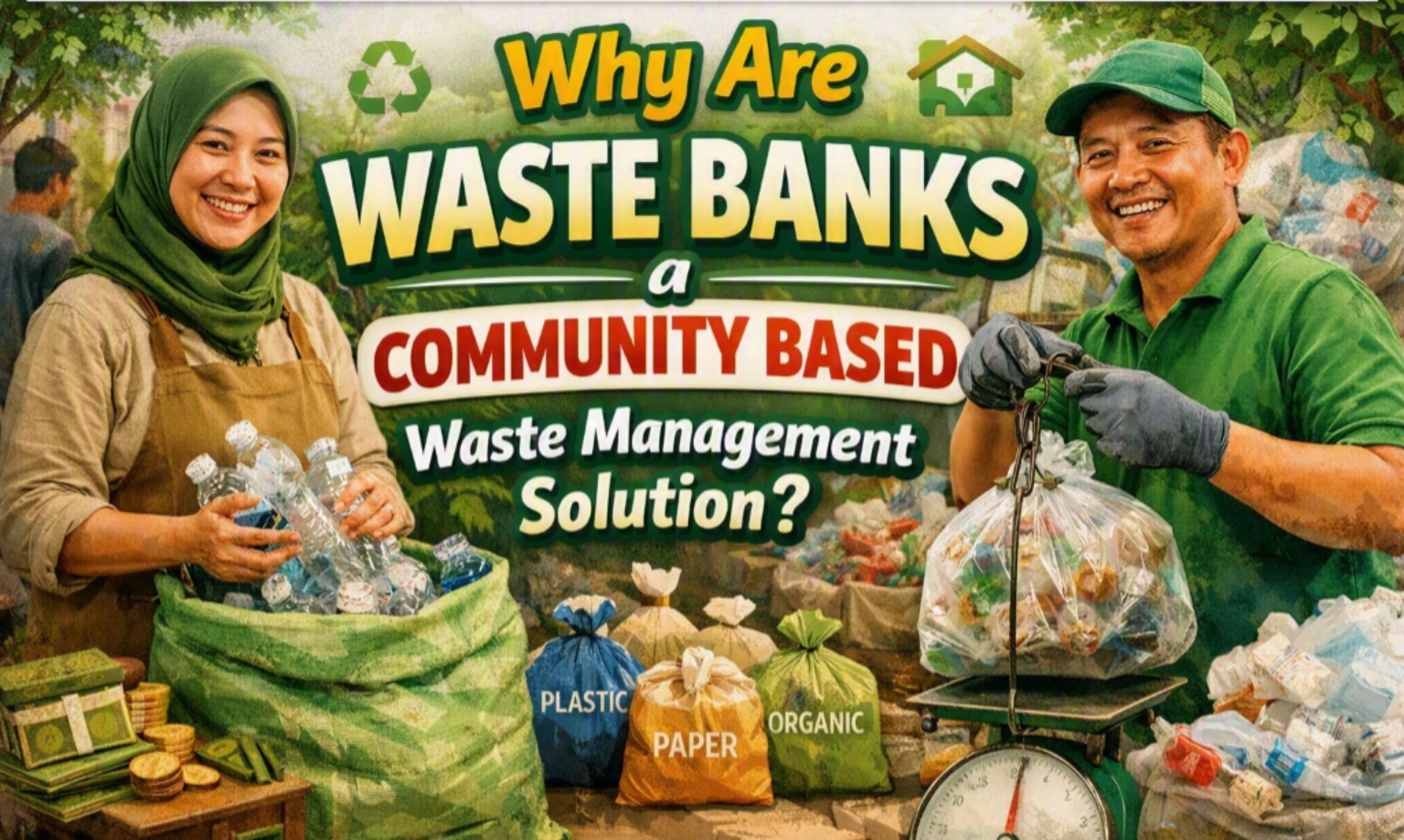
Waste management is a growing challenge in many communities, especially as household consumption continues to increase. Waste banks offer a practical approach by involving residents directly in collecting, sorting, and managing recyclable materials. Instead of treating waste only as something to be thrown away, this system gives certain types of waste an economic value. More importantly, waste banks encourage people to take responsibility for the waste they produce. This makes them a community based waste management solution that combines environmental awareness, participation, and economic benefits.
WHAT IS A WASTE BANK?
A waste bank is a community-based waste management system where residents collect and sort recyclable waste before depositing it at a designated waste bank. Materials such as plastic bottles, paper, cardboard, metal, and other recyclables can be separated according to their type and condition. The collected materials are then weighed, recorded, and generally valued based on applicable local prices. Depending on the management model, residents may receive savings, payments, or other benefits in exchange for their recyclable waste. This system helps turn household waste into a resource that can enter the recycling process.
Unlike conventional waste disposal, a waste bank emphasizes sorting at the source. Residents are encouraged to separate recyclable materials from organic waste and other types of waste before they are transported elsewhere. This simple habit can improve the quality of recyclable materials and reduce the amount of waste sent to final disposal sites. Waste banks can be operated by community groups, schools, neighborhood organizations, or other local institutions. Their success depends heavily on consistent participation and good management.
HOW DO WASTE BANKS WORK IN COMMUNITIES?
The operation of a waste bank usually begins with residents collecting recyclable materials from their homes. The materials are then cleaned when necessary and separated based on categories such as plastic, paper, glass, or metal. Residents bring the sorted waste to the waste bank according to its collection schedule. The waste bank staff or volunteers weigh and record the materials before determining their value based on the management system used. The recyclable materials are later stored and transferred to recycling partners, collectors, or other appropriate processing facilities.
A well-managed waste bank also requires clear administration and regular monitoring. Records can be used to track deposits, transactions, savings, and the volume of materials collected. Some waste banks use digital systems to make recording and reporting more efficient, while others continue to use simple manual records. The exact mechanism may differ between communities, but the main principle remains the same: waste is sorted, collected, valued, and directed toward further processing rather than immediately discarded.
WHY ARE WASTE BANKS CONSIDERED COMMUNITY BASED?
Waste banks are considered community based because residents are not merely recipients of a waste management service. They become active participants in the process. People contribute by sorting waste at home, bringing recyclable materials to collection points, and supporting the operation of the waste bank. Community participation can also encourage neighbors to share knowledge and develop better waste management habits together. This creates a sense of collective responsibility for the cleanliness of the surrounding environment.
The community aspect is important because waste management cannot depend entirely on government institutions or private waste services. Daily waste generation happens at the household and community level, so local participation can help address problems closer to their source. When residents understand the environmental and economic value of proper waste sorting, they are more likely to maintain sustainable habits. Community leaders, schools, youth groups, and local organizations can further strengthen these activities through education and campaigns.
WHAT ARE THE ENVIRONMENTAL BENEFITS OF WASTE BANKS?
One of the main environmental benefits of waste banks is their ability to reduce recyclable waste going to landfills. When paper, plastic, metal, and other recoverable materials are separated, these materials have a better opportunity to be reused or recycled. This can reduce the volume of waste requiring final disposal. Proper sorting can also prevent recyclable materials from becoming mixed with food waste and other contaminants. As a result, the materials may become more suitable for recovery and recycling.
Waste banks can also contribute to a stronger circular economy. In a circular economy, materials are kept in use for as long as possible through reuse, recovery, repair, and recycling. Waste banks help connect households with collectors, recycling businesses, and other actors within this system. Their contribution may be local in scale, but repeated community participation can support broader efforts to conserve resources. They also provide an opportunity to introduce environmental education through practical daily activities.
WHAT ARE THE ECONOMIC AND SOCIAL BENEFITS?
Waste banks can provide an economic incentive for residents because recyclable materials may have monetary value. Depending on local conditions and market prices, residents can receive compensation for materials that they collect and sort. Some systems allow the value of deposits to accumulate as savings that can later be withdrawn or used for specific purposes. Although the financial return from household waste may be modest, the incentive can encourage people to maintain consistent sorting habits.
Beyond financial benefits, waste banks can create social value within a community. Their activities can encourage cooperation among residents and provide opportunities for volunteers to develop organizational, administrative, and environmental skills. Waste bank programs can also support educational activities for children and young people by teaching them how waste should be managed responsibly. When managed transparently, these activities can strengthen trust and participation. In this way, a waste bank can become more than a collection point because it can function as a platform for community action.
WHAT CHALLENGES DO WASTE BANKS FACE?
Despite their potential, waste banks can face several challenges. Community participation may decline when residents do not understand the benefits of sorting waste or when collection services are inconsistent. Fluctuating prices for recyclable materials can also affect the financial sustainability of waste bank operations. Limited storage space, transportation, equipment, and trained personnel may create additional operational difficulties. Poorly sorted or contaminated materials can further reduce their usefulness and economic value.
These challenges require consistent education, transparent management, reliable collection systems, and cooperation with recycling partners. Communities also need realistic expectations because a waste bank cannot solve every waste problem by itself. Materials that cannot be recycled still require proper handling and disposal. Waste prevention and reduction should remain important alongside recycling. With appropriate support and management, waste banks can become a sustainable part of a broader waste management system.
HOW CAN COMMUNITIES STRENGTHEN WASTE BANK PROGRAMS?
Communities can strengthen waste banks by starting with simple and practical sorting rules that residents can easily understand. Regular education can explain which materials are accepted, how they should be prepared, and why proper sorting matters. Clear schedules and transparent records can help maintain trust between residents and waste bank managers. Partnerships with recycling businesses, local authorities, schools, and community organizations can also expand the program's capacity. Technology can be introduced gradually to improve registration, transaction records, communication, and reporting.
The most important factor is long-term community commitment. A waste bank should not depend only on occasional campaigns or temporary enthusiasm. Residents need convenient collection systems and clear benefits so that sorting becomes part of their normal routine. Managers also need to evaluate performance and adapt the program to local conditions. When environmental goals, community participation, and economic opportunities are managed together, waste banks can provide a stronger foundation for sustainable local waste management.
CONCLUSION
Waste banks are a community based waste management solution because they place residents at the center of waste sorting, collection, recovery, and recycling activities. They can reduce the amount of recyclable material sent to final disposal while creating opportunities for economic and social benefits. Their success depends on participation, proper management, reliable partnerships, and continuous environmental education. Waste banks should not be viewed as a complete solution to every waste problem, but as an important part of an integrated waste management system. By making responsible waste sorting a community habit, waste banks can help create cleaner neighborhoods, recover valuable resources, and support a more sustainable future.
Tentang Penulis
Gusti Ayu Tita P
Penulis — Universitas STEKOM
Penulis aktif yang berfokus pada isu-isu akademik, teknologi pendidikan, dan pengembangan sumber daya manusia di lingkungan kampus.