
Why Do Many Graduates Finish College Without Truly Mastering Their Field?
Gusti Ayu Tita P
19 Februari 2026
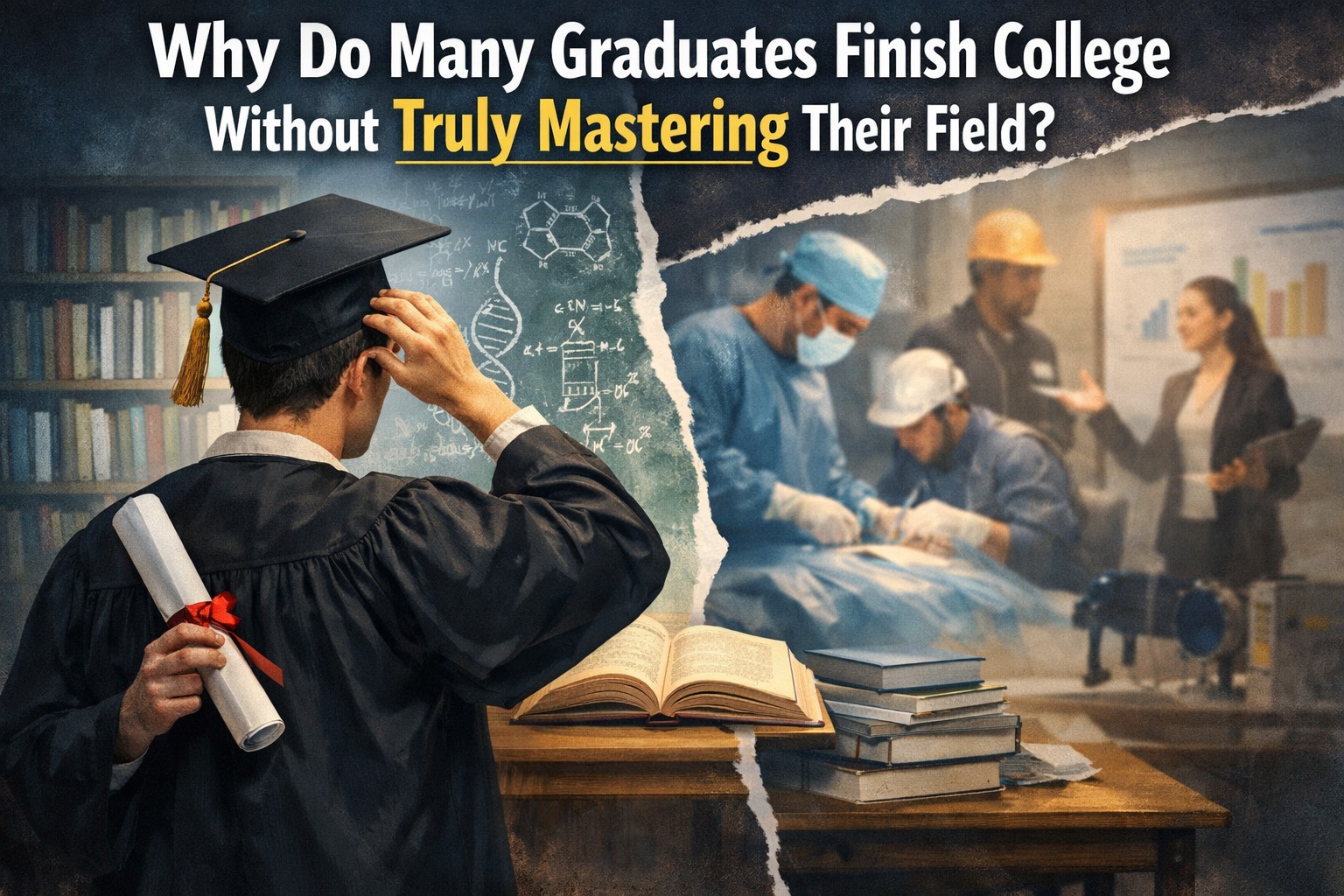
In modern education systems, final outcomes often become the primary measure of success. Graduating on time, achieving high grades, and earning an official degree are considered major accomplishments. However, an important question emerges: why do many graduates complete college without truly mastering their field of study?
This phenomenon occurs not only in schools but also in universities. Many students prioritize graduation over deeply understanding and engaging with the learning process itself.
A CULTURE FOCUSED ON RESULTS
One of the main reasons lies in a result-oriented culture. From an early age, students are encouraged to pursue high scores and academic rankings. Success is often measured by numbers on a report card rather than by the depth of understanding achieved.
This mindset continues into higher education. University students frequently focus on GPA and graduating quickly, believing these are the primary keys to securing employment. As a result, learning becomes a tool to meet administrative targets rather than a process of intellectual growth.
SOCIAL PRESSURE AND CAREER DEMANDS
Social expectations also play a significant role. Families and communities often equate success with earning a degree. The faster someone graduates, the greater the recognition they receive.
Moreover, many employers require a diploma as an initial screening requirement. This reinforces the belief that completing college is more important than fully mastering the subject. Deep understanding may be viewed as an added advantage rather than a necessity.
AN EVALUATION-BASED EDUCATION SYSTEM
Educational systems are commonly structured around final evaluations, such as semester exams and thesis projects. Assessment often emphasizes test results rather than the development of critical thinking, creativity, and long-term comprehension.
Consequently, students study to pass exams rather than to internalize knowledge. After assessments are completed, much of the material is quickly forgotten. Over time, this approach weakens true mastery of the field.
THE CONSEQUENCES OF SUPERFICIAL LEARNING
Graduating without strong mastery can have long-term consequences. The modern workplace demands practical skills, adaptability, and problem-solving abilities. Without a solid conceptual foundation, graduates may struggle to meet professional expectations.
The learning process is meant to shape character, mindset, and analytical skills. While grades and diplomas are important, they lose value when not supported by genuine understanding.
RESTORING THE IMPORTANCE OF THE LEARNING PROCESS
To address this issue, both students and educational institutions must shift their perspective. Students should view learning as a long-term investment rather than merely an academic obligation.
Institutions can also implement more interactive, project-based, and applied learning methods. When students are encouraged to connect theory with practice, they are more likely to develop meaningful mastery of their field.
CONCLUSION
Many graduates finish college without truly mastering their discipline due to a culture that prioritizes results, social pressure, and evaluation systems centered on grades. While graduation is an important milestone, it should not overshadow the deeper purpose of education.
True education lies not only in earning a degree, but in the journey of understanding, growth, and self-development. When process and outcome are balanced, graduates leave college not only with diplomas, but with real competence and intellectual maturity.
Tentang Penulis
Gusti Ayu Tita P
Penulis — Universitas STEKOM
Penulis aktif yang berfokus pada isu-isu akademik, teknologi pendidikan, dan pengembangan sumber daya manusia di lingkungan kampus.















