
Why Does Everyone Have a Different Definition of Happiness?
Gusti Ayu Tita P
7 Juli 2026
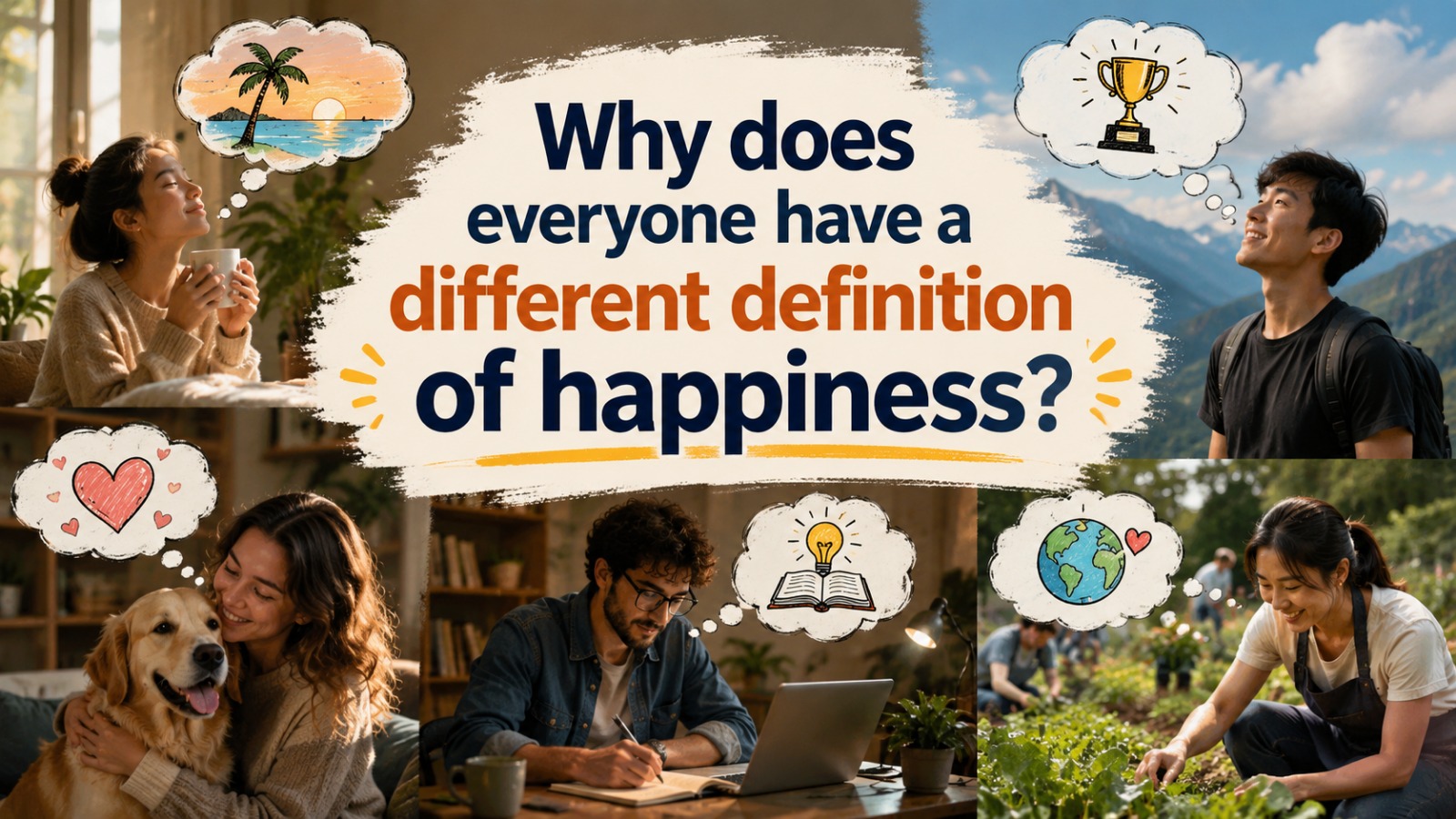
Happiness is one of the most discussed yet least universally agreed-upon concepts in human life. While everyone seeks it, not everyone defines it the same way. For some, happiness means financial stability, while for others it lies in relationships, freedom, or inner peace. This raises an important question: why does happiness mean different things to different people?
HAPPINESS IS SHAPED BY PERSONAL EXPERIENCE
One of the main reasons people define happiness differently is their life experience. A person who grew up in financial hardship may associate happiness with wealth and security. Meanwhile, someone who has always had material comfort might find happiness in emotional connection or meaningful experiences.
Our past shapes our expectations. What we lack often becomes what we desire most, and what we value in life is strongly influenced by our personal journey.
CULTURE AND ENVIRONMENT PLAY A BIG ROLE
Culture also plays a major role in shaping how people view happiness. In some societies, success and achievement are strongly tied to happiness. In others, community, harmony, and simplicity are more important.
For example, collectivist cultures often emphasize family and social harmony as sources of happiness, while individualistic cultures may prioritize personal success and independence. This shows that happiness is not only personal but also social and cultural.
DIFFERENT VALUES LEAD TO DIFFERENT GOALS
Every individual has unique values, and these values influence what they consider important in life. Someone who values freedom may find happiness in traveling and exploring new places. On the other hand, someone who values stability may feel happiest in a fixed routine and secure environment.
Because values differ, goals also differ. And since happiness is often linked to achieving personal goals, it naturally becomes a subjective experience.
EMOTIONAL AND MENTAL PERSPECTIVES MATTER
Mental state and emotional health also affect how people define happiness. A person who is struggling with stress or anxiety may see happiness as simply being free from pressure. Meanwhile, someone in a stable emotional state may look for deeper meaning or fulfillment.
This shows that happiness is not a fixed destination but a reflection of one’s current emotional condition.
THE PERSONAL NATURE OF HAPPINESS
Ultimately, happiness is deeply personal. There is no universal formula that fits everyone. What brings joy to one person may not have the same effect on another. This is why comparing happiness between individuals is often misleading.
Understanding this helps us respect different perspectives and focus more on our own journey rather than trying to match someone else’s definition of happiness.
CONCLUSION
Everyone has a different definition of happiness because it is shaped by experience, culture, values, and emotional state. Instead of searching for a single definition, it is more meaningful to understand what happiness means personally and how it can be nurtured in everyday life.
Tentang Penulis
Gusti Ayu Tita P
Penulis — Universitas STEKOM
Penulis aktif yang berfokus pada isu-isu akademik, teknologi pendidikan, dan pengembangan sumber daya manusia di lingkungan kampus.