Why Does the Strawberry Generation Often Experience Pressure in Education?
Gusti Ayu Tita P
26 September 2026
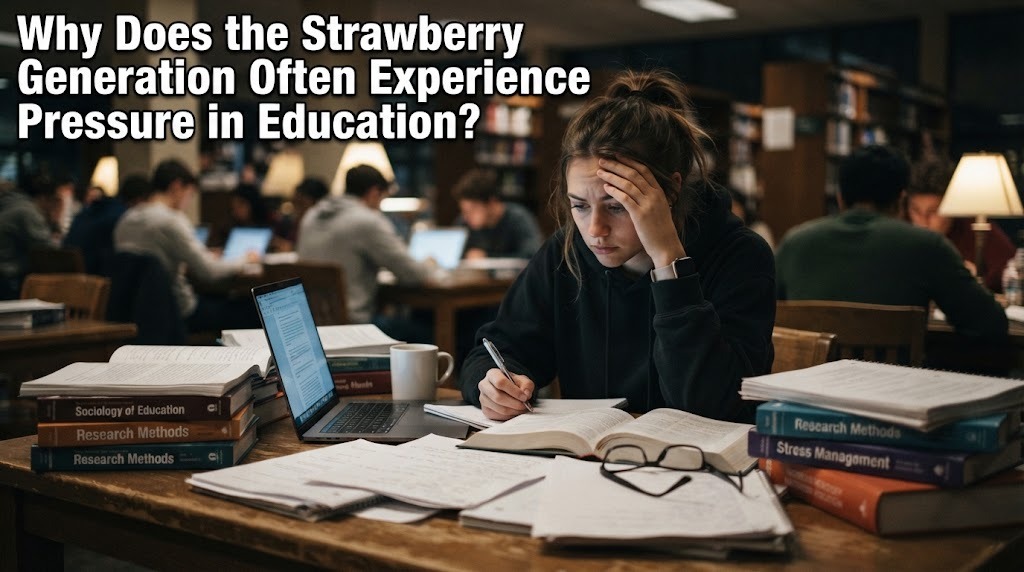
The Strawberry Generation is often associated with young people who experience significant pressure during their educational journey. Academic competition, high expectations, social comparison, changing learning environments, and concerns about future careers can all contribute to this pressure. Students may feel that they need to achieve strong grades while also developing various skills and preparing for an increasingly competitive future.
Educational pressure is not necessarily unique to one generation. However, the environment surrounding education has changed significantly, particularly because of technology, social media, changing career requirements, and greater access to information. Understanding these factors can help students, parents, and educators create healthier approaches to academic achievement.
HIGH ACADEMIC EXPECTATIONS CAN CREATE PRESSURE
Students may experience pressure to achieve high grades, graduate on time, enter respected institutions, or meet expectations from their families. Academic performance can sometimes become closely connected with perceptions of future success. When students believe that every academic result determines their future, ordinary setbacks can feel much more serious.
High expectations can encourage students to work hard, but excessive pressure may make learning feel like a constant competition. Students may become overly focused on grades rather than understanding the learning process. Establishing realistic academic goals can help create a healthier balance between achievement and personal wellbeing.
SOCIAL MEDIA INCREASES ACADEMIC COMPARISON
Social media gives students easy access to information about the achievements of their peers. They may see classmates posting about high grades, scholarships, competitions, prestigious universities, or other accomplishments. Frequent comparison can make students feel that they are falling behind even when their own progress is reasonable.
Online content also tends to highlight achievements rather than difficulties. A student may compare their complete academic experience with another person's most successful moments. Recognizing that social media presents only a limited view of reality can help reduce unnecessary academic comparison.
COMPETITION FOR EDUCATIONAL OPPORTUNITIES IS INCREASING
Students may compete for scholarships, university admissions, internships, academic awards, exchange programs, and other opportunities. In some fields, strong academic performance alone may not be enough, so students may also feel pressure to develop organizational, communication, digital, and leadership skills. The need to compete across multiple areas can make education feel increasingly demanding.
Competition can encourage students to develop their abilities and explore new opportunities. However, constantly trying to outperform others can also create stress. Students can benefit from focusing on personal development while recognizing that educational success can take different forms.
TECHNOLOGY CHANGES HOW STUDENTS LEARN
Digital technology has created many new educational opportunities, including online courses, digital libraries, educational applications, and artificial intelligence tools. At the same time, students need to adapt to rapidly changing technologies and learning methods. Keeping up with new digital tools can become another responsibility alongside traditional academic tasks.
Technology can also make it difficult for students to separate study time from personal time. Notifications, social media, entertainment, and constant internet access may interrupt concentration. Developing healthy digital habits can help students use technology as a learning resource without allowing it to become an additional source of distraction.
FUTURE CAREER EXPECTATIONS ADD ACADEMIC PRESSURE
Many students connect their academic performance with their future employment opportunities. They may worry that poor grades, limited extracurricular activities, or insufficient skills will reduce their chances of obtaining a good career. Uncertainty about the future can make ordinary academic challenges feel more threatening.
The modern job market also changes as technology and industries develop. Students may feel pressure to choose the right major, gain practical experience, and develop relevant skills while still studying. Career planning can help, but students should also understand that career paths can change and that one academic setback does not determine an entire professional future.
FAMILY AND SOCIAL EXPECTATIONS CAN INFLUENCE STUDENTS
Parents and communities can have strong expectations regarding academic achievement. Some students may feel pressure to obtain excellent grades, choose particular fields of study, or follow educational paths considered prestigious. When external expectations become stronger than a student's own understanding of their abilities and interests, education can become emotionally demanding.
Healthy communication can help reduce this pressure. Parents and educators can encourage students while also recognizing their individual strengths, limitations, and interests. Supportive guidance can help students understand that academic development involves progress, mistakes, experimentation, and gradual improvement.
FEAR OF FAILURE CAN MAKE LEARNING MORE STRESSFUL
Students who strongly associate failure with personal inadequacy may become afraid of making mistakes. This fear can lead to excessive worry before examinations, reluctance to ask questions, or avoidance of challenging assignments. A healthy educational environment should treat mistakes as opportunities for learning rather than permanent judgments of ability.
Developing resilience can help students respond more constructively to academic setbacks. Instead of asking only why they failed, students can examine which strategies did not work and what they can change next time. This approach can turn academic difficulties into useful experiences for future learning.
CONCLUSION
The Strawberry Generation may experience educational pressure because of high academic expectations, social media comparison, competition for opportunities, technological changes, career concerns, family expectations, and fear of failure. These factors can interact and create a demanding environment for students.
However, educational pressure can be managed through realistic goals, healthy study habits, supportive communication, responsible technology use, and a willingness to learn from mistakes. Academic success should involve not only achieving results but also developing resilience, skills, confidence, and the ability to continue learning. With the right support, students can pursue their educational goals without allowing pressure to define their entire experience.
Tentang Penulis
Gusti Ayu Tita P
Penulis — Universitas STEKOM
Penulis aktif yang berfokus pada isu-isu akademik, teknologi pendidikan, dan pengembangan sumber daya manusia di lingkungan kampus.