Why Every Business Should Invest in a Learning Management System Today
Gusti Ayu Tita P
30 Juli 2026
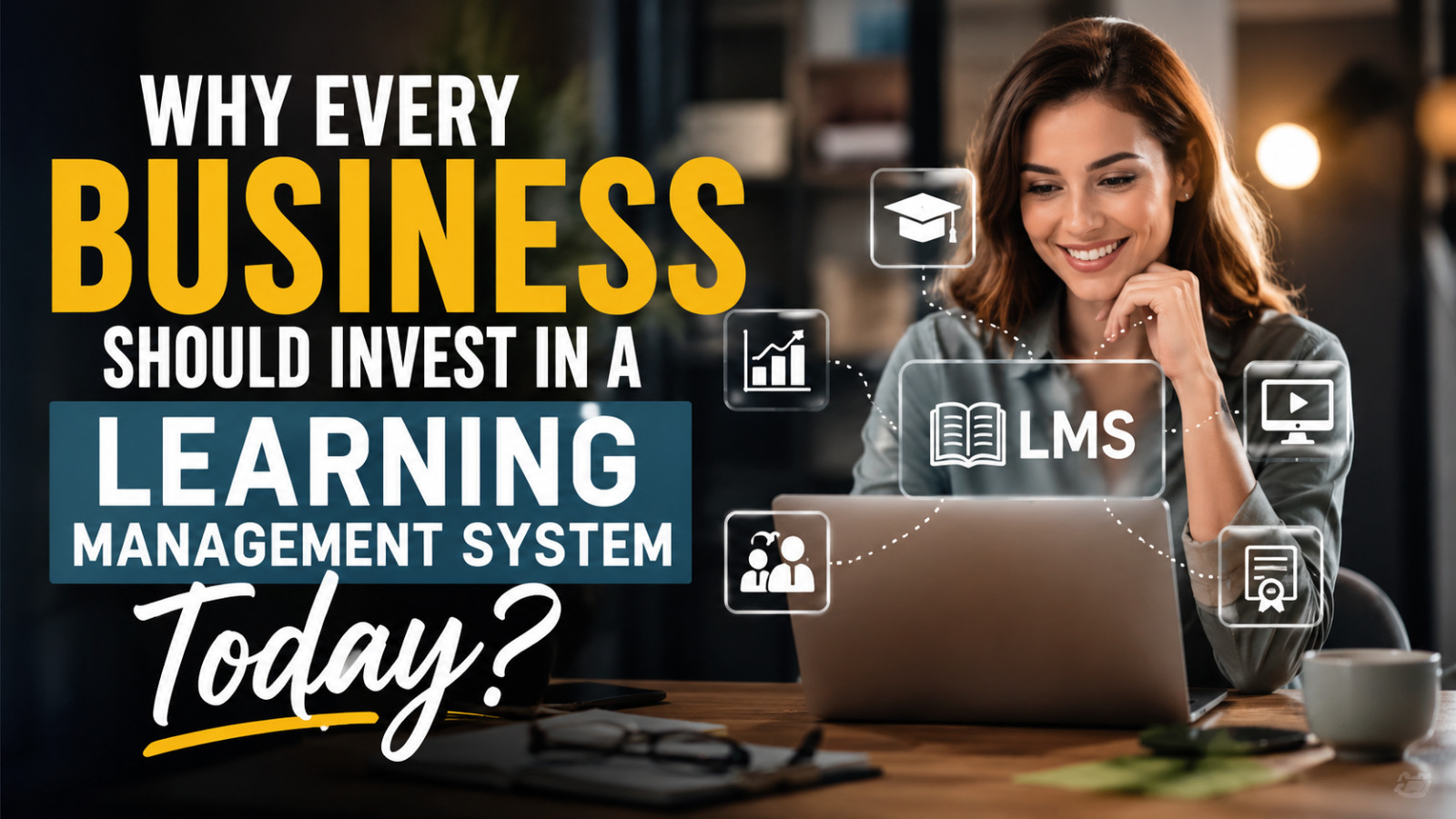
In today's competitive business environment, companies must continuously improve employee skills to stay ahead. Traditional training methods are often expensive, time-consuming, and difficult to manage across growing organizations. A Learning Management System (LMS) offers a smarter solution by delivering training digitally, tracking employee progress, and making learning available anytime. Businesses of every size are now investing in LMS platforms to increase productivity, reduce training costs, and build a stronger workforce. This article explains why an LMS has become an essential investment for modern organizations.
WHAT IS A LEARNING MANAGEMENT SYSTEM?
A Learning Management System (LMS) is a digital platform designed to create, manage, deliver, and monitor employee training programs. It allows businesses to organize learning materials in one centralized location that employees can access whenever they need. Instead of relying on printed manuals or in-person seminars, organizations can provide interactive online courses that are easier to update and maintain.
An LMS also enables managers to monitor employee progress through detailed reports and performance analytics. This helps businesses identify skill gaps, improve training effectiveness, and ensure compliance with company policies or industry regulations. As remote and hybrid work continue to grow, an LMS has become an increasingly valuable business tool.
REDUCES TRAINING COSTS
One of the biggest advantages of implementing an LMS is the significant reduction in training expenses. Businesses no longer need to spend large amounts on travel, printed materials, venue rentals, or repeated instructor-led sessions. Once digital courses are created, they can be reused multiple times with only occasional updates.
The platform also minimizes employee downtime because training can be completed during convenient schedules instead of requiring full-day workshops. This flexibility allows organizations to train more employees while maintaining productivity. Over time, the financial savings often exceed the initial investment in the LMS itself.
IMPROVES EMPLOYEE LEARNING EXPERIENCE
Employees today prefer learning methods that are flexible, interactive, and available on demand. A modern Learning Management System offers video lessons, quizzes, downloadable resources, discussion forums, and mobile accessibility. These features create a more engaging learning experience than traditional classroom instruction.
Because employees can learn at their own pace, they are more likely to understand and retain new information. Personalized learning paths also help individuals focus on the skills most relevant to their roles. This leads to higher confidence, better job performance, and increased employee satisfaction.
INCREASES BUSINESS PRODUCTIVITY
Well-trained employees complete tasks more efficiently and make fewer mistakes. By providing consistent, high-quality training through an LMS, businesses can improve overall operational performance. Employees gain immediate access to updated procedures, product knowledge, and company policies whenever needed.
Managers also spend less time organizing training sessions because much of the learning process becomes automated. Automatic course enrollment, progress tracking, reminders, and certification management reduce administrative workloads. This allows management teams to focus on strategic business growth instead of manual training tasks.
SUPPORTS REMOTE AND HYBRID WORKFORCES
Remote work has become a permanent reality for many organizations worldwide. An LMS ensures that employees receive the same quality of training regardless of their location. Team members can access learning materials from laptops, tablets, or smartphones with an internet connection.
This flexibility creates a consistent learning environment across multiple offices or countries. Businesses can easily onboard new employees, launch company-wide compliance training, and update educational content without geographical limitations. The result is a more connected and knowledgeable workforce.
MAKES COMPLIANCE TRAINING EASIER
Many industries require employees to complete mandatory compliance training regularly. An LMS simplifies this process by automatically assigning required courses, tracking completion rates, and generating certificates. Companies can quickly demonstrate compliance during audits or regulatory inspections.
Automated reminders also reduce the risk of employees missing important deadlines. Since every training record is stored digitally, businesses have accurate documentation whenever needed. This reduces legal risks while maintaining high professional standards.
PROVIDES VALUABLE DATA AND ANALYTICS
A major benefit of an LMS is its ability to generate detailed learning analytics. Business leaders can monitor course completion rates, quiz scores, employee engagement, and overall training effectiveness through real-time dashboards. These insights help organizations continuously improve their learning strategies.
Data-driven decisions allow companies to identify departments that need additional training or recognize employees who are ready for leadership opportunities. Instead of relying on assumptions, managers can use measurable performance indicators to support workforce development and long-term business success.
HOW TO CHOOSE THE RIGHT LMS
Selecting the right LMS requires careful planning. Businesses should first identify their training objectives, budget, company size, and expected number of users. The ideal platform should offer an intuitive interface, mobile compatibility, reporting tools, security features, and integration with existing business systems.
Scalability is another important factor because the platform should support future company growth. Reliable customer support and regular software updates also contribute to long-term value. Comparing several LMS providers before making a final decision helps ensure the investment delivers the highest return.
CONCLUSION
A Learning Management System is no longer just a technology upgrade—it is a strategic investment that helps businesses build skilled employees, improve productivity, reduce operational costs, and support continuous learning. As organizations face rapid technological changes and increasing competition, providing accessible, high-quality training becomes more important than ever.
Companies that invest in an LMS today are better prepared for future challenges while creating a culture of learning and professional development. Whether for small businesses or large enterprises, implementing the right LMS can deliver lasting benefits that contribute directly to long-term business success.
Tentang Penulis
Gusti Ayu Tita P
Penulis — Universitas STEKOM
Penulis aktif yang berfokus pada isu-isu akademik, teknologi pendidikan, dan pengembangan sumber daya manusia di lingkungan kampus.