
Why Is Environmental Education Important in the Adiwiyata School Program?
Gusti Ayu Tita P
15 September 2026
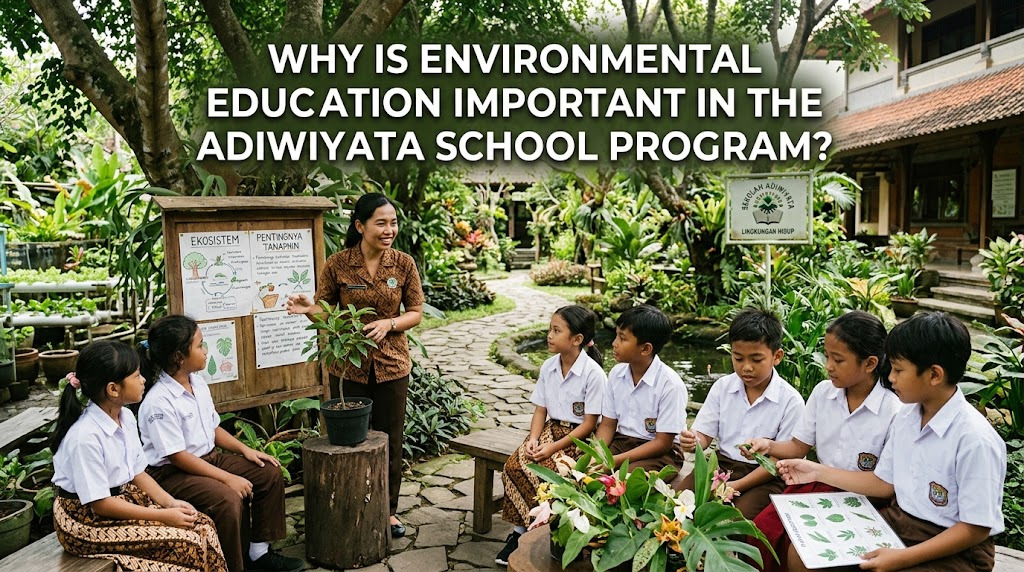
Environmental education is an important part of developing students who understand and care about their surroundings. Schools are not only places for academic learning but also environments where students develop habits, attitudes, and responsibility. Through the Adiwiyata School Program, environmental education can help students understand the importance of protecting nature through simple daily actions. Students can learn about waste management, conservation, cleanliness, and sustainable living through both lessons and practical activities. Therefore, environmental education plays an important role in creating a school culture that supports environmental responsibility.
WHAT IS ENVIRONMENTAL EDUCATION IN THE ADIWIYATA PROGRAM?
Environmental education is the process of helping students understand environmental issues and encouraging them to take responsible action. In the Adiwiyata Program, this education can be introduced through classroom lessons, school activities, discussions, projects, and daily habits. Students can learn how human activities affect the environment and why natural resources need to be used responsibly. The learning process should connect environmental knowledge with actions that students can practice in real situations. This makes environmental education more practical and meaningful.
Environmental education does not have to be taught as a separate subject in every situation. Teachers can connect environmental topics with subjects such as science, social studies, language, arts, or technology when appropriate. For example, students can write about environmental problems, create posters about saving energy, or study plants in the school garden. These activities allow students to understand environmental issues from different perspectives. As a result, environmental awareness can become part of the wider learning experience.
WHY SHOULD STUDENTS LEARN ABOUT THE ENVIRONMENT?
Students need environmental knowledge because their daily choices can affect the condition of their surroundings. Throwing waste carelessly, wasting water, or leaving electrical equipment running unnecessarily are simple actions that can create negative effects when repeated. By learning about these issues, students can understand the connection between personal behavior and environmental conditions. They can also learn that protecting nature is not only the responsibility of governments or environmental organizations. Every individual can contribute through responsible habits.
Environmental education can also help students develop important personal values. Students can learn discipline, responsibility, cooperation, and respect for nature through practical environmental activities. These values can be useful not only for environmental protection but also for their personal and social development. When students regularly practice responsible behavior, these actions can gradually become habits. This can help prepare students to become responsible members of their communities.
HOW CAN ENVIRONMENTAL EDUCATION BE APPLIED AT SCHOOL?
Schools can apply environmental education through activities that are easy for students to understand and participate in. Teachers can organize discussions about waste, pollution, plants, water, energy, and other environmental topics. Students can also conduct simple observations around the school and identify environmental problems that need attention. After identifying a problem, they can discuss practical solutions with their teachers and classmates. This approach encourages students to learn by observing and taking action.
Practical activities can make environmental education more engaging. Students can participate in school gardening, tree planting, waste separation, recycling projects, classroom clean-ups, and conservation campaigns. Schools can also create environmental posters, videos, presentations, or digital campaigns to share important messages. These activities provide opportunities for students to work together and apply what they have learned. When environmental education is connected to real activities, students may understand its importance more clearly.
WHAT ROLE DO TEACHERS PLAY IN ENVIRONMENTAL EDUCATION?
Teachers have an important role in delivering environmental education and guiding students to practice responsible habits. They can explain environmental concepts using simple examples that are relevant to students' daily lives. Teachers can also encourage students to ask questions, discuss environmental problems, and propose solutions. Their own behavior can become an example for students, especially when they consistently demonstrate cleanliness and responsible resource use. Therefore, teachers can act as environmental role models in the school community.
Teachers can also include environmental themes in appropriate assignments and classroom projects. For example, students may be asked to create a report about waste management or develop a campaign about water conservation. Teachers can provide feedback so students understand both the environmental issue and the purpose of their actions. Cooperation between teachers can also make environmental education more consistent across different subjects. With continuous guidance, students can develop stronger environmentally responsible behavior.
HOW DOES ENVIRONMENTAL EDUCATION BUILD AN ADIWIYATA CULTURE?
A strong Adiwiyata culture develops when environmental values become part of everyday school life. Environmental education can help students understand why school rules about cleanliness, waste, water, energy, and green spaces are important. Instead of following rules only because they are required, students can learn the reasons behind them. This understanding can encourage students to take greater personal responsibility. Over time, environmental responsibility can become part of the school's environmental culture.
The success of this culture depends on cooperation among students, teachers, school staff, and management. Everyone should have opportunities to contribute to environmental activities and maintain good habits. Schools can also evaluate their programs regularly and improve activities based on their results. Consistency is important because environmental awareness cannot be developed through a single campaign. A continuous approach can help create a stronger and more sustainable school environment.
WHAT ARE THE LONG-TERM BENEFITS OF ENVIRONMENTAL EDUCATION?
Environmental education can provide benefits that extend beyond students' years at school. Students who understand environmental responsibility may continue practicing waste reduction, conservation, and responsible consumption in their daily lives. They can also share environmental knowledge with family members, friends, and communities. This can expand the positive influence of the Adiwiyata Program beyond the school environment. In the long term, environmental education can contribute to a generation that is more aware of sustainability.
Environmental education can also support students' ability to solve problems and work with others. Environmental challenges often require cooperation, creativity, and thoughtful decision-making. Through environmental projects, students can practice these skills while working toward practical goals. They can learn that protecting nature requires both knowledge and consistent action. For this reason, environmental education is valuable not only for creating an environmentally friendly school but also for preparing responsible citizens.
CONCLUSION
Environmental education is important in the Adiwiyata School Program because it helps students understand environmental problems and develop responsible habits. Through classroom learning, practical activities, teacher guidance, and daily routines, students can turn environmental knowledge into real action. Important areas such as waste management, water conservation, energy conservation, school gardening, and cleanliness can become meaningful learning experiences. When students, teachers, staff, and school management work together, environmental values can become a lasting part of school culture. Ultimately, environmental education can help create students who are knowledgeable, responsible, and committed to protecting the environment.
Tentang Penulis
Gusti Ayu Tita P
Penulis — Universitas STEKOM
Penulis aktif yang berfokus pada isu-isu akademik, teknologi pendidikan, dan pengembangan sumber daya manusia di lingkungan kampus.



