
Why Is PPE Education Important for Improving Workplace Safety?
Gusti Ayu Tita P
29 September 2026
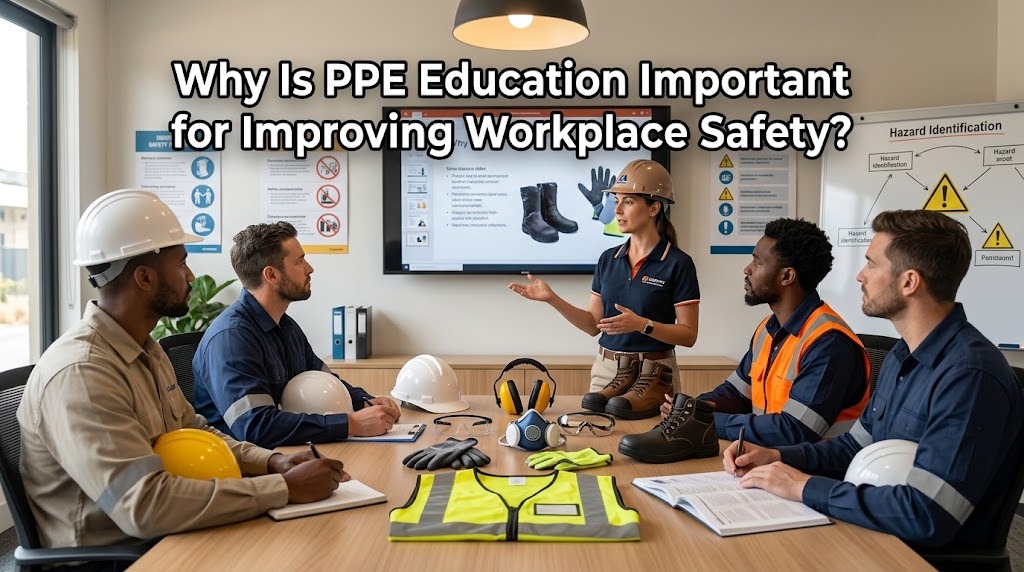
Personal Protective Equipment or PPE education is an important part of workplace safety because protective equipment only works effectively when workers understand how to use it correctly. Workers may face different hazards depending on their tasks, equipment, and working environment. Without proper knowledge, workers may select unsuitable PPE, wear it incorrectly, or fail to recognize when equipment needs attention. Education helps workers understand the purpose and limitations of the PPE provided to them. It also supports consistent safety practices throughout the workplace.
UNDERSTANDING THE PURPOSE OF PPE
PPE education helps workers understand why specific protective equipment is required for their jobs. Different equipment is designed to protect against different hazards, such as falling objects, chemicals, excessive noise, dust, particles, and electrical risks. When workers understand these risks, they are more likely to recognize the importance of using the required protection. This knowledge can also help them avoid treating PPE as an unnecessary part of their work routine.
Education should explain that PPE is generally the last line of defense after other hazard controls have been considered. PPE does not remove a hazard from the workplace, but it can help reduce a worker's exposure to certain risks. Workers should therefore continue following other safety procedures even when PPE is provided. Understanding this role helps create more realistic and responsible safety expectations.
LEARNING HOW TO USE PPE CORRECTLY
Providing PPE without explaining how to use it can lead to mistakes. Training should teach workers how to put on, adjust, remove, and inspect PPE according to workplace procedures and manufacturer instructions. Workers should also learn how different pieces of equipment work together when several types of PPE are required. Correct use helps ensure that protective equipment can perform its intended function.
Workers should understand that incorrect use can reduce the protection provided by PPE. For example, poorly fitted equipment may not provide the intended coverage, while damaged equipment may no longer be suitable for use. Training can help workers identify these problems before beginning a task. Regular instruction and practical demonstrations can make PPE procedures easier to understand and remember.
RECOGNIZING PPE LIMITATIONS
PPE education should also explain the limitations of protective equipment. No single item of PPE can protect workers against every possible workplace hazard. Gloves designed for one type of chemical, for example, may not provide adequate protection against another substance. Similarly, hearing protection reduces noise exposure but does not eliminate the noise source.
Understanding these limitations helps workers make better safety decisions. Workers should know when additional controls, different PPE, or specific workplace procedures are necessary. Employers should provide information about the equipment's intended use and restrictions. This can reduce the risk of workers relying on PPE beyond what it is designed to handle.
ENCOURAGING REGULAR PPE INSPECTION
PPE education can teach workers how to identify damage, wear, contamination, and other problems. Workers should know what to check before using helmets, gloves, eye protection, safety footwear, respirators, and other equipment. Regular inspection can help identify equipment that may need cleaning, maintenance, or replacement. Workers should report problems according to their workplace procedures.
Proper storage is also part of PPE care. Equipment should be stored in a way that helps prevent unnecessary damage and contamination. Training can explain the correct cleaning and storage procedures for different types of PPE. These habits can help maintain the condition of protective equipment between uses.
BUILDING A STRONG SAFETY CULTURE
Effective PPE education can contribute to a positive safety culture where workers and employers take safety responsibilities seriously. Training gives workers opportunities to ask questions and understand the reasons behind workplace safety rules. Supervisors can reinforce these practices by consistently following and communicating safety procedures. When safety expectations are clear, PPE use can become a normal part of daily work.
PPE education should not be limited to a single training session. Refresher training may be useful when workplace conditions, equipment, tasks, or safety procedures change. New workers should receive appropriate instruction before performing tasks that require PPE. Continuous education helps keep safety knowledge relevant and supports consistent protective practices.
CONCLUSION
PPE education is important because workers need knowledge as well as protective equipment to work safely. Proper training helps workers understand workplace hazards, select suitable PPE, use it correctly, recognize its limitations, and identify damaged equipment. Ongoing education can also encourage workers to follow safety procedures consistently. When PPE training becomes part of a broader workplace safety program, it can support better awareness and a stronger safety culture.
Tentang Penulis
Gusti Ayu Tita P
Penulis — Universitas STEKOM
Penulis aktif yang berfokus pada isu-isu akademik, teknologi pendidikan, dan pengembangan sumber daya manusia di lingkungan kampus.



