Why Is Sustainable Fisheries Management Important For Future Food Security?
Gusti Ayu Tita P
11 Agustus 2026
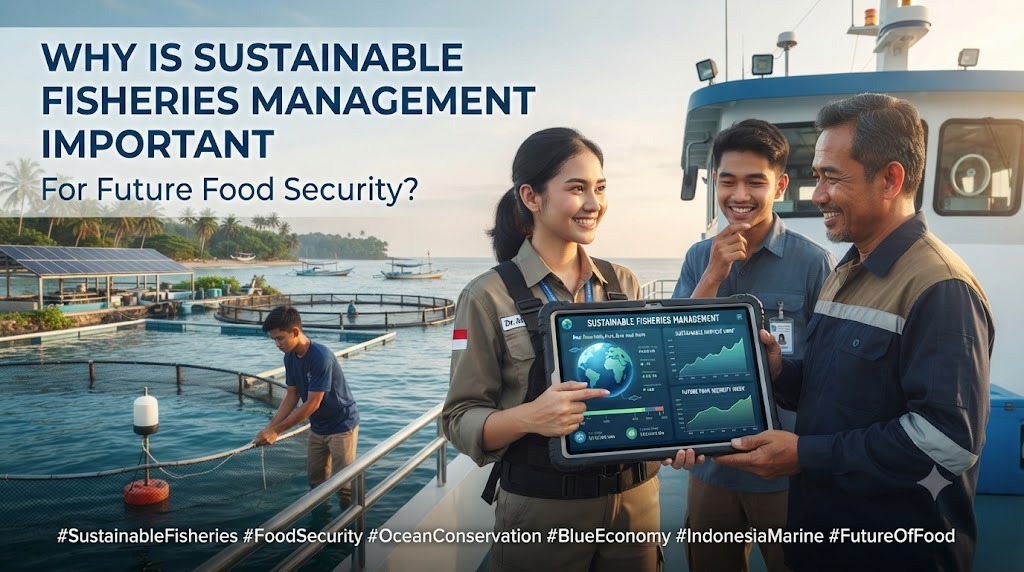
Fisheries are an important source of food, income, employment, and nutrition for millions of people around the world. Fish and other aquatic foods provide high-quality protein and important nutrients such as omega-3 fatty acids, vitamins, and minerals. As the global population continues to grow, demand for nutritious food is also expected to increase. Sustainable fisheries management is therefore essential to ensure that aquatic resources remain available for future generations.
However, marine and freshwater ecosystems face growing pressure from overfishing, habitat degradation, pollution, climate change, and other human activities. If fish populations decline significantly, communities that depend on fisheries can experience economic and food security problems. Sustainable management aims to balance fishing activities with the natural ability of fish populations and ecosystems to recover. This approach can help maintain food security, healthy ecosystems, and stable livelihoods over the long term.
UNDERSTANDING SUSTAINABLE FISHERIES MANAGEMENT
Sustainable fisheries management means regulating fishing activities so that fish populations can remain productive while ecosystems are protected. Management can include catch limits, fishing seasons, gear restrictions, size limits, protected areas, and monitoring systems. These measures are designed according to scientific information and local conditions. Responsible fisheries management helps prevent excessive pressure on aquatic resources.
Effective management also considers the people who depend on fisheries. Fishers need opportunities to earn income while following rules that protect the resource. Including fishing communities in decision-making can improve understanding and compliance. A balanced approach can protect both fish populations and the livelihoods connected to them.
THE CONNECTION BETWEEN FISHERIES AND FOOD SECURITY
Fish is an important part of diets in many countries, particularly in coastal and island communities. It provides protein and micronutrients that can complement other sources of food. Food security depends not only on having enough food but also on reliable access to nutritious and safe food. Sustainable fisheries can help maintain this supply over time.
When fish stocks are healthy, fisheries can provide a more stable source of food for communities. Declining stocks can increase prices and make nutritious seafood less accessible to lower-income households. Maintaining productive fisheries can therefore contribute to both food availability and affordability. Protecting aquatic ecosystems is an investment in long-term nutrition.
PREVENTING OVERFISHING
Overfishing occurs when fish are harvested faster than populations can naturally replenish themselves. Continued overfishing can reduce the size of fish stocks and may affect the broader marine ecosystem. Overfishing prevention is one of the central objectives of sustainable fisheries management.
Authorities can use catch limits, fishing quotas, seasonal closures, gear restrictions, and other measures to control fishing pressure. Scientific assessments can help determine whether fishing levels are compatible with the ability of stocks to recover. Effective monitoring and enforcement are also necessary to ensure that regulations are followed. These measures can help maintain fish populations for future food production.
PROTECTING MARINE AND AQUATIC ECOSYSTEMS
Fish populations depend on healthy habitats for feeding, reproduction, migration, and growth. Coral reefs, mangroves, seagrass beds, estuaries, rivers, and wetlands provide important ecological functions. Aquatic ecosystem protection can therefore strengthen fisheries productivity and biodiversity.
Fishing management should be integrated with broader environmental conservation. Reducing pollution, protecting breeding grounds, and restoring damaged habitats can improve conditions for aquatic species. Marine protected areas can also provide refuge for vulnerable species when appropriately designed and managed. Healthy ecosystems provide a stronger foundation for long-term food security.
SUPPORTING FISHING COMMUNITIES
Millions of people depend directly or indirectly on fisheries for their livelihoods. Fishers, processors, traders, transport workers, and seafood businesses all benefit from productive aquatic resources. Fishing communities can face serious economic challenges when fish stocks decline. Sustainable management can help maintain employment and income opportunities.
Management policies should consider local economic conditions and traditional knowledge. Providing training, access to markets, improved infrastructure, and alternative livelihood opportunities can help communities adapt to changes. When people have realistic economic options, compliance with conservation measures may become easier. Social well-being should therefore be considered alongside environmental objectives.
IMPROVING FISHERIES SCIENCE AND DATA
Good fisheries management depends on reliable information. Scientists and authorities need data about fish populations, reproduction, migration, fishing effort, and environmental conditions. Fisheries science helps decision-makers determine appropriate management measures.
Data collection can involve scientific surveys, catch records, monitoring systems, and information provided by fishers. Modern technologies can improve the speed and accuracy of data collection. However, scientific information should be combined with local knowledge when appropriate. Better data can lead to more informed and adaptive management decisions.
USING TECHNOLOGY FOR FISHERIES MANAGEMENT
Technology can improve the monitoring and management of fisheries. Vessel monitoring systems, electronic reporting, satellite data, digital databases, and remote sensing can provide useful information about fishing activities. Fisheries technology can help authorities identify unusual activities and improve compliance with regulations.
Technology can also support fishers by providing information about weather, navigation, market prices, and fishing conditions. However, access to technology can vary between communities. Training and affordable equipment are necessary to ensure that small-scale fishers can benefit from digital tools. Technology should support sustainable practices rather than encourage excessive fishing.
ADDRESSING CLIMATE CHANGE
Climate change is affecting aquatic ecosystems in many ways. Changes in ocean temperature, ocean chemistry, rainfall patterns, and extreme weather can influence fish distribution, reproduction, and productivity. Climate-resilient fisheries need management systems that can adapt to changing environmental conditions.
Management measures may need to change when fish populations move into new areas or environmental conditions shift. Monitoring systems can help identify these changes and support timely decisions. Protecting diverse ecosystems can also improve resilience to environmental stress. Climate adaptation should become an important part of long-term fisheries planning.
REDUCING ILLEGAL AND UNSUSTAINABLE FISHING
Illegal, unreported, and unregulated fishing can undermine sustainable fisheries management. It can increase fishing pressure beyond scientifically recommended levels and create unfair competition for responsible fishers. Illegal fishing control is therefore important for protecting fish stocks and supporting food security.
Governments can strengthen monitoring, inspection, vessel tracking, licensing systems, and cooperation between relevant authorities. International cooperation is particularly important because fishing vessels and seafood supply chains can cross national boundaries. Strong enforcement can create a more level playing field for legal and responsible fishers. Effective control also protects public confidence in fisheries governance.
PROMOTING RESPONSIBLE AQUACULTURE
Aquaculture can complement capture fisheries by producing fish, shellfish, and other aquatic foods through farming systems. When responsibly managed, sustainable aquaculture can contribute to food supplies and reduce pressure on some wild fish stocks. It can also create employment in coastal and rural communities.
However, aquaculture needs appropriate management to address issues such as water quality, disease, feed use, waste, and ecosystem impacts. Good farm planning and environmental monitoring can reduce these risks. Responsible production practices can improve the efficiency and sustainability of aquatic food systems. Aquaculture should complement rather than replace efforts to protect wild fisheries.
IMPROVING SEAFOOD SUPPLY CHAINS
Food security depends not only on production but also on the ability to move food from producers to consumers. Poor storage, transportation, and processing can cause significant seafood losses. Efficient seafood supply chains can reduce waste and increase the amount of fish available for consumption.
Cold storage, improved processing facilities, better transportation, and reliable market information can help maintain seafood quality. Traceability systems can also provide information about where seafood comes from and how it was produced. Stronger supply chains can increase economic value while improving access to safe and nutritious seafood. These improvements are particularly important for small-scale fishing communities.
PROMOTING RESPONSIBLE SEAFOOD CONSUMPTION
Consumers can influence fisheries sustainability through their purchasing decisions. Choosing responsibly sourced seafood can encourage businesses to support sustainable fishing and aquaculture practices. Responsible seafood consumption can connect consumer demand with better environmental management.
Consumers can also reduce food waste and learn about the origin of seafood products. Clear labeling and traceability can make it easier for people to make informed choices. Businesses, retailers, and restaurants can contribute by improving sourcing practices and providing reliable information. Consumer awareness can strengthen market incentives for sustainable fisheries.
STRENGTHENING INTERNATIONAL COOPERATION
Fish do not follow political boundaries, and many species migrate between national waters. Fisheries management therefore requires cooperation between countries, especially for shared and highly migratory fish stocks. International fisheries cooperation can support common management measures, scientific research, monitoring, and enforcement.
Regional fisheries organizations and international agreements can provide frameworks for cooperation. Countries can share data and coordinate responses to illegal fishing and environmental changes. International collaboration is particularly important when climate change alters the distribution of fish populations. Shared management can help prevent one country's actions from undermining the efforts of others.
BUILDING A FUTURE OF FOOD SECURITY
Sustainable fisheries management is not only about protecting fish stocks today. It is also about creating a stable food system that can support future generations. Long-term food security requires healthy aquatic ecosystems, responsible fishing practices, resilient communities, and effective governance.
Investing in science, technology, infrastructure, education, and conservation can strengthen fisheries for the future. Policies should balance environmental protection with the needs of communities that depend on aquatic foods. Adaptive management can help fisheries respond to changing ecological and economic conditions. With coordinated action, fisheries can remain an important part of a sustainable global food system.
CONCLUSION
Sustainable fisheries management is essential for future food security because it helps maintain fish populations, protect aquatic ecosystems, support livelihoods, and provide nutritious food. Without effective management, overfishing and environmental degradation could reduce the ability of aquatic ecosystems to supply food and income. Sustainable approaches can help maintain productivity while protecting biodiversity.
The future of fisheries depends on cooperation between governments, scientists, fishers, businesses, consumers, and local communities. Science-based management, responsible fishing, ecosystem protection, technology, climate adaptation, strong enforcement, and sustainable aquaculture can work together to build resilient aquatic food systems. Protecting fisheries today means protecting an important source of nutrition and livelihoods for generations to come.
Tentang Penulis
Gusti Ayu Tita P
Penulis — Universitas STEKOM
Penulis aktif yang berfokus pada isu-isu akademik, teknologi pendidikan, dan pengembangan sumber daya manusia di lingkungan kampus.